

 YouTube

 Apple Podcasts

 Spotify

 RSS Feed

 Spreaker

 iHeartRadio

 Castbox

 JioSaavn

 Pandora

 Deezer

 Podcast Addict

 Amazon Music

Dr. Kristi Tough DeSapri: Menopause & Postmenopausal Osteoporosis
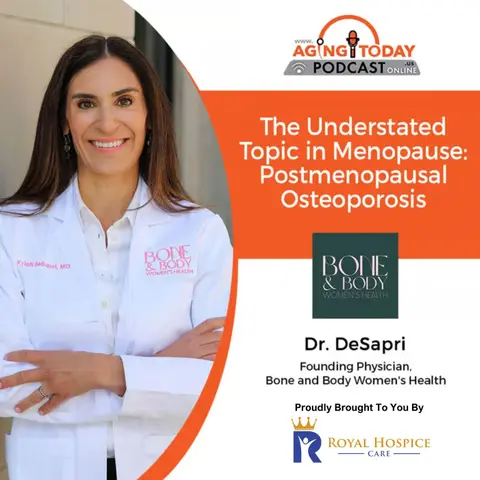
"𝙆𝙣𝙤𝙬𝙡𝙚𝙙𝙜𝙚 𝙞𝙨 𝙥𝙤𝙬𝙚𝙧 𝙬𝙝𝙚𝙣 𝙞𝙩 𝙘𝙤𝙢𝙚𝙨 𝙩𝙤 𝙢𝙚𝙣𝙤𝙥𝙖𝙪𝙨𝙚." - 𝘿𝙧. 𝙆𝙧𝙞𝙨𝙩𝙞 𝙏𝙤𝙪𝙜𝙝 𝘿𝙚𝙨𝙖𝙥𝙧𝙞
Mark Turnbull discusses the complexities of aging with expert, Kristi Tough DeSapri, MD, NCMP, CCD. Focusing on osteoporosis, menopause, and bone health, they explore how...
"𝙆𝙣𝙤𝙬𝙡𝙚𝙙𝙜𝙚 𝙞𝙨 𝙥𝙤𝙬𝙚𝙧 𝙬𝙝𝙚𝙣 𝙞𝙩 𝙘𝙤𝙢𝙚𝙨 𝙩𝙤 𝙢𝙚𝙣𝙤𝙥𝙖𝙪𝙨𝙚." - 𝘿𝙧. 𝙆𝙧𝙞𝙨𝙩𝙞 𝙏𝙤𝙪𝙜𝙝 𝘿𝙚𝙨𝙖𝙥𝙧𝙞
Mark Turnbull discusses the complexities of aging with expert, Kristi Tough DeSapri, MD, NCMP, CCD. Focusing on osteoporosis, menopause, and bone health, they explore how aging affects our bodies, particularly bones, and the importance of proactive measures to maintain bone density and prevent fractures. It's not a question of what happens in menopause, but the steps and awareness on the effects of bone health as women age.
Understanding menopause as a critical period for women's health and Dr. Tough DeSapri is a bringing awareness for all on the options for individualized treatment to promote healthy aging.
Learn More about Bone and Body Women's Health: https://boneandbodywh.com/
Listen to this and all the other great @Aging Today Podcast episodes here: https://www.agingtoday.us/
This is an oldie but goodie, replay!
#aging #osteoporosis #menopause #bone health
Buy Mark a Coffee - Support Our Content About Aging!

Like and share Aging Today podcasts with your friends and family!
www.AgingToday.us
0:00 [music] You're listening to Aging Today, the podcast where together we explore the options to aging on your terms. When I get older, lose a fire, many years from now, we used to be sending me a fountain time birthday greetings out of one, if I did I'd kill quarter to three would you like the dawn? Will you still leave me, will you still leave me when I'm sixty four?
0:42 And now the podcast where together we discuss proactive aging on your terms, connecting to the professional advice of our special guests while creating better days throughout the aging process. Now here's your host, Mark Turnbull. And welcome back to another lively discussion on Aging Today, we are the podcast where together we explore the many options to aging on your terms. You can find aging today and our past programs on our website, we got a great website, all you got to do is go to www.agingtoday.us and you can pick up any of the past programs, there's about four hundred of them.
1:25 It's amazing that there's that much topic out there, but aging is incredible, we're all aging and then I always say that if you're not too busy being born, you're too busy aging. But you can also follow us on your favorite podcast channel such as Spotify, Pandora, Apple, I Heart, YouTube, we've got about fifteen of them out there so do feel free to type in aging today, follow us and you can pick up any of the past programs. And then also I'm so grateful for you, the listener, all two hundred thousand plus of you that are following us on your favorite podcast in aging today.
2:06 And I just want to say thank you and from the bottom of my heart because without you, this isn't even possible and we want to know what your questions are. So keep asking the questions, send to me in an email, your questions and then also if you have an aging expert that you would like to hear on the aging today podcast, just reach out to me your host, Mark Turnbull and my email is Mark with a K, mark@agingtoday.us. Well as you know this is about a podcast about the story of aging and I've already said that if you're too busy, not too busy being born, you're too busy aging and you know think about that, that's, there's nothing more to it than living on this planet and for how many years that we're living and we're all aging at various levels.
2:58 But one of the things that has always intrigued me about the body, the human body is as we age and as we grow older things change and sometimes I don't like the changes that are going on in our bodies and I have a lot of questions for why, why we're, we're changing so dramatically. And one of the things that that where we see a lot of change is in our bone structure, we see a lot of changes in our hormonal structure. I don't know if that's the right word but I'm using it and here to guide us today along this journey is Dr. Christy Tuf Disapri and she's going to be leading us in this discussion on osteoporosis, menopause and other age related sagging issues if I may say so. Dr. Disapri, welcome to aging today.
4:01 Hi Mark, happy to be here. You're right, we are all aging but as I like to say we can do that gracefully, we can do it with strength and we can do it without fractures. So I think we're going to talk about all of those things, bone health, bone strength, falls and prevention of fractures today. Yeah and I love that you are so optimistic about aging gracefully because if you look at my smile and mug, it's not grace, there's nothing graceful about me. So but maybe that's my own image issue, right? Okay, so let's get into it and maybe that aging gracefully as we take care of our bodies is that when you say when that's kind of it's a loaded term gracefully. So what does that mean to you?
4:50 Yeah, I mean I think, right, I think we all, particularly so my area of interest is women's health, I'm a menopause specialist, I'm also a clinically certified dentist, a tomatrist, I'm a board certified internist and I have practiced in women's health after my fellowship at the Cleveland Clinic. So I have seen women, you know, through the reproductive span and then my focus really is on women after the reproductive years and so what happens in the menopause transition and menopause years beyond? So when I say gracefully, I think of that as all the body systems, right? Looking at cardiovascular, looking at breast health, looking at bone health primarily and again, making sure that we're individualizing treatment for women who come with certain pass medical histories and then want to look forward to maintaining good health and I think there's so much now in midlife women's health, a lot of, you know, technologies, a lot of medications, a lot of more awareness about those years beyond child bearing. So that's sort of how I, you know, see women as an individual and then also think about what's going to, you know, help her live well and live a long time without any of those medical issues we want to prevent. Yeah, and there are solutions. And we're going to talk about those solutions today to aging gracefully, aging well, another way of saying it and so let's get
6:21 into it. The thing that holds us upright is the bones that we have in our body, the skeletal structure. Without that, we'd like us be like jellyfish slithering across the floor, right? So the bones are extremely important. Absolutely. Well, you're right. Yeah. Right. So go ahead. I was going to say, what is osteoporosis? What is happening to us and our bones as we age? Yeah. So you set the framework, you know, no pun intended really well with talking about the skeleton and, you know, our bones. And so you're absolutely right. The skeleton is very important for mobility, for supporting our internal structures. We actually also have a lot of our main nutrients and vitamins, you know, inside of our bones like calcium and different phosphorus and different minerals and cells. And then, you know, when we think about bones, we usually don't think about those until someone, you know, has a fracture or is diagnosed with osteoporosis or has broken a bone or thinks about things like arthritis. And and so we really don't think about, you know, our bones until maybe, you know, sometimes it's too late.
7:39 So what is osteoporosis? This is probably one of the most common questions that I get. I see women, you know, day and day out in my clinical practice talking about osteoporosis, what it is and what it isn't. And really osteoporosis means, osteosus is a term for bone and porosis porous. So it means weakened or thinner bone bone mineral density, which means that your bone density is weaker, your bone strength is is compromised and that leads to an increased risk of a fracture. We call those low trauma fractures. So fractures from a standing height or less or fractures from in our spine can even be from like a twist or a bend that's exaggerated. So, you know, unfortunately, osteoporosis, you know, this is a term and a sort of a condition that is silent. So many women don't know they have it unless they've had a screening dexa, which we'll talk about. I'm sure in terms of how we screen for osteoporosis or on, or, you know, the more unfortunate is they've had a low trauma fracture like a fracture of their wrist, forearm spine, hip, pelvis and that's really either you know, changed their life. You know, they're either had in a cast or they've been immobilized or hip fractures really carries some more significant consequences. So osteoporosis is really the end. So of where we want to prevent, we want to prevent getting thinner bone density, want to understand why we have that condition and we obviously want to treat that and we'll, I hope, you know, get to talking about all those components today. Yeah. I want to talk a little bit about the bones themselves and what makes up bone, what chemicals, what nutrients, what, and the reason why I ask
9:15 that question is when we start out as children, our bones are a lot more pliable and then as we age, whatever is happening in the aging process, they become more brittle or in osteoporosis, the more what was the term you use? Yeah, thinner, yeah. Yeah. Yeah. So what's happening? I mean, we just not getting the right nutrients and is it, is it possible? Maybe not today, but is it possible into the future that will they be able to find the solution that will keep bones pliable and healthy, till you're 120? Yeah. Well, I think that there's definitely, there's a lot to that question and you're right. So, you know, bones are made up of many different cells. They are made of, like I mentioned, calcium, phosphorus, different types of bone cells that we call osteoblasts or bone forming cells, osteoclasts or bone breakdown cells. So we have something called osteocytes where a sort of the nerve conductor of the cell. So we have all these, these sort of cells within our bones and they all work together to, we call either do some modeling or bone formation, which primarily occurs in our teens, our 20s. And then depending on the skeletal site, like the wrist or the ribs or the, the clavicle, we know that you really sort of achieve, achieve peak bone mass in your 20s, which means you've really built up your bone bank is how I describe it to my patients
10:46 is all the bone that you're going to have in your early 20s, maybe, you know, closer to your 30s, and then you sort of plateau and primarily for women, we know that, you know, the time of menopause, whether that's surgical menopause or natural menopause, or we're starting to lose our primarily estrogen hormone secreted from the ovaries, that that is where that imbalance of bone being formed by the osteoblast and bone being broken down by the osteoclast starts to go haywire. And we know that when there's a lot of drops in estrogen, again, around the time of menopause, which can be for many women, women, sometimes age 40 to, you know, 60, depending on when that final menstrual period is and when those hormones are changing, is that there is an imbalance of more bone breakdown than bone formation is happening. So, you know, you're on the aging today podcast. I mean, we are all aging. The, the trick is, right, we want to trick our bones into building up more bone or building, simulating what we call the osteoblast, tricking our bones to reduce the osteoclasts, but also just allowing our own bone to remodel as it would because both, all those, those cellular structures and those cellular processes are very important to maintain healthy bone in both the trabecular bone compartment, which is primarily bones in our spine and our femoral neck of our hip and cortical bone, which is primarily densely packed bone in our long bones of our body, like our wrist, our femur,
12:16 etc. So, every bone in our body is made up of those two different components, slightly different cells, slightly different rates of remodeling and bone formation. But again, really important, and, you know, genetics plays such an important role, exercise calcium, like I mentioned, because that mineralizes the bone, plays these all things, play a really important role in how each one of us is different in terms of how much bone is being formed or your bone bank and how much bone is being broken down. And for, like I said, for women, so important to know what's happening at menopause, and really building and boosting the bone bank, as much as we can, and understanding your history as it relates to bone health and how that's impacted before the time of menopause. I mean, that's, I think, what we're going to, what we're talking about here today, really, the pivotal time of menopause where we need to understand, you know, what our bone density is to prevent more fractures and prevent bone loss. So, is there a difference between men and women and their bone bank?
13:16 Absolutely. So, you know, men obviously have, generally, when we look at the, you know, the curves for bone formation and bone breakdown, we know that men start with a higher bone mass, again, probably due to size, testosterone, men also do have estrogen, actually, as well. So, you know, we know that generally for most men, we know that the bone acquisition, bone marrow acquisition is higher for men than women, and also that men do not have a menopause, right? There's no time where men lose a dramatic amount of testosterone where women can lose up to 20% of their bone mass in both the tribicular and, and a cortical compartment at the time of menopause.
14:01 We know from literature that women who are thinner, women who have family history of bone loss can lose more bone density. So, again, men don't have the menopause. We still can lose bone density and men, and it's still important to do screening bone marrow density in a men of a certain age, primarily men over age 70 or men who have a, some chronic medical conditions that might contribute to bone loss or increased risk of fractures. So, yes, we don't want to forget about the men. Yeah, yeah. Well, and this is a relevant topic to today. I mean, we're questioning what is a woman? And what you're saying is that there is a difference between the sexes. There is two sexes, and they're uniquely designed, and they have their own, their own challenges, and it must be in the DNA or there must be a lot of things that are going on there. Why were so different? You would think why does there have to be a difference in the bone structure between a man and a woman when we're both equal in the sense that we're walking this earth? Why did there become a difference?
15:15 Right. And well, there is some interesting research done in that in the gender, affirming hormones and bone health that's ongoing, and really in its infancy, but is gaining more traction because we do are seeing this more often. And when we look at the large scale, you know, eight million women have osteoporosis that we know of in the United States, about two million men. So again, you know, some of the, again, the sex differences in terms of bone mass acquisition, menopause, certain, you know, conditions primarily, things like autoimmune conditions can sometimes preferentially affect women. So those sometimes carry risks of needing things like blue-gabocorticoids or steroids as their treatment, we know that there's such a large component of women now getting diagnosed with hereditary breast noberian cancer. And so a lot of those women who have undergone early surgical menopause that can affect their bone mineral density as well. So really again, you know, again, age of menopause is very important for understanding, you know, what our peak bone mass is and how to preserve it for those, you know, menopausal years, as we know, women are living a third to sometimes a half of their lives in the post-menopausal years.
16:22 Yeah, yeah. And it's only going to get, we're only going to live longer, I believe. I mean, there's some amazing things that are happening out there with longevity. And we've already seen, you know, the longevity of humankind working together and moving forward. It's not uncommon for us, you know, I have an in-home care agency and a hospice agency and it's not uncommon for us to be caring for people in their hundreds. And I don't know if that was really a prevalent thing, maybe 40, 50 years ago. Yeah, absolutely, absolutely. On a personal note, I have a maternal grandmother who turned 100 this month, which is very exciting. So, I mean, again, anecdotally, but I agree with you.
17:08 And, you know, the other thing with, you know, aging again comes with, well, what are the consequences? And so one, you know, interesting to statistics is that, you know, right, we are living longer, women are living longer, men are living longer. However, with osteoporosis, again, because of the silent condition, you know, it's, it's, you know, sort of projected that hip fractures will double by the rate by the year of 2050, which means, right, that if we're living longer and our bones need to, you know, we need to, you know, have our bones grow with us. The end consequences of thinning of the bone as we talked about with osteoporosis is, it's fractures in women, primarily, again, and men too who are in the 80th and 90th decades of life tend to have, you know, the prevalence of hip fractures are higher than women in their 50s and 60s, and that's because, again, when we think about falls, you know, one in three women fall over the age of 65 and, and males as well, and we know that that is one of the main reasons, you know, for emergency room visits, it is falls and, you know, elderly. And so when we think about, you know, prevention of osteoporosis, treatment of osteoporosis, you know, the hip fractures is in, in our field, in the bone health field, like into, you know, heart attack or, you know, cardiovascular event, meaning, you know, we want to prevent things until we, you know, we want to prevent your falls and your fractures before they occur because though those fractures are, again, the hip fracture is really a sentinel event, and really, again, you know, we look at the large-scale literature, you know, a third of, you know, a third of people do not,
18:39 you know, walk or live independently again. We know that there's a high mortality rate after hip fractures, again, from the fracture itself and from the sequelae. So, really when I see women and we know that looking at the hip bone mental density is so pivotally important as we age is really an indicator of what the bone strength is. We really want to prevent, you know, all fractures, but, you know, really the life-changing fractures for hip fractures and women and men who are, are, are, are those demographics is, is really important. Because we're all, aging and we're all living longer as we age, what are some of the things that we can do to prevent the bones from, you know, deteriorating and, and is there things that we can, you know, foods, is there certain foods that are more that we should be introducing into our diets more to keep our bones more pliable and healthy as we age? So, this is such a common question, you know, we get about lifestyle, you know, which includes, again, you know, exercise and then also nutrition. I think, you know, where we are now in our world, we have so many options. So, I spend a lot of time talking about the things that are, again, what I mentioned, but are, what are the building blocks to bone?
19:56 And so nutrients, but, you know, essential, you know, minerals, just calcium are very important. We're so lucky, you know, in this country and I really think many, you know, countries that have calcium-rich foods or dairy sources or non-dairy sources of fortified foods with calcium. And there's, you know, the recommended daily allowance, really for, for again, postmenopausal women is really 12 to 1500 milligrams of elemental calcium a day. And, and again, so getting that calcium, whether that can be through dietary sources or supplements, primarily, again, that's really an individualized discussion in terms of your history, making sure those are safe. They're not going to cause constipation in kidney stones and, and, and looking at the total inventory of what you're already, you know, doing that's really important. We talk about vitamin D, which also helps absorb calcium, certain nutrients, primarily things like protein intake. We know so much more of that about that, and how that is supporting muscle around the bone. So, you know, there are a lot of observational studies looking at calcium and vitamin D, but we really know, again, those are building blocks.
21:02 But what I always like to share is, you know, and I'm very much, you know, counseling as the whole, whole person is that if you have osteoporosis and that's, you know, again, sort of more, you know, bone loss that is at advanced to a point that, you know, really calcium and vitamin D, and we know this from, you know, placebo controlled studies, calcium and vitamin D alone are not going to mineralize or strengthen the fill in the bone, general density that's lost. We really need to do something to boost those bone cells and really work on, and within the bone mechanics that I talked about, really to strengthen the bone that's either there or build up some new bone mass to really support that. And, you know, it's similar to, you know, a lot of our other chronic conditions where we sort of, you know, want to control the blood pressure and the control the lipids, and again, make those levels look optimal because we know those are the areas where, you know, optimal aging, you know, occurs, and then we don't have the signs of bone loss and fractures. So, this is really, again, a discussion about treatments beyond calcium and vitamin D for women who, you know, again, have advanced bone loss or osteoporosis. Yeah, and there's really kind of two categories. It's the pre, you know, when we're younger, we should be making sure that we're taking enough vitamin D and calcium and all the other things that are going to build up that bone bank in us. And then there's, when the bone bank is empty, it's dry, if you will, then things, then there's another process or another
22:35 approach that you're taking. Is that what you're saying? I mean, exactly. I mean, I think right for each decade of life, it can be a little bit different pre-bent-aposal versus post-bent-aposal. You know, again, we know that calcium, you know, we should probably be talking about that in our, you know, with our pediatricians and with our younger children too, things like that leach calcium out of the bones. We want to, you know, avoid those, like, excess, you know, sodium or salt, excess, you know, sodas, things like that, which can affect, you know, that calcium balance. And then I think, again, it just becomes paying more attention. I think, you know, as we age, we need to pay more attention to, you know, the macronutrients, even the micronutrients. And I think calcium is one of those ones that kind of sometimes gets overlooked or has a bad, you know, rap, some people say they're allergic to that or, and I, there's, of course, there's lactose intolerance, but there's a lot of other ways to get calcium for folks who have done it by like that. And I think sometimes it's just, learning, I, I, I share a lot of things like looking at certain websites, like the Bone Health and Osteoporosis Foundation, which is a great non-profit that really tries to educate both clinicians, healthcare providers, as well as patients, in terms of understanding osteoporosis and, you know, again, how to live with this diagnosis, how to prevent and treat the, the diagnosis as well. Yeah, and I think, you know, one of the, we've had a lot of guests on, and we talk a lot about, you know, whole-food plant-based nutrition and different things. And so if you're, you're not going to do a lot of dairy products. So you've got to find other ways to get the calcium
24:10 and the, you know, the vitamin D if you're not going to take, you know, have dairy products. Because it sounds like dairy products are the highest form is am I correct or the most, or the most convenient form to get calcium in our diets? Yeah, I mean, absolutely. I mean, they're not, they're not fortified, like some of the other products, however you can, like from a lot of our non-fortified, you know, our fortified milk products now, which examples like almond milk, coconut milk, soy milk, all of those can be fortified with calcium. And so sometimes those are good options, but I mean, there are so many out there. And so again, it's, you know, what is it? What works in your diet? And then consistency is key because we know that with low calcium or low vitamin D, again, that's not, you're not mineralizing your bone. And as we age, I said, there was, you know, more bone breakdown happening. Well, we need to replenish those doors. And so we need to make sure that the mint bone is mineralized. In addition to very common when I see patients, you know, they think if they're on an osteoporosis treatment, you know, either a medicine that prevents bone loss or one that stimulates bone formation, either oral or injectable, that they know, they know, they're now like off the hook for taking calcium, vitamin D, that that's doing the trick. And that's something that, you know, it's so important to know that no, you need to still take, even if you're taking a medication, great, we still need the building blocks. So including calcium, vitamin D, you know, again, some sort of exercise, resistance exercise, posture balance, all of those things.
25:36 Let's talk about the elephant in the room, menopause. And so how does menopause affect osteoporosis? And what is menopause? And then how does that, what's the relationship between the two? Sure. Yeah, I think that's just really, you know, menopause itself is really getting a little bit more media attention. I think we've got some celebrities talking about how, you know, they're menopause, you know, journeys. I think that there's some more physicians and technology out there. But it's really important, you know, that, you know, menopause is a natural state, okay? So this is really defined retrospectively. Menopause is a time period in women's life where they have undergone 12 months of no periods or what we call amenorea. And sometimes that's, again, a lookback diagnosis. Some women have irregular cycles for many years up until the final, their final menstrual period. And we call that time, you know, the early or late hairy menopause time before we enter sort of the menopause transition and then the final menstrual period. And then the year's postmenopause would be would be after that. So, and again, if there's surgical menopause, that can be an abrupt cessation of a period because again, the ovaries are removed. Oftentimes I see women who have undergone, you know, chemical menopause. So, or either taking medications primarily for, like, cureditrile breast nobarian cancer or chemotherapy radiation that really stops periods. And so as I mentioned in this country, the average age of menopause is 51 and a half. But that can,
27:11 there can be a long, you know, span. We know, you know, menopausal symptoms such as, you know, hot flashes, night sweats and things like that. And don't just happen, you know, in menopause, they can have an early in the, in the, in the hairy menopause and really can continue for someone from for seven to 10 years. So, hot flashes and that in vasomotor symptoms and night sweats and disturbed sleep, joint pains and mood symptoms in Samnia, things like these can be more commonly related. There are some other uncommon, you know, things that we hear about with menopause, like, dryness of the skin or chest or palpitation. But the one we don't talk about often is bone loss, right? So, no one comes to me and says, "Oh, I'm in menopause, you know, like, what's going on with my bones?" They say, "I'm in menopause, like, what's going on with my joints? Her, you know, I'm having vaginal dryness. I can't sleep at night." But again, when we know what's happening, you know, underneath the skin, so to say, in the, in the bones, we know that at the, the 12 months before the final menstrual period, that estrogen declining, the bone loss, particularly, we know this from, you know, looking at bone markers and looking at bone density declines, that the bone has already started to decrease more. We see those changes in the spine, so in the trabecular bone, and so women come with their spinal, bone mineral densities that can be lower than their hip and they're confused. And that, again, is primarily because of the, the rate of remodeling that happens in the bone at the time of menopause.
28:37 So, that's why it's, you know, again, really important, you know, to know when you're, going through menopause and then what your risk factors for bone loss might be because, you know, at the time of menopause, you know, if you have risk factors for bone loss, which are many, you know, family history, genetics, medicines, surgery, etc., you know, the bone mineral density, you, you need that as that, right, with either a fracture risk assessment or a bone mineral density spring. You're listening to Aging Today with your host, Mark Turnbull and his guest, Dr. Christy Tuff DeSapri and the understated topic in menopause, postmenopause, and osteoporosis. You can find out more at her website, boneinbodywh.com. We'll have more with Mark and Dr. DeSapri in just a moment.
29:25 Sometimes I'd like to smack old age right in the kisser. Oh, yeah, still got those moves. I would be fabulous. Comfort care can help with as much or as little home care as you need. From medication reminders and meal prep to everyday chores and errands. Let us create your personalized care plan and find the perfect caregiver match so you can live your best life possible. Call Comfort Care at 503-636-0417. A Did You Know Moment from Comfort Care Home Care of Westlin. Did you know in the US, 6,000 women enter the menopause transition every day? That's more than 2 million per year and one in two women over the age of 50 years will sustain an osteoporosis-related fracture, a broken bone. In her lifetime, which is more than one in eight women who will be diagnosed with breast cancer. And finally, once a woman has sustained an osteoporosis-related fracture or broken bone, she has a five times higher risk of having another fracture in the following years.
30:32 This Did You Know Moment was provided by today's guest and is brought to you by Comfort Care Home Care. Call today at 503-636-0417. And now more with Mark Turnbull and his guest, Dr. Christy Tuff Desaferi. In our discussion about menopause, postmenopause, and osteoporosis on aging today. I was wondering if there was cause and effect. Does menopause cause osteoporosis, osteoporosis cause menopause? Or is it individual and they're independent of each other? How closely related are they?
31:20 Well, I think oftentimes we're only getting a bone marrow density assessment at the time of menopause, unless women have come for the premenopausal years, have had bone loss due to either anorexia, eating disorders, or they've had genetic predisposition. Maybe they've had a lot of stress fractures. So really again, we know that there are many risk factors for osteoporosis, including like I said, genetics and medical history. So certain things like diabetes, rheumatoid arthritis, celiac disease, I mean, so many that can affect the way that calcium is metabolized. Those can contribute again to bone loss that we are not only picking up at the time of menopause because for many of our medical societies, really the indication for a bone mineral density screening is the time after the final menstrual period until the age of 65 if you have risk factors for bone loss. So, you know, age of menopause being on the lower body mass, surgical, surgical history medicines, particularly like things like steroids or breast cancer survivors are on the Roma Tase inhibitors, all of those things. So just because we pick it up at menopause, in the time of menopause, we know that bone loss is occurring before and again, awareness is really like, you know, I'm working here today with amgen on awareness about, you know, when, you know, when is bone, when is bone mineral density, when do we need to think about that and how do we need to think about that too? Again,
32:53 think about preventing those fractures in the future and maintaining bone mass. Yeah, and when it comes to menopause, menopause is it hormonal primarily? Is the body losing its hormones and then that's what causes this transition in life? Absolutely, yep. Okay. And so, loss of estrogen from the ovaries, we know testosterone also decreases, but that actually declines sort of more in a stepwise fashion even starting in our 30s. And, you know, again, we have estrogen receptors everywhere in our body. So all those symptoms that I just mentioned in terms of, you know, sort of things like brain fog, joint pains, cardiovascular symptoms, those are all because we have estrogen receptors, both estrogen alpha and beta in all of our body and all the cells of our body.
33:48 So from our, our, our head really in the high-booked alimus that affects hot flashes to our toes and our joints even in our feet and ankle. Yeah, so we really need to take menopause seriously because if we don't take it seriously, then it's going to have an increasing effect upon our bone structure. Right. Absolutely. And it's one part, right? So I mentioned there's some women who come, again, most women come with symptoms of menopause, or I say they're the lucky few that get no symptoms, but we know 70, 80% of women get some sort of symptoms of menopause, whether that's, you know, the panopelete symptoms I mentioned or just a few of those symptoms. But again, bone loss is that hidden silent, you know, symptom of that. That's the hidden silent one. Yeah. Exactly.
34:32 So even more important that we think about calcium hormones at that time if they're indicated, because we know we're even leaching more calcium out of, uh, out of our bones at the time of menopause. So again, just to bring it back to the calcium being important at the time of menopause as well. Yeah. And so there's a, there's a lot of talk about hormonal, um, replacement therapies and how important is that because, um, and I say that and I, I talked to my wife, Christina, and I said, it's okay if I talk a little bit about you because she's going through it as well, and she's gave me permission. So one of the things, you know, that she's, she's not done anything. And, and I'm going, well, shouldn't you? And she says, well, the doctor said, don't, don't do any replacement things until there's some problems or whatever. And I'm just sitting there going, well, that's not very proactive in my mind, but I don't know what I'm talking about. Yeah.
35:31 So how do you approach that? Yeah. Well, I think, right. So if we're really thinking, um, you know, about like thinking about like looking at bones, sort of in isolation. So we're thinking about, again, the menopause transition, you know, women in their fifties for natural menopause. Again, we're, if we're talking about this, this demographic. So it, if you do have bone loss, which is the beginning of bone loss is called something like osteopenia. Now we call, we refer to that as low bone mass, you know, or osteoporosis hormone therapy. We actually call it hormone therapy, not hormone replacement therapy. So hormone therapy is really the correct term because, you know, we're not replacing, you know, all of the hormones that are lost at the time of menopause. We're giving back small fractions to offset bone loss and off and also treat symptoms, you know, that are there. We're not trying to replicate a pre-menopausal state. So you're right. This is a very nuanced discussion.
36:24 Again, also individualized, you know, when we think about the medical societies, particularly, I'm very involved in the menopause society. And we look at the evidence for, for using hormone therapy. It really is for women who have symptomat symptoms of menopause moderate to severe bothersome, phasomotor symptoms and those symptoms I mentioned. Treatment of genital urinary syndrome of menopause, another great topic. Maybe we can talk about on your show another time, which is a vaginal dryness, a painful intercourse for current urinary tract infections changes that happen. Again, due to lack of estrogen and the vagina and the vulva and lower one, third of the, of the bladder. And then, you know, again, and it's sort of like the third one is hormone therapy is indicated for the prevention of osteoporosis. It is no longer conservative, it's approved for treatment of osteoporosis after a woman's health initiative study.
37:13 However, when we look at women who are low absolute risk for fractures and who are less than age 60 and less than 10 years since menopause, there's some good evidence that hormone therapy also, you know, prevents fractures. And so, and maintains the bone mass. And so, this is where the discussion comes in with women who generally have a couple of symptoms and they've had some bone loss. And if they have no absolute contraindications for hormone therapy, we, we, we do talk about that hormones actually. Again, is then that class of preventing bone loss. We know that there are a lot of other ones, oral injectables and things, but this can be one of the options that we talk about both that treats menopausal symptoms and helps, you know, again, offset bone loss. And there's so many different ways hormone therapy comes. I, you know, bio-identical hormones is a marketing term, but they generally need biosimilar hormones, hormones that are similar to what our own ovaries made in our reproductive years that are given either orally or transdermally or in the perl of vagina. So there, and then there's also a progesterogen, which is the second part, which prevents the uterus lining from thickening. Are very important if you have not undergone a hysterectomy. So again, we tie talk a lot every day about, you know, what would be the indications, what's the contraindications. And then I think we are still in this sort of gray zone or whether we're now recommending women for prevention using prevention, a hormone therapy for prevention of aging.
38:44 And I don't recommend that, but I do think for women with symptoms or with signs that we see, things like bone loss, genital urinary syndrome, and menopause really, you know, again, we don't necessarily just suffer through menopause anymore. And that's really the message that I think is so important from the healthcare community. And I hope also from, you know, media and other things that are happening around the menopause discussion. Yeah, I wanted to talk a little bit about, you know, there's always two philosophies or two approaches to everything. And one is, you know, the more natural approach versus, you know, more of a, I don't know, for lack of a better word. And again, it shows my ignorance. You can correct me on this, but more a pharmaceutical approach to, you know, addressing the whole menopause. Which are thoughts on that? Yeah. And I would say it's the same with addressing osteoporosis. So, you know, you know, my thought is that, you know, menopause is like I mentioned is a natural process. You know, osteoporosis or bone thinning, some of that is inevitable, you know, with again, looking at each and woman as an individual or as men as well. But we can prevent, you know, the outcome of thinning of the bones such as fractures. And so I think they're all important together. I mean, it's kind of like you ask a dentist like what's more important brushing or flossing? I mean, it's kind of like, yeah, you said analogy. I mean, it's like, they're both important. Like, right? And they ask you every time if you're doing both for, so I think it's really important. Well, we always have those those extremes. So we always want to compartmentalize
40:18 and put people into camps and I just go, well, maybe, maybe both can, can you have both, you know, right? Absolutely. So, right. So, that is absolutely, you know, as a trained physician, I'm really, you know, within, you know, really, you know, within this field of bone health and menopause, it's a rent again. I think I try and set it on on both and keep up with the research on both, because I don't, I think, and pay, I learn from patients, you know, oftentimes, or I review the small studies that are, you know, brought in and then sort of say, okay, yes, maybe, or we don't have the, we see, you know, we don't have all the answers in medicine. But what I would say, you know, when we think about, you know, particularly when we think about osteoporosis, and like I said, you know, women who say I like to do this to the natural root, I obviously always want to support things like healthy, invited, the exercise, balance, training, reduction of falls. But again, we really need to support the natural structures that we already have. So, the things like the osteoblast, we need to, you know, support that and boost that up and we have medications that can do that.
41:18 We have medicines that can work on reducing that bone turnover. So, slowing that down so that your own body sort of naturally fills in its own bone. So, again, I think it's sort of working within the, these are, you know, a lot of these medications are, are working within the compounds of what we already have within our bone and just stimulating. And so, you know, I often recommend, you know, many websites, which I mentioned the bone health and osteoporosis foundation. There's another one that is understandop.com, which is again, where there's some more information on, you know, being proactive, how to start that conversation with a healthcare provider, you know, again, trained in bone mineral density or trained in, you know, you know, there can be so many different clinicians that know about osteoporosis, whether that be rheumatologist, endocrinologist, primary care, gynecologist.
42:05 So, sports medicine, I mean, there's so many different takes on this. So, really starting that conversation, if you have had bone loss or you are at risk for fractures or really, you know, sort of, you know, educate yourself and then hopefully, you know, again, start that conversation. Yeah, and it's not that you can reverse menopause, but you can slow it, the progression or the effects of it by exercising and diet and, you know, making sure that you're getting enough calcium and vitamin D and on and on a ghost, correct? Yeah, for bone loss. I mean, we think about, right? So, right, we live in the menopausal years. The estrogen deficiencies, again, are across our body. So, we want to treat the symptoms. So, you know, for women who have vasomotor symptoms, you know, again, not just like tapping that out, you know, really get there's hormones, there's non-hormonal options, things like vaginal dryness. We have lots of, again, hormone estrogen-like options, you know, non-hormonal options as well. And then for, you know, bone loss, we do have things like, like we mentioned that slow bone loss or, again, treat osteoporosis because, you know, again, once bone has been lost, you know, more dramatically, we want to work within the confines to, you know, reduce the risk of fractures because, as I mentioned, I mean, I see so many women, you know, for both things like, you know, prevention of the first fracture, it's very hard because osteoporosis is not tangible, you know, what does a risk fracture look like, you know, and I've seen patients, you know, who are, you know, with risk fractures, primarily that's happening in women in their 50s and 60s and they might be at the peak of their career and their architects and their drawing and they're, you know, and they're
43:38 trying to continue exercising and we know that injuries really, you know, can set people back and then not to mention, like I talked about the hip fracture and the sequelae of those things. So, again, it's trying to treat, so we prevent the, either the outcomes primarily again, fractures because fractures as we age are becoming more common. We know that, you know, one and two women over the age of 50 will stain an osteoporosis-related fracture in our lifetime and one in four men. So, you know, we have a lot of work to do. This is why things like this are very important, creating awareness, you know, in the media, creating words with, you know, with, with amgenus, so important because we, you know, we need to get this message out, so we do a better job at screening, diagnosing, and treating osteoporosis to make those a shift in those numbers.
44:23 Yeah, and because I'm a guy and I want to fix things, okay, so when my wife is going through, you know, some of the symptoms and I'm thinking of hot flashes and night sweats, you know, I'm like, okay, what can I do to help? How can I fix this? And, you know, she says, relax, you can't, okay, but how, how then should the partners respond and to support someone that's going through menopause? And did you found effective? Yeah, so I always joke that it's, I don't think I'm the first to say it, but it's sort of like putting the men back in the menopause, right? So, and it's very kind that you, you know, are an entopold that you are thinking about that. So, yeah, I mean, there are a lot of things I would find, I would primarily say that, you know, you know, if you're listening and you're, you know, there are a lot of good medical societies where you can find that, you know, a trained, you know, clinician, so there are, you know, there's a society called the menopause society where you can find a physician all, and I or a clinician all throughout the United States, and there's even an international menopause society if you're listening and you're international. So, that would be the first step, I would say, to find someone who is not, is going to validate your symptoms. And, and again, like, you know, talk to you about the treatment options, besides things like, you know, a cooling blanket and a fan and keeping your room 65 to 65 degrees. I mean, there are lifestyle, you know, things to do, you know, we go, you know, with your partner to the appointment as well. And sometimes, you know, we underestimate things,
45:55 and then our partners remind us how important they are. So, I think that would be the, you know, the, the, the good first step. I think there's some really great literature out there. There's some good podcasts. You know, again, I would stick with sort of the, the, you know, the physician or medical community bent, which again, are very, I think, both, you know, talk about all the things we've talked about lifestyle, risk factors, and what to do. So, yeah, so, so good, some good information out there, more books that are coming out. I feel like every day, yeah, yeah, talk about this. Knowledge is power. And the more knowledge that we have, you know, it'll, it'll improve all of our lives. Yeah, I think educate the knowledge and making sure that it's coming from an educated, you know, source, primarily physician source. I think it's very important around this topic. Yeah.
46:43 And along with that, knowledge is power. There's a lot of knowledge out there that maybe isn't accurate or incorrect. And there's a lot of misconceptions. So, what, what are some of those misconceptions that we can address? Yeah. So, I think a lot of the misconceptions, you know, are around the fact that, you know, osteoporosis is inevitable. Fractures, height loss, you know, is inevitable. But we know with, you know, a lot of our therapies, like we've talked about here, you know, we can reduce the risk of a fracture by 40 to 50%. So, it's not that, you know, we just need to live with this, that, you know, osteoporosis can be treated, can be prevented. You know, the other thing that we, you know, we forget is that, you know, once one fracture occurs, sometimes, you know, fractures are treated in places like the emergency room or, you know, are sort of forgotten about, you know, we sort of sustain a fracture and then move on. But what we're really appreciating now is that, you know, if you've had one osteoporosis-related fracture, you're five times more likely to have another fracture and the risk of another fracture is highest between the person, you know, one to two years after an initial fracture. So, it's not like one and done, you know, we know that this, once you've got a fracture, it tells us something about your bone mineral quality, your bone mineral density, your bone strength, maybe you're falling, you know, we need to address that. And so, I think common misconception is, you know, this is inevitable, this is just, you know, aging, this is the natural suppression, but it's
48:15 not, and it doesn't go away, right? So, finding someone to talk about, let's say I mentioned that website, understandop.com, but finding someone to, you know, to talk about osteoporosis to get your options for treatment, whether that's, you know, again, the combination of lifestyle options, nutritional options, and then therapeutic options, putting exercise in there as well, is really, really important because I think, oh, there's, again, you know, a run thinks, you know, fractures are just a sign of aging, but really is, again, something that we can alter and we can affect in a positive way. So, you've mentioned that every woman will experience menopause at some point in their life. And so, what are some things that women and men can do to prepare themselves for that day when menopause comes knocking at the door? And it's, you said it was around 51, you know, is there pre-menopausal? And we've talked a little bit about that, you know, things that you can eat and, you know, exercise and all that, but what are there some specific things?
49:24 And then as you're making that transition, there's all kinds of symptoms. And I know you've already spelled out a lot of those symptoms, but let's talk about some of those symptoms and then post-menopausal. So, let's take right through the process. Yeah. So, you know, you know, right, parrymenopause is also sort of this time where it's very nebulous. You know, it can last anywhere. Some women start parrymenopause in their early 30s. You know, on average, we think parrymenopause, you know, is sort of starts in late 40s. And that can be at hallmarks of different things. So, we know that menstrual cycle changes, particularly if you're having, you've had, you know, sort of regular remensual cycles or, and you're not on a, you know, contraceptive, we know that menstrual cycle changes start to happen. Sometimes periods get lighter, heavier, sort of get closer together. So things like, you know, seeing women who have cyclists within like, you know, every 21 days, some people then start to skip cycles. So, have like one month skipping, two month skipping, so skipping cycles.
50:25 And then symptoms, right, symptomatology. And it's very hard, you know, a lot of women come and they want to know their estrogen level and they want to know certain levels. But we know that that's sort of a moving target in the parrymenopause. I'm very hard to, you know, see where you're at or you're getting close to menopause or you're not getting close to that much. I didn't know that. I thought estrogen levels were one of the two. It's like, you know, checking your oil, you know, you got a dipstick. And now that has nothing to do with it. No, yeah, it can be, and unfortunately, a lot of the laboratory companies now do think that that is the way. But really, if you're going to check estrogen level off contraceptives, it really has to be like the third day after your first day of, first day, meaning your first, you know, day of menstrual bleeding at the third day. But that's what we do in reproductive, in the reproductive, you know, we check something called the estridialin and FSH. But that really is more when women are trying to get pregnant and we're looking at like things like reproductive endocrinology and reproductive infertility. So it's very hard to be reliable, is basically what I'm saying. So, symptoms of menstrual cycle changes, things like parrymenopauseal symptoms can be things like if you've suffered from, you know, mood symptoms before your cycles.
51:31 That can be one, sleeplessness changes in, you know, things like anxiety. Like I mentioned, some people have some palpitations. So again, those, these are all things that can be, you know, parrymenopause and some women have them and some women don't. But it is important. I think when you're going to your either annual gynecologist or annual, you know, or internist, hopefully, again, they're asking you these about these symptoms. You're aware of these symptoms. For a lot of women in their 40s, they're still on contraceptives and that is safe up into the time of menopause. Again, if we think of, look at your, it's not just age that determines what sort of contraceptives we can use nowadays. We have to look at your, you know, medical history, medicine, things like that to determine what's safe and so some women are on things like the oral contraceptives or a patch or the IUD have had, you know, different procedures done. So again, we have to look at those things because those might impact your, you know, having symptoms or not having symptoms. So sometimes we try and replace back some of the hormones. And then other times again, it's, you know, lifestyle things, making sure we're safely prescribing something. So I think again, you know, making sure you know your numbers, like you're knowing your cholesterol before you hit menopause, you know, we know that, you know, the weight changes, you know, in 99% of women, we know that when at the time of metapause, so much is happening in terms of our, our, our changes in glucose metabolism, fat metabolism, that we become less metabolically active. So more of our muscle tissues sort of get converted into
53:04 adipose or fat tissue. So really trying to work on adding in resistance exercises, really trying to achieve an optimal, you know, body weight, muscle mass. All those things are really important before menopause because naturally things will shift with that decline in estrogen. We know that this is very common. So really trying to get into, you know, again, shape for is different for every woman, but getting into it, I would say just like the best metabolic self that you can is really important making sure your cholesterol is normal. Your diabetes screen is, is good, you're working on resistance exercises and have keeping body mass within the normal limits. It's very important because we know that things can change through the menopause transition. Yeah, yeah. And who do we see?
53:50 What kind of a doctor? Do we go to the primary physician to start with or and they refer us on or, you know, do we, is a primary skilled enough to go through this whole thing? Yeah, so this is like where, you know, the, you know, the field of menopause medicine is a little bit more, is too small. You know, we really need more, you know, women who are looking at their life women through, you know, the lifespan. So a lot of women are seeing a gynecologist, so particularly if women have had children and then are, you know, moving on, so gynecologist, some internist. You know, again, the level of knowledge changes. I'm working a lot with different organizations like Ms. Medicine, again, like working with the North American, the menopause society, other educational events to, our organizations to kind of improve the education for internist gynecologist. I mean, and some have, you know, just, you know, good training and then sometimes again, patients, you know, bring that up and then find, you know, find who they want to talk to. I'm interestingly in this field now, there's more telehealth options for women in paramedics and menopause to talk through their symptoms. I think because again, we've got a dearth of medical providers really, we're siloed more in internal medicine and gynecology and these organizations are trying to sort of target women who might have these direct questions. So I would say again, finding someone through the menopause society website is important, asking your gynecologist or internist that they have this knowledge. And if they don't,
55:21 then finding someone that does, if you are having questions that cannot be answered. And I think that is what I hear often, you know, they're finding patients and women are finding their way. And I think again, discussions like today and really a lot of the educational efforts that are coming out of the menopause society and etc., really trying to expand, you know, how we, how we reach women and also how we discuss treatments and how we answer the questions that they have, right? Meet them where they are rather than say, oh, you're not in menopause yet. See you when you are. There's a lot of things that happen before menopause that we need to address. Yeah. And I don't know if this is a great question, but I'm going to ask it anyhow. So throughout the ages, we're living longer.
56:04 Was menopause at some point at the age of 31? Now it's 51. In the future, is it going to be 61, 71? Yeah, it's a good question. There's like some other, you know, some, some thoughts about that as far as what I've seen in the, you know, the literature. I mean, I think we're, again, living longer, the average life span of women now is 81.3 years. I don't think that age has menopause has changed. I mean, we haven't, you know, we look at like the sort of census data or, you know, sort of rest of the, I have not seen that that has changed. You know, you do hear like some changes in terms of what's happening with like men arc or puberty. Maybe that is, um, moving, changing, you know, earlier.
56:50 You know, we do know some women who undergo earlier menopause can be, you know, you have, if you're a thinner, a smoker, you know, women who have family history of earlier menopause. Sometimes those things can also trigger an earlier menopause autoimmune conditions. And so again, if those are you, you could start to be having these symptoms. It's not just, you know, normal, right? You have to, we have to think about what are the symptoms? What does your menstrual cycle look like? What contraceptives have you been on? What's your, you know, reproductive health history before we make a good assessment and then find something that'll work for symptoms or that we say, okay, things look like they're progressing. You let us know, you know, here's what we would recommend for the stage. And then, you know, here's what we would recommend for the stage based on again, who you, you're, you know, your, your sort of makeup. When, when someone comes to you for the first time, do you, do you have a list of questions in order and, and talk through that process? And because I think that might be helpful for a lot of women, especially and men also, when they go to talk to their doctor, it's, it's, sometimes you don't, you're so ignorant that you don't even know the right questions to ask.
57:57 Well, so yes, I mean, I'm pretty, I try and be very comprehensive and I'm, I'm very lucky that I have my own practice, bone and body women's health where I can have a lot, I, I, I now have a lot of time to spend with my patients and I, and so my plan is, yes, I mean, I, I honestly do what we've sort of been talking about, talk through, particularly again, I see a lot of women with fractures and bone loss. So I ask them about, you know, all their fractures, including, you know, stress fractures, I ask about a family history of osteoporosis, you know, first, mental cycles, what that looked like, what their childhood activity looked like in calcium, pregnancies, lactation, any, the alcohol, smoking history, activity level, you know, falls, dizziness, balance, all of those things that are important really in the, in the bone health, any secondary osteoporosis, which is really a medical term for anything that could contribute to bone loss. So like we mentioned some of those high level medications or surgeries like things like gastric surgeries that might impact, you know, absorption of things like calcium and vitamin D medications, even things like proton pump inhibitors, you know, so, you know, rheumatoid, rheumatoidic conditions. And then it's really, it's, it's, it's, it's, it takes me a long time. Yeah, it does. And I, and I, and I look at all the labs, and you know, we look at the dexas, the times of them are coming to me with many dexas to look at and so I look through those and, and really mammograms, all those things are very important,
59:30 and really again, understanding like what is the, you know, mid-life women's health picture. I see, I see again, with the focus on, you know, again, we don't talk about osteoporosis and prevention of bone loss. So a lot of women will come to see the osteophenia or osteoporosis and they had, didn't even know what the time of menopause. So that is again, a workup that we do to make sure that there's no underlying causes and we can do that very easily with some, you know, blood tests in your intestine, then really talk about the individualizing the treatment options, which are many. Yeah. And in the age of technology, are you taking patients from different states? Like I'm out here in Oregon. Yeah. So if I, if I called you up, can you take me on as a patient? And I don't know personally, but I mean, yeah, anybody that, you know, that is living in another state and they've been listening to this, the interview and this, this conversation that you and I are having and they go, wow, this is in pretty incredible. And I'd like to begin this process.
1:00:30 I'm actually outside of Chicago, but that's where my practice is located out of in Wineca, Illinois, outside of Chicago. I do see some patients for virtual visits. That is an option. I have, you know, there's so many interesting things about prescribing outside of your area. I, you know, I usually say if I, if I, if you'd like to see me, I'm happy to talk to you and then sometimes I can connect you with some other, you know, folks across the country too. Sure. Make referrals in the various states. Yeah. I've got this a great group of a great, you know, a lot of bone clinicians that are really, you know, share a lot about their patients and had to make sure that they get the right treatment. So, yeah, again, my, I think you have my resources.
1:01:14 You could probably share those if you want it. Yeah. Yeah. What is your website? Because I know know our listening audience would appreciate that. - Yeah, it's um, my website is it's bone, B-O-N-E, A-N-D, B-O-D-Y, w-H-Δ-C-O, bonebody, w-hΔ-C-O. - Alright, which the wh is women's health, so bone and body women's health. - Yeah. I only see women, yes, thank you, thank you. - Yeah, yeah. Except for you're seeing me today. - Except for you're seeing me today. - I, I, I, I appreciate that. - And I appreciate that. Yeah. - Well, and you've, you've exposed all my ignorance and so, um, but it's, it's, you know, when you're living with, you know, people that you love, you're my mom and my, my wife and, you know, my sister and then all the other people that are around my sphere.
1:02:06 I mean, it affects men as well. And, and like you said, I think sometimes I wonder, you know, if I'm going through manopause, you know, there, I think there's some, there's some things that are going on in my body that are changing and I'm going, wait a minute, that's not possible. - No, there, I mean, I know there's always these questions about this andropause, but I mean, I don't think it's as dramatic as as women's menopause, but, um, you know, there are, I, I, right, each, each ex has their, has their specific, uh, specific changes, so. - Yeah, absolutely. Alright, well, is there anything else that you would like to leave with us, any thoughts that we haven't covered? I, there's, there's actually a few things that, you know, we, I wanted to talk to on was, uh, muscle decline, uh, skin elasticity, but, you know, I don't know if that's appropriate for another, you know, interview.
1:02:57 - Yeah, maybe we'll do it. Yeah, maybe because that I know I always say like every, every discussion could be an hour in themselves. That's why my, uh, visits tend to, you know, everyone, I have questions for them and women always have lots of questions for me. So, um, yeah, no, I, I just think this has been, you know, completely informative. I, I think it's so important that again, you know, we think about menop, we think about bone health, um, and, and changes that are happening at menopause along with the things that we talk about, like weight and vasomotor symptoms and vaginal dryness because we, we have treatments for all of them, whether people, you know, want to know about those and hormones and non-homonal options and we have, you know, treatments to offset bone loss, um, and, and prevent and treat osteoporosis.
1:03:39 So I think again, this effort, a lot of efforts, you know, with, with the companies, you know, we're working with to try and, you know, make a difference in how women, you know, feel and, and, and experience menopause is, is really, uh, it's really important because, you know, again, like you said, education and, and appropriate knowledge, uh, and from, you know, for trained professionals is really important to, to sort of help the masses. Yeah, and, and just one last thought and one last comment that I'd like you to comment on, you, you had written that osteoporosis is a chronic disease that shouldn't be accepted as the normal part of aging.
1:04:20 Explain that for our listening audience. Ah, so I think that is a great recap. I mean, again, we, we, we think about, you know, aging and we think about maybe some people sort of conjure up images of like, you know, women in, in wheelchairs or have, or posture, you know, again, or having, you know, fractures or potential living and like, you know, assisted living. I mean, some of this is aging and we're, and we're, we're working through each thing individually. But we do not need to accept that, you know, osteoporosis, you know, starting even our 50s and 60s, uh, is something that we need to live with, that we, you know, we can prevent and treat fractures. We know we talked about in the beginning, you know, trying to age, you know, gracefully with strength, posture balance and, and fracture free is possible.
1:05:08 Um, primarily again, if we think about dying, making appropriate, you know, screening first, making appropriate diagnosis and then treating if we have bone loss, whether that is mild, uh, to moderate, like osteopenia or low bone mass or more, more advanced, like osteoporosis. Yeah. Well, well said and, and we, we are against the end of our conversation and I just want to say thank you. You've been, and lighten me. You've educated me on a lot of things that, that I had questions about. And so that, if, if no one else got anything out of this, at least I did. Yeah. Well, good. I hope you can bring some back to your, your wife and also, yeah, to the wider audience that you're impacting.
1:05:50 So I thank you for your time. Well, we have about 200,000 followers out there. So I'm, I'm assuming that there's a few out there that are going to be getting, cleaning some of the, the nuggets of, you know, your wisdom and your knowledge. So I want to say thank you so much for being on aging today. You. All right. This is Mark Turnbull, your host, and I want to thank all of you for tuning in to aging today. And we are the podcast where together we're exploring the many options to aging on your terms. And as every Monday, when we release a new conversation on aging today to your favorite podcast channel, and remember, we're all in the process of aging.
1:06:32 And as we age, we really are better together. So stay young at heart. You make me feel so young. You make me feel like spring is from. And every time I see your face, I'm such a happy individual. So moment that you speak, I want to go play hide and see. I want to go and bounce the moon just like a Torreville moon, well, you and I, I'll just like a bullet tauts running across the metal. They can have lots of, forget me night so you made me feel so young.
1:07:19 And maybe there are songs to be sung, there will still be wrong and wonderful things to be fun. And when I'm old and grey. You've been listening to aging today, where together we explore the options to aging on your terms. Join Mark and his guest next week for another lively discussion on proactively aging on your terms, connecting you to the professional advice of his special guests with the goal of creating better days throughout the aging process. Your host has been Mark Turnbull. Join Mark and his guest every week on aging today, your podcast to exploring your options for aging on your terms.
1:08:00 And you went all grey. You make me feel the way I feel today. Oh, you make me feel so. You make me feel so. You make me feel so young. So young. You make me feel so young. You make me feel so young. (upbeat music) [Music]