

 YouTube

 Apple Podcasts

 Spotify

 RSS Feed

 Spreaker

 iHeartRadio

 Castbox

 JioSaavn

 Pandora

 Deezer

 Podcast Addict

 Amazon Music

Matthew Snowden: The Power of Conservator and Probate Bonds
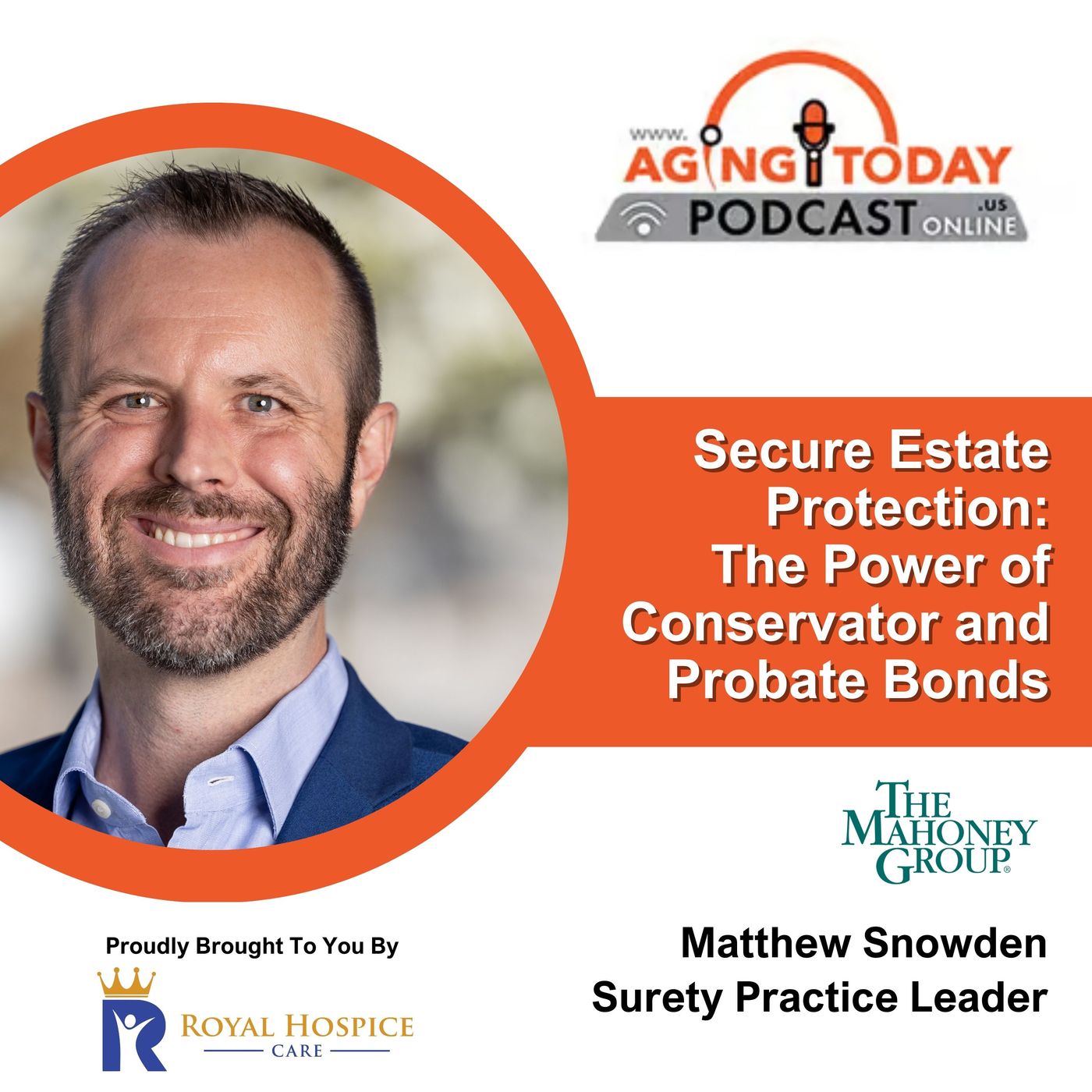
"It's not insurance; it's a guarantee." - Matthew Snowden
Host, Mark Turnbull and guest, Matt Snowden with The Mahoney Group, delve into the complexities of the probate process, the responsibilities of executors, and the importance of understanding...
"It's not insurance; it's a guarantee." - Matthew Snowden
Host, Mark Turnbull and guest, Matt Snowden with The Mahoney Group, delve into the complexities of the probate process, the responsibilities of executors, and the importance of understanding legal terms related to estate management. They discuss the role of wills, bonds, and the necessity of legal guidance in navigating these challenging situations, especially during times of grief.
Matt found himself requiring the services of his own company with emphasizing that planning now will help mitigate cpmplexities of trusts, the role of surety in probate matters, and the importance of legal representation.
Learn more from Matt Snowden and the team at The Mahoney Group.
Special Thanks to Royal Hospice Oregon for the sponsorship and support!
#surety #bonds #wills #probate #AgingTodayPodcast
Buy Mark a Coffee - Support Our Content About Aging!

Like and share Aging Today podcasts with your friends and family!
www.AgingToday.us
0:00 As I've led the Surety practice here for The Mahoney group, I've actually had the opportunity to unfortunately be a consumer of my own product. My father passed away pretty unexpectedly earlier in the year and I was to be the administrator of his estate. And every state has its own probate laws, but in our case, we needed to provide a copy of his will that stated that I would not have to post a bond as the administrator. We could not find an original copy of the will right away when he passed away. And so I had to call my friendly probate bond underwriter with whom we do business and ask that they would co-sign my obligation to my family to honor my father's intentions, dearle fairly and honestly with my fellow heirs and sort out the details of the estate.
0:56 [Music] And now the podcast we're together, we discuss proactive aging on your terms, connecting to the professional advice of our special guests while creating better days throughout the aging process. Now here's your host, Mark Turnbull. Hello everyone and welcome back to another lively discussion on aging today and I just want to remind everybody that we are the podcast where together we explore the many options to aging on your terms. You can find aging today and yes, we've been on the air for eight years and over 500 episodes and just about any topic on the aging related areas we've addressed and we're addressing more and more as we move forward into the future.
1:52 So tune in, go to our website, it's www.AgingToday.us. It's agingToday.us and then I just want to say thank you for all of the many followers that have been tuning in for the past eight years. I love you. You're done. A great job of sending out the message that aging today and we want to address all of the questions that people have on aging and they're a myriad of them. It's not easy aging and we always say that if you're not too busy being born, you're too busy aging. So it applies to all of us. It does not matter your age.
2:32 So tune in and I just want to say thank you. Thank you from the bottom of my heart for supporting us over the past eight years. There's nothing easy about being a leader and a manager and there's so many things that go into being a great leader and one of those things that about being a leader is that you have to wear many hats and one of the couple of things that are the qualities of a great leader is that you're all about managing risk and when it comes to managing risk, you're acting lawfully, not only that, you're a peacemaker, you're a manager and you have to be ethical when it comes to being and if you're ever asked to be an executor and that's what it takes to be an executor.
3:24 You've got to manage those risks that are out there and here to guide us down that road of managing risk is our guest Matt Snowden. You may know Matt from behind the scenes over the past eight years he's been with aging today and I just want to say Matt thank you for all the efforts that you've done in making this show possible in the past but now in the future looking forward, we get to see your face and we're going to talk about your expertise and what we're going to be talking about is conservatorship and probate bonds. Matt welcome to aging today. Mark honored to be here with you. Yeah, yeah, it's good to see your face out there in the public and I'm so looking forward to our conversation today.
4:13 So Matt, we always start out our episodes as you know with what's in your story and we want to know a little bit about you so tell us how you got to be an expert in the insurance industry and in particular when it comes to probate, when it comes to bonds and then how you can help manage our risk moving forward. Sure, thanks Mark, I'd love to. I grew up in a small town in Appalachia and made my way to Arizona State where I studied finance, spent my career in financial services and left one of the largest banks in the world to get into the insurance business which is an unusual statement for someone to say and within the insurance business there's this really unique niche called bonding or surety and so it's underwritten and issued by insurance companies but it's actually not an insurance policy.
5:07 It's a financial guarantee. It's to co-sign a promise that somebody made or a surety bond and so given my financial background when I got into the insurance business this niche within a niche of helping folks navigate. And if promise was made, could an insurance company stand beside them or behind them and guarantee that promise was fulfilled became a very interesting place for me to spend my time. Flash forward, I built a company and sold it to one of the largest firms in the country and then as I've led the surety practice here for the Mahoney group, I've actually had the opportunity to unfortunately be a consumer of my own product.
5:52 My father passed away pretty unexpectedly earlier in the year and I was to be the administrator of his estate and every state has its own probate laws but in our case we needed to provide a copy of his will that stated that I would not have to post a bond as the administrator. We could not find an original copy of the will right away when he passed away and so I had to call my friendly probate bond underwriter with whom we do business and ask that they would co-sign my obligation to my family to honor my father's intentions, dearle fairly and honestly with my fellow heirs and sort out the details of the estate.
6:39 We got through that or I should say we're still in the middle of that but we found the original will and so we were able to release that bond after the process had begun but had we not found it I'd still be co-signed so to speak by the surety company that felt that I was credible and credit worthy enough to stand in that fiduciary position on behalf of my father's estate. Like I said in my intro is that being a leader, being an executive administrator of a business state when you've ever been asked to do that, it is a daunting task and there's so many things that you're introduced to that are new and one of those things that oftentimes at least it is for me because I'm also the executor to my mom and dad's estate and as I'm walking through that myself I'm being introduced to all these terms that I've heard but I really never really understood and when you start practicing being the executor and then you see the implications to these terms it takes on a whole new meaning.
7:51 It really does and we should probably clarify for everybody we're not attorneys this is not legal advice and you should certainly consult an attorney because we're going to talk about that later but you do live in a world that for most of us is one or two times in a lifetime that you have to navigate the probate process and the duties that are placed upon you and having dealt with finances my entire professional life and knowing generally what was going on with my father's estate but not all of the details I even found myself at times operating out of order and so I had to go get legal counsel of my own to understand in this particular case what's the appropriate customary and necessary course of action so that a) I'm honoring the intention of the estate and b) I'm not putting my own personal financial well being at risk because you find yourself at times if you operate outside of what is prescribed in that state under that state's legal hierarchy for state matters or trustee matters, fiduciary matters you could find yourself being personally financially liable for those decisions that you execute on behalf of the estate and certainly my children like Christmas presents and my wife likes to live indoors and so we wouldn't want to find me unintentionally making mistakes that cost us any of those important things that we've worked hard for.
9:19 Yeah absolutely so let's begin with some definitions of some terms that we're going to be throwing out in our conversation today because I really want people to understand the power and the impact of understanding what these terms mean so that when you're having a conversation it's an intelligent conversation and you don't get mixed up and crossed over because that's when you get into trouble. Alright so let's start with an executor so well actually let's go back even further. A will so okay it's I think it's pretty self explanatory what a will is but I think it's important to not only understand what a will is and what's in the will but what happens and I know I don't want to go into great detail but if you don't know that you have a will then it's a great question so as as a living person we will all eventually pass away and that will is the document that's intended to guide what happens to the things that matter to us once we're gone and how we'd like them to be handled by those to whom we've entrusted them so whether it's children or animals or financial assets or real estate it will prescribe who gets what and who's in charge of calling those shots and wrapping up those affairs
10:51 and as a living person that's the time that you can draft that will it can't be drafted once you're gone you have to have drafted it it has to meet the state requirements which do vary by state which is another great reason to have an attorney involved not us and for that to be binding it should say who's going to be in charge do they need to post a bond or a surety bond more specifically to administer your estate and ensure their fidelity or faithful execution of their duties and then what do they do with your stuff and if you have liabilities which you very likely will even if they're small how do those get handled and so that will is your governing document for what is to happen with your affairs post mortem.
11:39 Yeah it's the instruction manual it's the what is it was my intent for how things were to be distributed so as the executor your job is to follow the instructions in just right it's not about what I want it's not about what I like it's about what my father wished which fortunately he and I had a great relationship and I had a very good understanding of what he would wish but in some cases and you asked it what happens if there's no will there's no instruction and then the government gets to make decisions for us and so it's playing what happens then so and yeah and I'm assuming there's not there's a lot of people out there that don't have a will or they don't know that they whether they have a will or not from when somebody passes and you'll find out correct correct so oftentimes when there's not a will and let me go back one step an original will so again it may vary by state the state in which my father resided it had to be the original will I had a copy I did not have the original with his wedding signature on it and that made a big difference and so an original copy of the will is presented to the authority could likely be someone within the judicial system locally and that person will look at the will and if it exists they will appoint the person that's supposed to be the executor now if it's contested that's a different matter entirely if it's uncontested hopefully it's as simple as what the will
13:14 instructs but without a will which is very common or within my case as it was with out an original will you could be forced as the administrator to be qualified as the administrator which is subject to the interpretation of the local authority and then be appointed and have to post a bond or the person could die in test date which means that the their affairs are really going to be governed by the judicial system and not by their wishes because in the absence of a will you are left to the the judicial system to determine how your affairs are to be resolved post-mortem and is that where the term probate comes into play great question many times the word probate gets used broadly is all things post-mortem and so probate bond is the bond that is guaranteeing the faithful execution of the executor whoever that may be whether it's a relative or perhaps an attorney or perhaps some officer of the court but also the probate process as a verb the probate process itself is where the judicial system dictates the terms of the resolution of that person's affairs post-mortem yeah yeah and so you used another term that you know people may not be familiar with and that is bond what what is a bond in the simplest terms the bond is a co-guarantee of an
14:46 obligation so we have an obligation in this case to a probate process either under a will or under probate statute and that bond comes along and bonds itself or guarantees that the responsible party will faithfully fiduciary we hear that word a lot will have faithful execution of their duties and they'll deal fairly and honestly with everybody involved and so the bond underwritten by an insurance company sold by an insurance agent but not an insurance product is really a guarantee that if for some reason you failed to act the bond company would have to make it right and then they would pursue you individually personally for remedy so for example if you made a mistake that cost the estate or an error a hundred thousand dollars the bond company if it had to pay that out would not just eat that hundred thousand dollars like an insurance policy would in an auto accident they would actually come to you personally as a guarantor of that bond and say hey we had to pay this out on your behalf we now expect repayment because it is an indemnification not an insurance product so two more terms I'm going to get clarified guardian and conservator thank you they're they're almost the same so for the purposes of this conversation the guardian or the conservator is the person who has the responsibility to act faithfully and in the best interest of award we just
16:20 love definitions around here so award is the person adult or minor who the court has decided cannot handle their own financial affairs a minor cannot enter into contracts so by definition a minor has to have a conservator however an adult with dementia or an adult who has a brain injury or an adult who has some sort of cognitive impairment may not be able to handle their affairs appropriately and legally and so a another qualified person steps in and administers their affairs on their behalf and they have a duty to handle those affairs not in the best interest of the conservator but in the best interest of the ward or the person who is found to be unable to handle their own affairs and there's many instances many implications to what you just described there and I was thinking of you know maybe some adult children don't live in the same state maybe they're living in a different country or maybe they're living across the United States by 3,000 miles away and they haven't seen their parent for a very long time they get noticed you know that mom, dad have dementia or you know whatever yes and then they learn about this and how then do does somebody like that get to be the conservator or the guardian of that person
17:55 in all of these cases I keep coming back to the importance of the attorney not because it's my job to keep in attorneys employed but these are really complicated legal matters that vary by state and by other documents that might exist to govern someone's affairs what happens is the attorney and really in my business it's pretty uncommon to allow someone to enter into a conservatorship or a probate matter without the representation of an attorney and having been through it first hand I can tell you that that's not just because we like to pay attorneys it's because these are really complicated matters that you don't deal with on a daily basis and so what happens is that person has some impairment because of that impairment they've been deemed by the judicial system not by you and I not by the bond company not by their children but by the judicial system as needing to be cared for and have their affairs handled by a third party that third party gets appointed through a legal process and needs to be represented by an attorney this is not a good DIY path and then that attorney would provide the court order to and their information to the bond agent for example myself and we would then understand what is required by the court how much of a bond is required perhaps how long like this person live we very likely need medical records to
19:30 understand how long they might be with us because these these are non-cancellable obligations once we're in a relationship like this we cannot get out of it until the court themes it out no longer necessary and so that legal process tells us what commitment is required we then have to qualify that a caretaker as being worthy of a bond guarantee not everyone can qualify personal credit personal assets all of those things come into play in deciding whether or not that person can actually obtain the required bond and sometimes siblings have to make tough calls about who's the person that's the most likely to be able to satisfy the court be able to satisfy the bond company and then take care of this person that they care about as a surety practice leader that's your titles yes yes so as a surety practice leader when somebody gets into this situation where they need a bond yes who contacts you dude is it my responsibility as when I learned that I'm now the executor or is it the court's responsibility who puts the parties together yeah let's assume for a moment that the executor or the administrator in either case is a loved one they're not a professional that's in the business of doing this as a service they're not mandated by the state to do this that
21:05 this is someone who has stepped into this role has the responsible party for someone else many times they will be told by their attorney you need to go get a bond they might as well have told them to fly to Mars because they've never done a court and they have no idea what that means yeah and no it is not a bail bond that gets you out of jail this is a completely different solution provided through insurance agencies and not all insurance agencies do this so either the newly appointed administrator has a requirement by the court to obtain a bond or they know one is coming and they want to make sure that they can get it before they before the court orders it their attorney may very likely know who to call so many times the attorney will say here you should contact mad at the mahoney group here's his contact information or the attorney may initiate contact but my client is ultimately the administrator or the executor or the person that has been appointed as custodian depending on the details my client is not the attorney it is not the informed person and it is not the deceased not the deceased nor is it the state it's the individual that has to post the guarantee that we have to co-sign which is the executor exactly that's right would be the exact or administrator because those two executor or the administrator depending on the state that is a typically a state dependent
22:38 criteria and we work across all 50 states and so I would hesitate to even begin to tell you what each state's specific requirement is and the same is true if it's a living ward so if it's an adult or a child either case a minor or an adult that can no longer care for themselves it's the person appointed to handle their financial affairs so is it fair to say that there's two types of bonds and a bond is basically an insurance marker correct is is that a good way to also describe what a bond is it's an insurance not insurance protection is it's not insurance because with insurance there's an expectation of loss so there's an expectation that in the event of a claim the insurance company will pay the bill and you're not going to pay them back as the client as the insured in our business if the bond company has to step in and make a payment even though it says insurance company at the top it is not insurance product it's a guarantee and you're expected to repay that loss so no it is not an insurance product it's a guarantee it's more like credit even though it's not there is no credit no loan going on it is more like credit than it is insurance so you're just saying that the person that's the executor is capable of being protected we found them to be trustworthy trust worthy okay that's right and and if they're not and you have to come to the the estate or the ward because we this all falls under the term of
24:15 probate whether it's a living ward or a deceased person in both cases it falls under the probate umbrella our client we are guaranteeing their faithful execution of duties and if they don't our client actually owes us back the money and it's the the state or the ward that is being protected by this product so the the administrator or the executor again depending on the state we're not protecting them we're simply providing a co-guarantee their clarification great clarification I thought it was where you were guarantee you're guaranteeing that they're validity but if something were to go sideways the executor still is financially responsible they're on the hook that's exactly right gotcha gotcha it's a very nuanced world yeah it got kind of confusing for me because the Mahoney group is an insurgency and I was thinking that it was acting a lot like insurance does where you're protecting me for as the executor all you're doing is making sure to let the court system know that I'm I'm valid as the executor you're essentially paying me to take not take your side in the event of a disagreement as funny as that sounds yeah that is so bizarre okay yeah and this is the complexity of our legal system this is the complexity of you
25:53 know at estate planning why why it you know I get it why you say hey we're not promoting you know lawyers so much but we are promoting the protection and a lawyer can give you that kind of protection that's right we need their guidance because you're only going to do this hopefully zero maybe once or twice in your life and so the last thing you want is to DIY one of the most complicated responsibilities you'll ever take on usually in a time of grief and usually people want to act with good intention good intention is not always what the law is looking for sometimes there's an expectation that's a little different than what you think the good intention might be well I'm glad we got that clarified um because I'm also the executor to my mom and dad's estate and my dad is in passway my mom is still living but after my dad passed I mean it's amazing how much time I've spent in front of the attorneys even though they had a will and it was very well spelled out it was eyes were dotted the tees were crossed but everything changes and I would never know have known that the trust would have changed you know and then there's all thing kind of new things I've been learning is that they had a trust between the two of them and then when one passes then there's a survivor's trust there's a marital trust and then there is an exemption trust and it keeps going on and on and on and it's like
27:23 I there's no way I would've been blindsided it's very complicated and yeah and and there's a reason we know we're not trying to be difficult but when someone calls and it's not unique to our firm and they say we need we need a bond for probate matter or living wards adult miners and adults that that requires a custodian it's a very stressful time and we don't like to say it but it's very difficult to place a bond with an insurance with a bond company in the absence of legal representation because it is so easy to your point to unintentionally find yourself on the wrong side of a document or a rule or an understanding and we really do rely on the attorneys to navigate the process and we're just there to ensure faithful execution. Did you know that the unexpected death or incapacitation of a loved one can require someone to step in and handle their affairs with a financial and legal burden to act in their best interest with a personally guaranteed surety bond?
28:33 Advanced planning and knowing in advance who to call and how to navigate the obligation will allow you to focus on your loved ones without the delays burdens and distractions of challenging questions and decisions from a bond underwriter. This did you know segment is provided by Matthew Snowden with the Mahoney group and brought to you by Royal Hospice of Oregon. Yeah. Now how long have you been practicing being a surety? When I started in the business I left banking in 2014 and have progressed through the surety business for I guess that puts us just over 10 years and you must have a million stories.
29:15 I do. Some of the rarely are they happy stories because they're usually really difficult situations that we confront. Yeah. And remember I do a bribe variety of bonds. So the only I don't only do probate bonds but they're usually the ones that stand out as the greatest stories from a you know tugging at your heartstrings wanting to help helping folks navigate challenging situations. We we got to call one time from a gentleman who he had lost his adult daughter and had taken custody of his minor granddaughter and the situation around his adult daughter's passing was heartbreaking and here's this poor granddaughter that needs somebody to care for her and he's the best solution according to the courts and according to his heart. And we had to find a way and again he was represented by an attorney which was critically important. We had to find a way to find a bond company that would honor an obligation that might last another I think 16 years because she was a very very small child and so we're trying to in a time of grief with great complication find a bond company that will step in and say we will we will co-sign this commitment for faithful execution until this child reaches the age of majority which is typically 18 as long as they're fully functional in to become a legal adult and with that we were you know we were
30:53 scrambling to make sure that he could fulfill his familial commitments and we've had cases where adult children were taking care of aged parents and we had to ask really difficult questions about medical records because as interesting as it is to to think about it this way the longer that that aging parent might live the more difficult it is to find somebody that will enter into a non-cancelable commitment that you will be faithful to your duties for as long as that person lives. We cannot cancel that commitment once it's made in most states. So with a child you at least have an idea of when they're going to reach age of majority with an adult who is requiring a custodian that could go on for decades if they're in relatively good health and just not able to handle their affairs.
31:48 Yeah. So just to be clear a probate bond doesn't always go into effect. The only well not the only time but the the time that it does is when there's no will that that's a gimme. It's one of the most common triggers. So in the absence of a will at least in the states where I'm specifically thinking about in the absence of a will that states that the administrator doesn't have to post a bond because that's another statement in the absence of that statement you could bind yourself posting a bond even under a will. So it's in an original will at that and so a bond is not always required in the event of someone's death but when someone steps into that executor or administrator role if the advanced planning was not sufficient and the right documents are not readily available you could find yourself in the position of needing to urgently post a financial commitment bond to step in and handle their affairs without all the right guidelines that you or guidance that you would need to make sure that you're doing things to their wishes. And to your air I mean you have fellow airs in many cases and so you sure you're mourning the loss of a loved one and you're also navigating your fellow airs interest and you can't put yours above theirs.
33:11 Your interest above theirs is is a violation of trust. Yeah. So there's a probate bond and what are the some of the other types of bonds? There's a conservator bond. Yeah for our aging population we're really going to say that within the world of probate bonds it breaks down into living and deceased. In the deceased category it is someone who has passed away a person has been appointed as responsible for administering their affairs postmortem that person may be required to post a bond depending on the state depending on the size of the estate and depending on the documentation around their death. That's probate in the traditional postmortem sense. On the other side of the probate bond world are living wards and a ward is a person that cannot take care of themselves either because they haven't reached the age of majority in their minor or they're a living adult and in both of those cases that administrator that is stepping into that role could be a guardian could be a conservator goes by different names in different states but it's that person that's responsible for faithfully handling their financial affairs and making decisions for them that are in the best interest of the ward not in the best interest of the person taking care of their affairs. When somebody that doesn't have family and they become mentally incapacitated where they can no longer make decisions for themselves
34:47 who appoints a conservator or a guardian is that would it be the state will have a judicial process and through that judicial process they will appoint a representative a personal representative is another term that you commonly hear in our business and so they will appoint someone to the role of conservator administrator whatever the whatever the state requires do they have a preference because there are professional conservators guardians out there that do this for a living but then they could maybe say well based on jacks you know he had a close neighbor would they would they jump in and do that or if maybe some distant relative is living in Ethiopia someplace.
35:39 Yeah good question if the if that interested party is presented to the court and the court deems them to be appropriate then they can be appointed. Grandparents are a good example it's not the parents of the ward it's the grandparents and the grandparents are obviously intending to take care of this person it's not always automatic again in the absence of proper planning and that's really the whole message that I have for your audience today Mark I don't ever want you to need my services. Consult with a proper estate planning attorney that's qualified to do the documentation appropriate for your state if you move if your family composition changes if your assets materially change if you have children whatever the case may be update that document as time goes on so that it is current to where you are in your life for example my wife and I did our state planning we started it before we had children we contemplated future errors errors in our estate plan before we had children so that if something were to happen to us before we updated the documents they were ready for our children to step into that first in line position so yes an interested party can be appointed and that's really going to come down to that particular state and how their judicial process recognizes other interested parties in their standing.
37:05 You kind of alluded to this in a while back but how long does a probate bond last? Great question it's because it can go on for a long time or it could be a short time. It's a long and long and long. It's a non-cancellable obligation that will renew annually until the estate is closed. Many simple estates can be closed inside of a year and all we look for is documentation from the local jurisdiction that shows that you've satisfactorily closed the estate and that we can release our bond and everybody in the transaction will be familiar with that and you'll get the required documentation. I'm also familiar with what I would call not super complex estates that have drug on for eight years and the reason they've drug on is the is the estate administrators have open items maybe there was complexity to a particular holding or a fellow dispute with an air that just hadn't been resolved this can go on for many years and you're going to pay that bond premium each year that you need to renew the commitment and your bond premium is based on the size of the assets and it's stipulated by the by the local judicial system so we actually can't issue a bond without a judicial order that tells us the size and the party and then we can issue then if with paternity representation and satisfactory credit and assets then we can enter into that
38:40 commitment that again is non-cancellable so we're with you from a from a guarantee standpoint until you resolve the estate. Yeah do you have any stories to tell about how there were triggers that have happened with executors that were they got into trouble and maybe there's some things that you can share with us to help all of those of us that are as executors things that we need to be aware of so that we don't get blindsided down the road. Yeah I can give you a really it's relatively small and simple but it also illustrates the magnitude of what could be an otherwise small and routine decision so familiar with an estate where again not particularly large no real dispute among the heirs there was a little bit of complexity in in the financial affairs when the the individual passed away the administrator stepped in and began sorting out the bank accounts the credit card statements any bank loans okay we have we have these assets we have these liabilities well at that moment in time it appeared as though there were going to be sufficient cash assets to satisfy the credit cards and to start resolving the matters so that they could just quickly transition the estate and close it well pretty quickly it became apparent that there were there were open liabilities that were
40:15 not obvious right away money was paid out of the check the in this case a business checking account to satisfy alone and then new liabilities came to light that would have had priority over that loan that was paid off because there's an order of priority in an estate and it's driven by statute and it's different by each state and so you as a normal person operating in totally good will might think well this is a simple bill I'm just going to pay this when and get it taken care of if you pay some bill out of order and this was the trigger in this case that there were there were priority claims that had not been satisfied there were legal bills that needed to be paid to keep proper representation of the estate intact and there were tax matters that had to be resolved funds were used to pay a non-priority creditor before they should have been paid and additional liquidity came into the estate and everything worked out okay but that administrator could have potentially found themselves in a position where they were personally responsible for making right a financial transaction that could not be unwound because they were just operating in good faith and good faith is not enough there's also statute and that's why the attorney guidance is so important to helping you pay the right people at the right time and not finding yourself on
41:45 the wrong side of a claim bonded or unbonded it's true either way even in the absence of a bond because you know all the proper planning was in place you could still find yourself on the wrong side of priority if you don't get good legal guidance yeah so the obvious question is how much does it cost and oh yeah good question who pays it you got always got to ask the question it's a great question so it's going to vary by creditworthiness of the applicant it's going to vary by state it's going to vary by size you know routine call it you know two hundred thousand dollar relatively small estate that's not complex you're probably talking in four hundred bucks for the year maybe five hundred bucks for the year for the bond as the bond amount gets larger and the commitment gets longer those can go up pretty substantially but a relatively small estate that's only likely to be open for a year not terribly expensive a living but it's on a sliding scale it is it is so yeah the larger the estate the larger the bond requirement that's going to be imposed on you by the court and the larger the bond requirement the larger the premium because our bond premium is just a percentage typically of the bond amount and it is more expensive so to speak to guarantee the affairs of a living ward than it is to guarantee the faithful administration of a deceased estate what happens when you run out of money I have the problem in my world because of yeah the
43:21 lot of times you know people are cash poor and property rich or asset rich whatever that means then what happens well you actually ask two different questions which are both very interesting the first one is what happens if we have assets but not enough cash to pay the bills in that case you're either faced with injecting outside cash to satisfy the affairs of the estate which you're typically not required to do so you're in a lot of ways throwing good money after bad or your force to start liquidating assets of the estate to create liquidity and pay bills and many times you can work with all of the interested parties and and establish hey we're going to sell these assets we're going to pay these bills it's all very administratively driven by the judicial system and so they will typically expect an accounting of the estate and you'll have to answer for we had this much in assets they were just kind of property this kind of cash this kind of shadow or you know cars boats guns whatever the person owned this is how we liquidated them we turn them into this much cash and we paid these bills and there's a claims process where a creditor is notified it needs to be notified of the death of an individual and then they need to file a claim with the appropriate authority and then that authority has a record that you are responsible to pay that debt out of the
44:55 proceeds of the estate before you can close it and in the event that the estate does not have sufficient assets even after liquidation to pay all of the creditors again you need to consult with an attorney but you tip you're just effectively dealing with a bankrupt estate and so whatever's available will go to the priority creditors with nothing left for those that don't have priority and in many cases that can be the errors of the deceased that don't get anything yeah and I'm wondering if I don't know if you see this or if this is more of an attorney type question but let's say I find out in the will that I'm the executor and because of all this conversation I don't want to be the executor I don't want to be on the hook can I back out of being the executor yeah you're going to want to get legal representation it's typically you typically can't be conscribed to service in most cases there you have to accept the responsibility and and if you don't then there's typically a judicial process to appoint the next in line the next line yeah in some cases there can be disputes among the errors and so sometimes the court has to hear that dispute to also adjudicate who's going to be in charge yeah is there anything else that that you want to share with with us about probate bonds and I think it's I think it's important to understand that the bond company is not there
46:28 to protect you the bond company is there as a backstop my biggest takeaway yeah I wish I could tell you that you know we're your best friend when we write the bond and where your worst enemy when things go wrong and it's not because we desire that it's just the nature of the obligation and yeah and we're not legal counsel you really do need qualified legal counsel typically in that local market where you're dealing with the issue in your example where an error is across the country there's a very good chance that they're going to need to hire local counsel to navigate the complexities of that local matter and the best thing I can say is don't need me do proper estate planning for your loved ones as difficult as it is consult with your loved ones that may pass ahead of you and get them engaged in the planning process even if they don't want to tell you what's in the document at least have the document and know where it is and how to access it in the time of need mark I'm sure on your program you've talked about advanced directives many times that gets bundled in with this and it can really nobody comes to us having the best day of their life and needing a probate bond because they've either had to step in and take care of a ward or because they've lost a loved one we just add stress to the process and that's not our that's not what we want it's just the nature of bonds are a very invasive underwriting process it's like qualifying for a mortgage we have to know a lot about you and many times that document may not even be handy because you're
47:58 across the country contending with immediate challenges that need to be dealt with and so the the more advanced preparation the better there are cases where folks you know sometimes say a terrible auto accident that puts a minor in a position of needing a conservator we can't always plan our way out of that but really good legal counsel can help you navigate those obligations so that when you do come to us you're you're prepared for what it is exactly that the court is going to mandate that you provide yeah yeah so I got one final question for you and I and just maybe a statement here I thought that you were going to protect me like the good friend that you have always been you've always been protecting me over the last eight years but now I don't need you Matt you know because I've got everything's taken care of in the will as the executor hopefully knock on wood I won't I'm not going to need a you know a probate bond moving forward but but that doesn't mean that I still can't be your friend I've never been more happy not to earn your business mark so so tell us a little bit about those of that are listening out there and they maybe are in a place where you know the will isn't clear and they need a you know a probate bond tell us a little bit about you and how they can get in touch with you and and how all that works
49:32 sure you know we're we're in the business of being found when you need us and so it could be as simple as writing it down and putting it in the file of important papers that you know open upon death or when needed or whatever the case but I'm pretty simple to find my name is Matt Snowden SNOW DEN my email is M Snowden M SNOW DEN at the Mahoney Group dot com that's M Snowden at M-A-H-O-N-E-Y-G-R-O-U-P dot com my phone number is 623 215 1378 again 623 215 1378 I don't get texts at that number you actually have to use it as a telephone which I know is a crazy concept in today's world but typically if I don't pick up I get back to you within 24 hours and you know these things are challenging and so if you have advanced questions I'm more than happy to answer them in hopes that you never need what I have to offer yeah yeah well and and I just want to validate Matt and I've known him for the past eight years and he's a man of integrity and if you do need that assistance or if you do need to ask more in-depth questions or scenarios Matt will be able to assist you and help you to resolve the the conflict that you might find yourself in honor Matt thank you. Thank you. Yeah and Matt I just
51:06 want to say thank you for your friendship thank you for supporting aging today and I just also want to say thank you for you know everything that you've done for us and the the service that you can bring to our listening audience I think is incredible and you can serve all 50 states correct. We can yeah yeah yeah perfect all right well thanks again for being on aging today and this is Mark Turnbull your host and I want to thank all of you for tuning in to aging today we are the podcast where together we're exploring the many options to aging on your terms and remember this we're all aging and we're on the process of aging and as we age we really are better together so stay young at heart.
51:54 You make me feel so young you make me feel like spring has sprung and every time I see your face I'm such a happy individual the moment that she speaks I want to go play hide and see I want to go and bounce the moon just like a toy balloon well you and I I'll just like a bullet dot running across the metal pick and I've lots of forget me not so you made me feel so young you made me feel there are songs to be sung there will still be run and wonderful thing to be fun and when I'm old and grey you've been listening to aging today where together we explore the options to aging on your terms join Mark and his guest next week for another lively discussion on proactively aging on your terms connecting you to the professional advice of his special guests with the goal of creating better days throughout the aging process your host has been Mark Turnbull join Mark and his guest every week on aging today your podcast to exploring your options for aging on your terms and you when I'm old and grey you make me feel the way I feel today because you make me feel so you make me feel so you make me feel so young
53:35 you make me feel so young you make me feel so young