

 YouTube

 Apple Podcasts

 Spotify

 RSS Feed

 Spreaker

 iHeartRadio

 Castbox

 JioSaavn

 Pandora

 Deezer

 Podcast Addict

 Amazon Music
Missy Buchanan: Feeling Your Way Through Grief
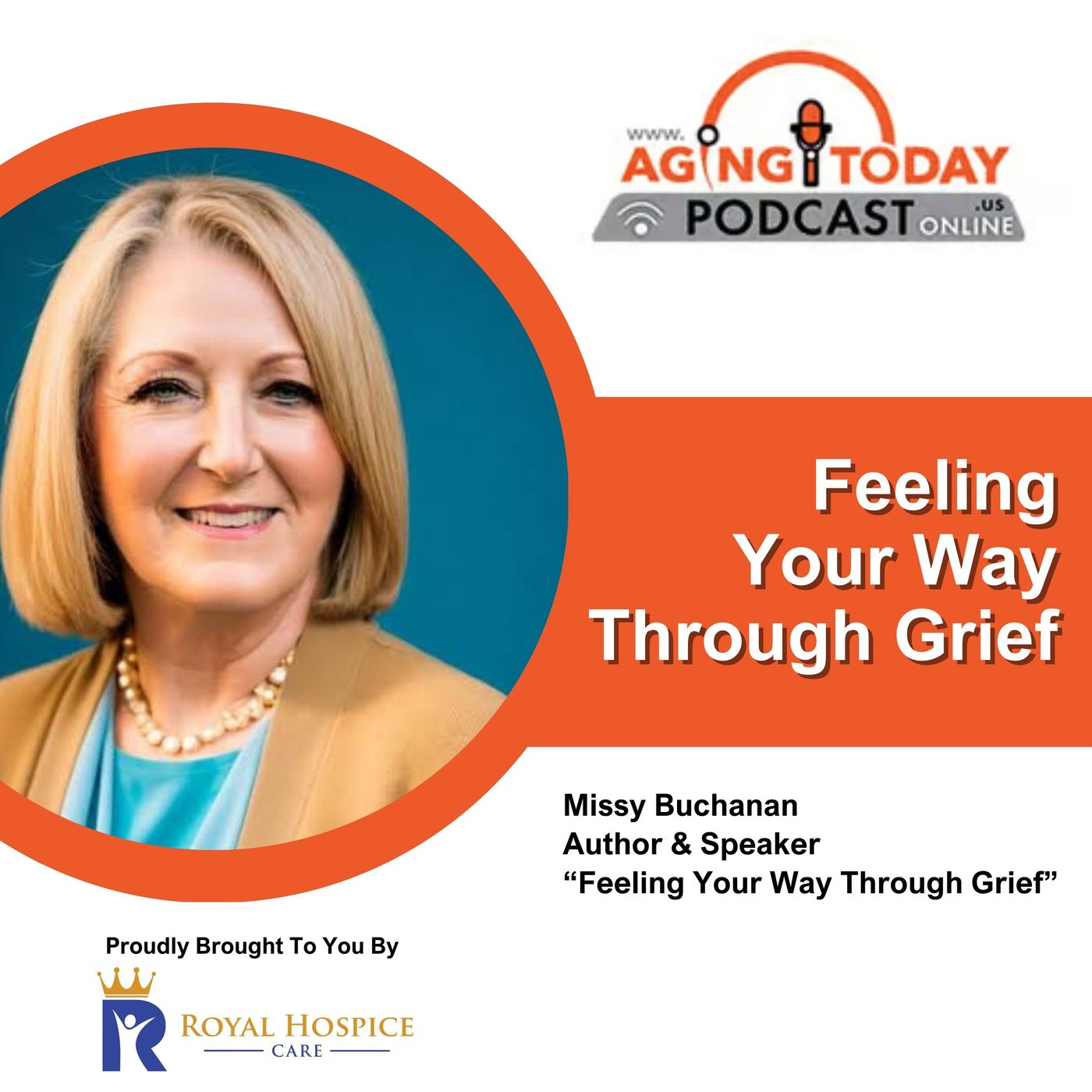
"Grief is love." - Missy Buchanan
Host Mark Turnbull welcomes back author Missy Buchanan to discuss her new book, 'Feeling Your Way Through Grief.' The conversation explores the complexities of grief, the importance of acknowledging loss, and how to...
Host Mark Turnbull welcomes back author Missy Buchanan to discuss her new book, 'Feeling Your Way Through Grief.' The conversation explores the complexities of grief, the importance of acknowledging loss, and how to navigate the emotional landscape that follows.
Missy shares her personal journey of loss after the death of her husband, the triggers that evoke memories, and the significance of allowing oneself to feel and express grief. The discussion also touches on the impact of grief during holidays and the importance of finding purpose and connection in the aftermath of loss.
Learn more about Missy Buchanan and her book: https://missybuchanan.com/
Contact Aging Today Podcast: https://www.agingtoday.us/
#aging #grief #loss #MissyBuchanan #podcast #agingprocess #emotionalhealth #copingstrategies #personalstories #healing
Buy Mark a Coffee - Support Our Content About Aging!

Like and share Aging Today podcasts with your friends and family!
www.AgingToday.us
0:00 If by the night till quarter to three would you lock the door? Will you still leave me? Will you still leave me? When I'm sixty four? And now the podcast we're together we discuss proactive aging on your terms, connecting to the professional advice of our special guests, while creating better days throughout the aging process. Now here's your host, Mark Turnbull. Hello everyone and I want to welcome everyone back to another lively discussion on aging today.
0:42 We are the podcast where together we explore the many options to aging on your terms. You can find aging today and our past eight years believe it or not eight years on the air and all you got to do if you want to go back and see some of our programs. All you got to do is go to our website agingtoday.us and you can see all of the over 500 episodes that we've recorded. Now this is today is a very special day because this is our first video recording. We are graduating to YouTube and so we're excited to be able to bring the visual to you.
1:23 And hopefully I'm not going to scare too many of you away. So let's see where that goes. And then all of you that are following us on your favorite podcast channels such as Spotify, Pandora, and there's about fifteen others that were on and now YouTube. All you have to do is tune in and follow us on your favorite podcast channel. And then I also want to say thank you to the multitudes of people who have been tuning in over the years since 2017 that has made this show and continues to make this show. You are the ones why we're here and we want you to know that we want to address all the questions that you're asking about the aging process.
2:10 And it's your questions that initiate how and who the guests are that come on to aging today. But we also want to know some of your aging experts. If you have somebody that you would recommend to us all you got to do is reach out to me, your host Mark Turnbull. And my email is mark@agentoday.us. It's mark with a K and it's mark@agentoday.us. Well, we talk about a lot of different topics on this podcast and it's all related to the aging process. And I always say that if you're not too busy being born, you're too busy aging.
2:51 And aging happens whether you're fifteen years or a hundred and fifteen years. I'm not sure anybody's alive today that's a hundred fifteen, but there may be somebody out there and congratulations you've defined the laws of gravity. And so we definitely want to acknowledge all of you that are aging. But one thing that I know that is certain in life and it's just a matter of time before all of us will begin to experience losses, losses of something or someone in our lives. And when we experience loss, grief takes over.
3:34 And here at a guide us today through the process of grieving and the grief process is our guide and she's an incredible author. She's an incredible human being. Her name is Missy Buchanan. Missy welcome to aging today. It is so great to be back with you, Mark. Thank you. Yeah, and we have had you on in the past and for our listening audience, the topic that we discussed was, do you remember what it was? The best that I remember. I think it was about faithful aging and the challenges of aging and how we look at aging as not something to be dreaded, but more of an adventure.
4:25 And what we can do to prepare for it. Yeah. Absolutely. But today we're going to be talking about your new book and I'm excited to learn more about that. I did have the opportunity to read it and I was very impressed with the approach and the style in which you write. And but before we do that, before we get into your book, I always start out with all of my guests and I know you've been a guest in the past, but for those that are tuning in for the first time, I want them to hear a little bit of your story.
5:05 What's in your story and how did you get to this place where you are a well known author and well known speaker? Well, I write on faithful aging and that all came about as I was being a caregiver for my own aging parents. And I realized as I would interact with them at their senior living community, how different residents would say one to the other. How you doing today? And the answer was often, I'm just here. I'm just here. And that really broke my heart because you know that just it made it sound like they were just waiting to die.
5:51 And I thought, yeah, that's not number one. As a person to fight that, I don't think that's how God intends for us to live out our last years. And so we have purpose and so I began to write actually for my own parents just writing little devotional, something they could read very quickly because I didn't find anything out there that was written in their heart language, I call it. And so I just began to write for them and the first book was called Living with Purpose in a Worn Out Body. It just been one after another and now I get to speak to so many different senior living communities and church groups and aging conferences and it's just been an amazing ride that I never anticipated.
6:39 But this last book came about, it was the one I never intended to write. A book on grief was something that I never, never wanted to write number one, but I also had thought to myself, you know, there's so many books on grief out there that they didn't eat another book. But I found that when my husband died, it's been a year ago. He died in April of 2023. And what I realized as I brought out all these books that I already had on my shelves, you know, I had at least a dozen and I began to go through them and one by one they either felt like a textbook, like it was too academic, they had homework and I didn't want to do homework.
7:25 Or they were just cliches and things like that and I'm sure at a different point in my life, the information would have been very, very helpful. But in that moment I was looking for something that spoke to my heart, my broken heart. And when I couldn't find it, I just began to write little snippets as if I was talking to him. And I began to post every once in a while something like that on Facebook and then, oh my goodness, the response that I got from people that would private message me and say, oh, this is exactly how I felt, you know, even though their circumstances were different, the feelings were the same.
8:06 And so when my publisher, I put room, we talked and I said, you know, I think maybe I will do a book on grief, but it's not going to be something that's a one, two, three step by step process or whatever. It's just all about getting in touch with those feelings. And so that's where the book, feeling your way through grief, that's how it came to be. Now in your book, I think you described that there's three sections to the book. And it described in a little more detail what your intentions were with those three sections. Well, actually the publisher chose to put them in that order and I had not really thought about it, you know, but they wanted to do something that were more ordinary, just those little things that happened that just kept you off guard, you know.
9:00 Just the door knob, open the door trying to go outside of the door handle comes off in my hand and I'm like, now what do I do? And just those little things or the smell of soap, just all those little things that just kept you by surprise. But then there are those things that are that we can plan for things like holidays and celebrations and, you know, anniversaries and birthdays and whatever. And for those events, you have an opportunity to think about, how do I want to spend that birthday?
9:40 You know, I remember coming up on a very first birthday after his death and thinking, okay, now what do I want to do? You know, and my kids were great and they were like, mom, we can come be with you. You know, what, what do you want to do? And finally, told them, I said, you know, I think I just want to stay home and stay mostly in my pajamas and I'm going to fix pecan waffles that were his favorite. And his favorite bacon and I was going to watch Top Gun, which was his favorite movie and I was going to cry and laugh through it. And that's what I did. And so for Christmas and things like that, it doesn't mean it's going to turn out exactly as you thought, but you do have an advance notice and thinking about, how am I going to approach this?
10:28 And that's very different than those things that just happens spontaneously. Yeah, yeah. And I think a really good place for us to go back to just to kind of rewind a little bit is, you know, help our listening audience as you were experiencing this journey with the loss of your husband. And again, you know, I don't want this to be about the definitions of grief, but in your mind, what is grief? And I think that would be helpful to many people out there as they experience loss. Yeah, I think grief is is as individual as our fingerprints.
11:11 But I think grief is love, you know, I don't think you grieve deeply if you didn't love deeply. And it's that sense of that life is just taking a total different direction than what you want. It's looking out and thinking broken dreams and things you're not going to get to do together and so it can bring this profound loneliness and sadness and disappointment, all those things rolled up, but I think the essence of it is love. Yeah, yeah, I would agree with that. And one of the things that I've been doing a lot of research and study myself because I speak on grief in particular. And it's, it's something that is deep inside of us when we experience that loss.
12:06 It's the deep, the anguish, the feelings that that of experiencing a particular loss, whether that's, you know, thoughts and beliefs and all of those things they live in the body. And one of the things that you mentioned is the bubbling up and I think that people need to understand that when you have a significant loss in your life, that grief never goes away. And it's laying, it's laying there, it's lying there, waiting to surface and it has to have a release valve. I look at it like a release valve or like a geyser, you know, like old faithful.
12:54 Sometimes it's just violent and it's released and sometimes it's very calm. And one of the things as I looked at that definition and how I see grief and how it manifests itself, I saw that in your book. And I don't know if that was intentional, but each chapter, there was a trigger that inspired you to write. Oh, absolutely. Which you were going, which you were eloquently, you know, describing there just a little while ago. And I said it was the hardest, easiest book that I've ever written. It was easy because my goodness, it was, it was written in real time. And so these were things I was experiencing just as you were describing.
13:39 And I, you know, you were talking about the bubbling up thing and I think that's so true just yesterday, a prime example. And I moved and built a little two bedroom cottage down in the hill country of Texas to be nearer my son. And I had decided this about a year ago that I was, if I could find the right place and whatever, because I have one daughter that's in California, one that's in Ireland and then my son who's in the hill country. And so I was at, you know, at least four hours away. And I thought, I need to, you know, I need to be closer to them. So I built this little cottage and it's been great and whatever. And so that meant leaving behind a church and friends that I'd had for 43 years.
14:22 And that was hard. And that's a different kind of grief just as you were explaining because we don't just agree the loss of people through death. We, we grieve over things we leave behind and friends we leave behind and whatever. But I knew I wanted to do this. And so yesterday was the day that I chose to join the new church. And after 43 years in my own church in back in Rockwall. And I knew that it was going to be hard, you know. Over a year since Barry died, but still to go up by myself and what are in standing front of the church and what are, you know, I just said tears in my eyes.
15:03 And luckily the minister knew what was going on. And so as soon as the services ever she pulls out the clean necks this for me, you know, which I appreciate it. But it's like, yes, those things still bubble up, you know, it can be a song. And it can be, you know, if the blueberry hill was what his favorites and that comes on the radio or on something I'm listening to and whatever. And you know, I just hear it comes. It just comes. Yeah. And that's I think that's a great example in sharing. Thank you for sharing that because, you know, when you've experienced that loss, there's a sacredness to that. And sometimes we get the guilt shame and the judgment that runs through and say, well, I can't change. I can't I can't do anything else. I can't do anything new.
15:50 I can't have any new relationships because of, you know, maybe those things are bubbling up inside of you. And I think that, you know, there's a balance there of give yourself that time to, you know, let you know, hang on to some of those things. But there's going to be that time when you have to move forward. How did you know that it was that time for you to move forward and begin to relinquish or let loose some of these things like just even choosing a church? You know, I think a lot of it and I do, I look at grief is being a companion. It's a companion that's with us and it's intertwined with life.
16:33 And it always will be for me from this point on and I totally get that. I've tried to be proactive in thinking what I wanted my children, my adult children to take away. I did not want to, for them, let's say that I were to become ill or whatever, I didn't want them to have to stop their lives to come up and take care of me and what it was like. I wanted while I was still able, I wanted to make that move knowing that it was going to be hard. But I just knew in my, my God that it was the right thing to do. And so it's, I think by wrestling with all those emotions and by giving myself permission to feel.
17:18 To feel all those feelings, whether it's anger or sadness or loneliness or whatever it is, I have given myself permission to feel them and not be ashamed of them. Because I've heard too many, actually a lot of older adults that will, they will say things like, well, you got to have a stiff upper lip and I'm like, no, you don't. You know, I don't think that's what life is about having a stiff upper lip. I'm going to, it's okay that I stood in front of that church and had tears rolling down my face. It's okay. Because it's, I think it's in that vulnerability that we are strong. And it's when I allow others to see, yeah, this hurts, but I'm doing it anyway.
18:07 That's where I get my courage. And so I think that's, and I try to think of it as how can I model this for my adult children? That's been real important to me. Yeah, I love that word that you use that grief is your companion. And I think that that's pretty accurate from what I've experienced in my own life. And then as you know, I've experienced that through other people's life. Is that if we allow grief to be our companion or I call it our teacher, there's many, many things that we can learn about ourselves.
18:47 And as we work through some of the losses and some of the grief that we're experiencing. And, and there's no doubt about grief is complex. And I call it an inside job. It's, it's inside of us. And I think also one of the things that I've acknowledged about, about grief is that it doesn't need to control us. But it will always be with us. And there's a big difference there. How do you see that? I totally agree. You know, it's like I am very aware of it. You know, this morning I went out on the back porch was the first day that I really felt cool enough just to go out and have my coffee.
19:36 And it was like I was sad. But at the same time, there was a sense of hope and looking forward. And, and I've learned to get comfortable with that. I've also learned that it's when I face those really hard feelings. And I write about this in the book about the first time that I listened to voicemails that that Barry had left on my phone, you know, the month a few months before he died. And, and I went back to listen to them and I had dreaded it. I had really dreaded it because I didn't know what they were going to say. And I, but I knew just hearing his voice was going to trigger.
20:18 But I thought, no, I want to do this. I really need to do this. And the first one, you know, he says something to the fact of he was calling. He said, I just called to hear your voice. You know, I just needed to hear your voice. Well, I just lost it. You know, I just lost it because I thought I'm not ever going to hear his voice again in this lifetime. And yet, and so I mean, I just sobbed. I just sobbed and sobbed. But what was interesting was that I came out on the other side of that feeling lighter and brighter. And so I think it's when we face instead of try to run from those feelings when we just lean into them. Knowing that it's going to be hard, I think that's when we can really take grief is our companion and walk through the rest of life. At least that's what I'm planning on doing.
21:10 Yeah. Yeah. And I think there's there's a lot of value in that too, just hearing somebody's voice. You know, I'm often, you know, when music plays that role in our lives. And you know, when you think about your life story, at least I do for myself that there's specific types of music in my past. And when I'm going through a loss, there may be a music that, you know, can identify with that loss of memory with that person back in time.
21:53 And when I hear that music, it's actually very can be sorrowful, but then it turns into fond memories that begin to trigger. And that's what I love about your book is that you take the trigger points that you've experienced in your life. And you wrote them down for all of us to be able to feel those things like the rocking, the rocking chair, the, there's the very first one. Describe what happened in that moment that inspired you to write about the rocking chair.
22:34 The rocking chairs, we lived in a wonderful neighborhood where we had downsize to and had a, just a sweet, you know, small cottage and whatever. And we had two rocking chairs out there. And we had been living there since all the kids had grown and, and, or off and about. And, you know, life was simple and it was wonderful. And then we often would go out and sit on the, you know, in the evening and, you know, wave at the neighbors and whatever. But during COVID, particularly, that became our little respite, you know, because it was like you could go out in the world, but be safe at the same time.
23:15 And we could talk to neighbors who were passing by and whatever. And, you know, they were out walking their dogs and just, it was just this wonderful place. And we could base time with the grandkids and whatever, but we'd sit in those two rockers. And so after Barry died, it was like, that became a really, that was hard to even think about wanting to go out and sit in those rocking chairs on the porch. Because that was something we just did together. We just sit out there and talk all the time. And then it was, you know, you realized you're not going to have that person to talk with anymore. You know, you're on your own. And that was really hard. It was like, I left that particular one in a question. Like, will I go back out there? You know, or will I not? I don't know.
24:04 Because I don't think there's a wrong answer. Wouldn't have been wrong if I didn't. I did eventually go back out. But it was not until I was ready to do so. And I think there again, everybody has their own stories. And it may not be rocking chairs for somebody else. It would be, but I think it triggers something that they can go, oh, that's like for me, blah, blah, blah. And that was the goal, I think, in writing it was that I know you're not going to have the various same experiences that I had, but I think that it will trigger things with you and prompt you to think about something that you can go, oh, yes, I know exactly what you're talking about.
24:46 Did you know grief is a universal consequence of a significant life loss? If you're a human living on planet Earth, then you know loss happens. Loss is a part of life. Nothing can prepare us for the death of a loved one. And nothing is ever the same after. Grief can bring on pain, isolation and confusion. And grief is a normal and natural response to loss. It lives on in our bodies. And keeping grief inside only increases the pain. So how do you ever begin to live life after loss? With new awareness, you can discover how curiosity and self-care can be lifelines to radiant living. And take your life back from grief's grip.
25:33 With grief as your teacher, it is possible to move beyond your grief. If you are feeling overwhelmed in your grief, there are numerous resources available to assist you in your grief journey. Reach out to aging today and we can assist you in connecting with the many grief resources that are within your reach. This did you know moment was brought to you today by Royal Hospice of Oregon. Yeah, absolutely. One of the other chapters that struck me was "Tell me a story." The chapter on "Tell me a story." And my wife will often say when she has a hard time sleeping at night, she says, "Tell me a story." And as soon as I start talking, she falls asleep.
26:21 That's how engaging I am as a community. But it exclaimed that story because I think it was very similar, not the same, but similar. Just to describe that, we had this little thing if I was awake and whatever. And I would say, "Tell me a story." And I do it in a silly kid-like voice and whatever. And he would go, "Well, what do you want to hear about?" And I would say, "Well, tell me about when you were a kid and did such and such or tell me whatever." And then toward the end of that little piece and whatever, it's like, I realized, "I didn't hear all of his stories."
27:04 And that makes me sad because I'm sure there were stories that I never thought about asking about. And some of the stories I heard over and over, not in care. It was just a little fun thing that we did between the two of us, but it was part of our routine. And that just made it special. And those are the hard things, those little silly things in most people's minds. But yet when it's your life, it takes on all different meaning. Yeah. And I'm sure with the passing of Barry, I'm certain that probably what you experience was deep, deep anguish. And you've had to work through that. How many years has it been?
27:50 He died in April of 2023, such as been a, you know, close to a year and a half now. Just a year. And my question to you is, you know, as all of us when we experience losses in our lives and, you know, the closer we are to someone or something and we experience that loss, you know, I'm sure that we'll all go through that deep, deep anguish. I think that one of the things that, you know, I want everybody to know that that grief is is not a life sentence, meaning that you're not going to be stuck there. Hopefully you're not going to be stuck there forever.
28:34 Yet that grief will always remain with us. How has the grief in that year's time evolved for you? And I'm certain that it'll continue to evolve as long as we take the responsibility as human beings. And it's just to manage that grief. How has it changed for you? Yes, it has changed. And it's, it's lessened in some ways. It's like, you know, there were particularly probably the first six months to a year. It's like, I don't think there was a day that went by that I didn't cry. You know, there'd just be something that would trigger tears and they might not last long or it might, you know.
29:15 And I just kind of got used to that. And, and I've realized that particularly as I kind of, you know, made transition to a new house and whatever. And, and I feel more comfortable in handling all the finances and things like that that I hadn't done before. You know, I'm feeling that sense of responsibility and whatever. But with each step that I take, it's, it's not that it goes away because it definitely does not just like it did not yesterday. But you, you learn that number one, it's not going to last as long that that moment of just anguish and whatever, just like yesterday joining the church.
29:56 I mean, I literally went to the car and just went, but then I came home and it was like, OK, now I'm ready for lunch. And so it's, it's been interesting to see how that's, you know, it's not, it's not, I know that I'm not going to stay there. And that's what I tell the kids, my, my adult children, whatever, they know that when I tell them, I'm going to have a raw day. There's just something that I know that's, you know, coming up or that I'm feeling it. And if it's a day that I don't want to talk, you know, or face time or whatever, I'll just say today's a raw day. And that, that signals to them, I think that it's, you know, mom's going to be OK.
30:39 She's going to be sad today. But it's OK. And I think it gives them permission to do the same because they're grieving too, just, you know, differently. But I think that it's like, you know that it's there and it doesn't go away. But the weight is not as heavy. I think that's probably the best way that I can describe it. Yeah. Yeah. Yeah. And, and you have to look at it, you know, another way to look at it too is each year that goes by, you'll never forget your, the loss of Barry.
31:21 You'll never forget, you know, the touch, the special touch that he's had on your life. Even as you, you know, go on in other relationships. And I think that's one of the fears that many people have is the fear of losing touch with the special touch that that person brought into their lives. And I don't think that's true because there's all kinds of, like you write in your book, there's all kinds of things that happen during the day that trigger memories of our loved ones. Totally. And, you know, for me, I think it's, it's been a lot about maintaining purpose.
32:07 Yeah. I, I probably took off about six weeks, two months, maybe before, you know, canceling speaking events that I had done was, were on my calendar or in whatever and things like that. And then I hop back into it. Knowing, knowing it was going to be hard. And I, you know, I remember the first group that I spoke to after he died. You know, I told him, boy, even started, I said, okay, there's going to come a point in here that I'm probably going to cry and I'm just going to give you all a heads up. And they were so sweet and so supportive and whatever. But it was like, I needed to get back into the rhythm of things that are important to me, which is, you know, speaking to older adult groups and writing and doing all those things and a travel to speak.
32:55 Yes, that was hard because I was so used to him most of the time he would travel with me. And so now I was traveling alone and it wasn't nearly as much fun. But I had a reason to do it. And I know that that's, you know, that's continuing to propel me forward. And so to me, that's real important is not to lose sight of whatever that purpose is that we have. You know, purpose is being a grandmother and whatever, you know, moving down here, I'm closer to three of my four grandchildren and able to participate in more of their daily lives than I was before. Well, that's a blessing. And so, you know, I have to always stop and think about, yes, I gave 43 years of friendships there. But on the other hand, I'm also getting an opportunity to be with my grandchildren more. And that's huge.
33:46 Yeah, it's, it's constantly just reflecting on those things, I think. And life life has to move forward. It does. And I am a firm believer in that life has to move forward. And yeah. And that's not being disrespectful to you. No, no, no, no. My husband would have been the first to say that. I think he would be very proud and not wanting me to be stuck. And so that's what I've tried to do. Yeah. Yeah. And it's really sad to see somebody that is stuck in their grief and they haven't been able to move forward. And if they, if you came across somebody like that that was stuck in their grief, how would you counsel them? What would you say?
34:34 Well, that's hard. I mean, it's hard without really knowing them and whatever. Probably would vary. I do think that's true. And I think people are often stuck because they are not willing to be in touch with their emotions. You know, I think the more we are less likely to be stuck if we're willing to lean into all of those and to say, okay, this is, I'm going to be really sad today. Or, you know, that this, they want me to do such and such for Christmas and I just don't want to do that and whatever. And that's okay. You know, I think the people that tend to get stuck are those that are kind of in denial and just never really wrestle with those emotions.
35:17 And I think the kind of like I was saying, when you lean into those really hard things, you come out on the other side feeling lighter and brighter. And so I think that's the message that I would try to share with someone who seems to be stuck. And on the other hand, everybody greets at their own pace. And so I don't want to put a timeline on anybody's grief, you know, because I don't, I think that's not fair either. So, you know, encouraging them to wrestle with those emotions and at the same time, you know, take, take that little mini step forward. Sometimes that's all we can do is just take that very small step.
35:58 Yeah. One of the things that I know about grief in my own personal life and just in, as I talk with many, many people out there is that grief lives in our bodies. And I, that, that's an interesting way to look at it. What I mean by living in our bodies is that it lives in our brains. It lives in our heart. I mean, I know people, my grandfather being one who, when my grandmother died, my grandfather was a tough old logger. And he died of a broken heart. And I don't think, and I really truly believe that. I mean, he was one strong dude.
36:45 And when he lost the love of his life, you know, he, he lost his purpose for living in, in some respects. So grief lives in our brains. It lives in our hearts. It lives in our tears. It lives in our immune system. I mean, if you don't take care of that grief, you can really wear your body down and then you're susceptible to all kinds of other infections and things like that. It can affect our appetite. It can affect our sleep. I mean, there's so many ways that grief affects and lives inside of our body. For you in particular, if we can get personal here, how did, if you were to look at those categories, I just brought to you.
37:29 Which one affected you the most? I think I've tried to be very cognizant about eating well. It would have been very easy to just not care. And very easy not to exercise. I mean, to be real honest, because it's, you know, I, I, I think you feel like you have an excuse. And I'm not to say that I do it well all the time. I don't. But I tried to be very deliberate with, with, you know, eating, eating alone is just yucky. I mean, it's just not very much fun. Cooking for one is not much fun. But I do try to find, you're like, okay, you know, our local grocery store here has wonderful little simple meals of salmon already done up for you.
38:20 And you all get to do this, pop it in. It's like, you know, that's what I'll do. But I try to choose well. And I try to get up in the mornings and do my walking and then cherry yoga and whatever. Just because I know I need to and I want to, I want to be as healthy as I can be as number one just to take care of myself. But also because, you know, I travel and I speak and I've, I've got to keep up my energy in order to do that. So that's been real important. On the other hand, I think that it's also like I give myself permission just to be sometimes it's like I love having a day where I have no responsibilities and, and I just give myself permission just to, you know, I can just watch a hallmark movie or whatever I want to do.
39:14 And just rest and just rest and I think that's important. Yeah, I don't, other than that, I don't know that answers your question. I think I think you're right about that. Yeah, no, no, I think that does. And I think it again, it's so different for everybody. Everybody approaches it differently, but you know, it's, it's going to affect us and it lives inside of our bodies. I think that's the principle. And the principle is, okay, so the solution to the principle is how do you address that? And one of the things that you said so clearly was being deliberate and keeping your life moving forward. I mean, one of the things that that you have that maybe not everybody has is that a structure of being.
40:03 And being in front of groups and speaking and writing and doing all those things, but it doesn't matter because everybody has something in their life that they can be deliberate with. I think that's true. And that's being that intentional, whether it's volunteering somewhere, it doesn't mean you have to do it every day, you know, but it just having one day a week where you know somebody's counting on you to do something. And it kind of puts a little pep in your step, you know, and I think that's hugely important, but we do have to be intentional about that. I've seen people kind of go another route in whatever in which they over schedule just trying to fill their time.
40:45 And I don't think that's very helpful either, you know, to just fill your days with so many things just so you don't have to think about being alone or what that grief feels like or whatever. And all of that, it's about a balance, you know, it's being intentional on one hand and then on the other hand giving you self permission just to rest at the, however, works for you. I just think both of those things together is what makes it work. At least it does for me. Yeah. And when those times when the bubbling does occur, whether it's a gentle bubble or a violent bubble, you know, we can't live in this world of guilt, shame and judgment when those times happen. Just let them go because it's a relief valve.
41:32 It's like I remember watching my mom, you know, they did she did a lot of canning back in the day, right? And so there's that little valve that release valve on top of the pot, you know, when it gets too much pressure in there, it releases that steam. And you have to think of it that same way is as we experience our grief and as it lives inside of our bodies, you know, we, we all need that relief valve, whatever that may be. Right. And to get past that notion of stiff upper lip thing and, you know, I've got to be almost stoic in whatever. And so, you know, that's the message I really try to share with people is like, give yourself permission to cry.
42:16 Give yourself permission to be angry, give yourself permission to, you know, whatever those emotions are, just feel them. And thus the title of the book, feeling your way through grief, it's not about thinking it through, it's not about, you know, doing your homework through it and whatever. And whatever those things all have their place in time, but this is just to get in touch with those feelings and say, it's okay. It's absolutely okay. If that means you got to wear waterproof mascara when you go out, wear waterproof mascara. If you're worried about having it run down your face. So, you know, whatever, whatever it takes just to say, it's okay to feel any of those things. My brother, he lost his wife just, just like three weeks after Barry died.
43:08 And he said that he would get where your people come into him and saying, how are you doing? And he said, I know they're well intentioned, whatever. You just get tired of answering it, you know, and he said, he said, now he answers, I'm okay until I'm not. And I told him, I said, that's terrific. That's such a great way of saying it. I'm okay until I'm not. And so just having, you know, a common phrase like that to say to somebody and whatever, instead of trying to launch into, you know, all the things that you're feeling or doing or whatever, just a simple answer, I'm okay until I'm not. Period. Yeah, absolutely. Well, your book is broken down into the three parts. It's the snapshots of, you know, kind of those triggers.
43:56 I call them the trigger points that happened in your life that you begin to write those things down. And we all experience them. That's why your book is so relatable. And then you had the every day grief in section number two. And then in section number three, you have grief through the year. And I'm going to take a little bit of time because in talking about that third section, because I think it's a very important section about, because it's your addressing the holidays. And there are other points that happen in the holidays. And a lot of people avoid the holidays because it does trigger loss. And in many, in many ways.
44:42 And so I'd like you to just kind of address that section and how you approach that when those triggers came up and the grief began to bubble up inside of you. Yeah, there again, it's like those are the those are the times that you can think about in advance. You know, you know, Thanksgiving's kind. And so you're already thinking, oh, you know, what are we going to do? We're going to do the same thing we've done every year. Do we do that thing that some of the grief support groups will say, you know, set the empty place at the table. And it's like that didn't that didn't work for me, but you know, maybe that works for someone else. But just start thinking about it instead of just, you know, not thinking about it because I think you can begin to make a plan as to what you, you know, how do you want to spend Thanksgiving at this, if this is a year that you want to just work and go somewhere else totally, then do it, you know, just do it for me. It was capturing those moments and the things that that I didn't really anticipate were like the Thanksgiving turkey dinner at church.
45:54 And then it's on the screen about bringing your Thanksgiving turkey dinners, which we collected every year. And I'm thinking, why is this, you know, why am I crying? Over Thanksgiving turkey dinners and all of them, you know, of course it came about because that's very, I would do that every year. We go shop for the family. These were turkey dinners given to underserved families in the Dallas area. And so, you know, is something we had done together for years and years. And so when I saw that on the screen, it just made me weak. And so then it was like, okay, what do I do now? Is this going to be the year that I go on and go buy all the things and that's going to be really hard? Or is it the year that I just skip it all together?
46:43 And so what I ended up doing was, you know, I wrote a check to the church because they said they could use cash as well. And I thought, okay, for this year, I'm just going to write a check. Now next year, I may do something different, you know, and that would be this coming Thanksgiving. You know, probably we'll go back to doing the Thanksgiving turkey. But it's like those just having the opportunity to try to think through it like what are the, what are the traditions in your family? Like for us, it was going to be Christmas Eve and knowing as soon as I heard Silent Night and everybody's holding up their candles. I thought, oh, I'm just going to lose it. I know I am and I did. But it's okay. It's okay. So I think it's just important to know that there's not what you do this year doesn't have to mean that it's going to be that way forever.
47:36 But it's, you know, how do you want to proceed? How do you think you want to proceed with it this year? And make that plan. And then if it's, you know, if you cry through it, okay, you know, it's just okay. And that then another year will come by and you can take a different tack. But to try to, you know, sometimes I think we try so hard to keep everything as it once was that we end up being miserable. And I didn't want to do that either. So while we kept traditions and whatever, I remember my daughter, she wanted to make sure that we had very stocking up, you know, because we had everybody stockings that we hang over the fireplace.
48:21 And that was really important, the hard that it stay up there. And I said, we will put it up and we did. But it's for every family, for every individual that's going to be different. There is no particular right way. But just, I think to think through it as best you can. And then know you're going to get through this year. And then next year you have a different opportunity. So, you know, no right or wrong on that. Yeah, yeah, absolutely. Well, one of the things that I really appreciated about your book was the love that you had for Barry.
49:03 And it came through very strong, powerful and a powerful way. And it reminded me of one of the things I enjoyed doing. And this sounds really morbid. I enjoy going to Cemetery. And I enjoy the reason why I go is because I enjoy seeing the epidemics that people put on their tombstones. And because it tells you a story. And I'm all about the story. And I'm fascinated by the myriad of people that have lived on this planet, you know, from day one to where we are today. And everybody's got a story. And there's one cemetery in Eastern Oregon in a width in an old wind swept cemetery. There's a tombstone. And on that tombstone, she writes, he's gone and oh, how I miss him.
50:00 And that's probably my favorite type of time. And as I was reading your book, I probably if I can interject and speak for you. That's your story. Barry's gone and oh, how you miss him. And it comes out strong in this book. Thank you. I appreciate that. You are absolutely correct. You were absolutely correct. You know, we were married. We were a team. But we really were also best friends. And we just had a great time. And I tell you what, when Reverend Adam Hamilton wrote an endorsement for the book. And he sent the endorsement, but then he sent a little a private message too. And he was saying that it made him cry in certain parts and whatever.
50:52 And because he was reflecting on his relationship with his wife. And I thought, you know, that's something that I hope younger people would read it. And think, you know, some of these things that we think are important really are. I mean, cherish the time that you have together, laugh together, laugh together. And it's important. It's, you know, we get hung up on too many silly things and whatever. But I'm glad that that did shine through it because that's the way it was. And that's that's again the deeper we love, the deeper we're going to great.
51:32 Yeah, absolutely. Well, we're running out of time. And I just want to say, Missy, what a delight. What a pleasure to have you on aging today to tell your story. The story of the loss of of your husband and the loss that's in your life. And being so transparent for the rest of us because I want everybody to know that this is not a, it's an anti-necconneming book. It's not a definition of what is grief. It's, it's, it's a book that that I think your, your title says it well, feeling your way through grief. And it's all the trigger points that happen when we do experience a loss and how you responded to those triggers that we're all going to have when we have a loss.
52:20 And I just want to say thank you for writing this book for all of us. You're, you are very welcome. And I, I do hope that others will read it and find that sense of companionship. I want them to know you're not alone, you know, you're not alone on this journey. It feels like you're alone, totally. But other people, I think about the friends that I have that have helped me the most have been the ones that have just been that quite. And they'll, from time to time say, do you want to do anything together today? Or they'll understand if I say no. And that's what a huge blessing that is.
53:04 And so I hope that the book in some way will be that source of comfort for others that are on this journey. Yeah, absolutely, absolutely. And the book is feeling your way through grief by Missy Buchanan. And you can pick it up at your Amazon. Is it on Amazon? Yes. Where were you? Amazon, the best place. Amazon, Christian, up around books. Yeah, they've almost any online presence for sure. Yeah. And, and then also once one more thing before we leave you also were interviewed on the Good Morning America. Good morning America with Robert. I don't watch that. Yeah, good morning America with Robin Robb. She, she, she, and he is. Yeah.
53:52 Yeah. And so if you want to hear that, hear that interview or that story, do you have that posted on your website? I don't think it is, but you can, you probably Google it. It was August 1st of this year. And so just Google, you know, Good Morning America August 1st, Missy Buchanan, Robin Robb, it's a little pop up a bit. It's fantastic. Missy, once again, thank you for being on aging today. It's a delight to have you on. And let's do it again in the future. Do you have another book that's on the back burner? Well, not right now. I do have some thoughts rumbling around, but not yet close enough to a book for them, but in the future, there will be, I'm sure. So thank you.
54:36 But in the event that anybody wants to follow along on Facebook, they can go to aging and faith, Missy Buchanan and follow along on Facebook because I post there every day. So I'd be glad to have them join. Fantastic. Missy, have a great day. Thank you for sharing with all of us here at aging today. And we're delighted that we have that friendship. We have that relationship with you. You've got a great story. Thank you for sharing. Thanks so much. Mark, I appreciate it. All right. And this is Mark Turnbull, your host. And I want to thank all of you for tuning into aging today as a reminder, we are the podcast where together we're experiencing the many options to aging on your terms. Join us every Monday when we release a new conversation on aging today to your favorite podcast channel.
55:27 And remember this. We're all in the process of aging. And as we age, we really are better together. So stay young at heart. You make me feel so young. You make me feel like spring has sprung and every time I see your face, I'm such a happy individual, the moment that you speak. I want to go play hide and see. I want to go and bounce the moon just like a toy balloon. Well, you and I, I'll just like a bullet.
56:10 Running across the metal. Big enough, lots of forget me. Not so you made me feel so young. You made me feel there are songs to be sung. There will still be wrong and one of the things to be fun. And when I'm old and grey. You've been listening to aging today where together we explore the options to aging on your terms. Join Mark and his guest next week for another lively discussion on proactively aging on your terms, connecting you to the professional advice of his special guests. With the goal of creating better days throughout the aging process, your host has been Mark Turnbull. Join Mark and his guest every week on aging today, your podcast to exploring your options for aging on your terms.
57:01 And you and I, when I'm grey. You make me feel the way I feel today. You make me feel so young. You make me feel so young. You make me feel so young. You make me feel so young. (upbeat music)