

 YouTube

 Apple Podcasts

 Spotify

 RSS Feed

 Spreaker

 iHeartRadio

 Castbox

 JioSaavn

 Pandora

 Deezer

 Podcast Addict

 Amazon Music

"Parenting Your Parents" | Navigating the Complexities of Caring for Aging Parents
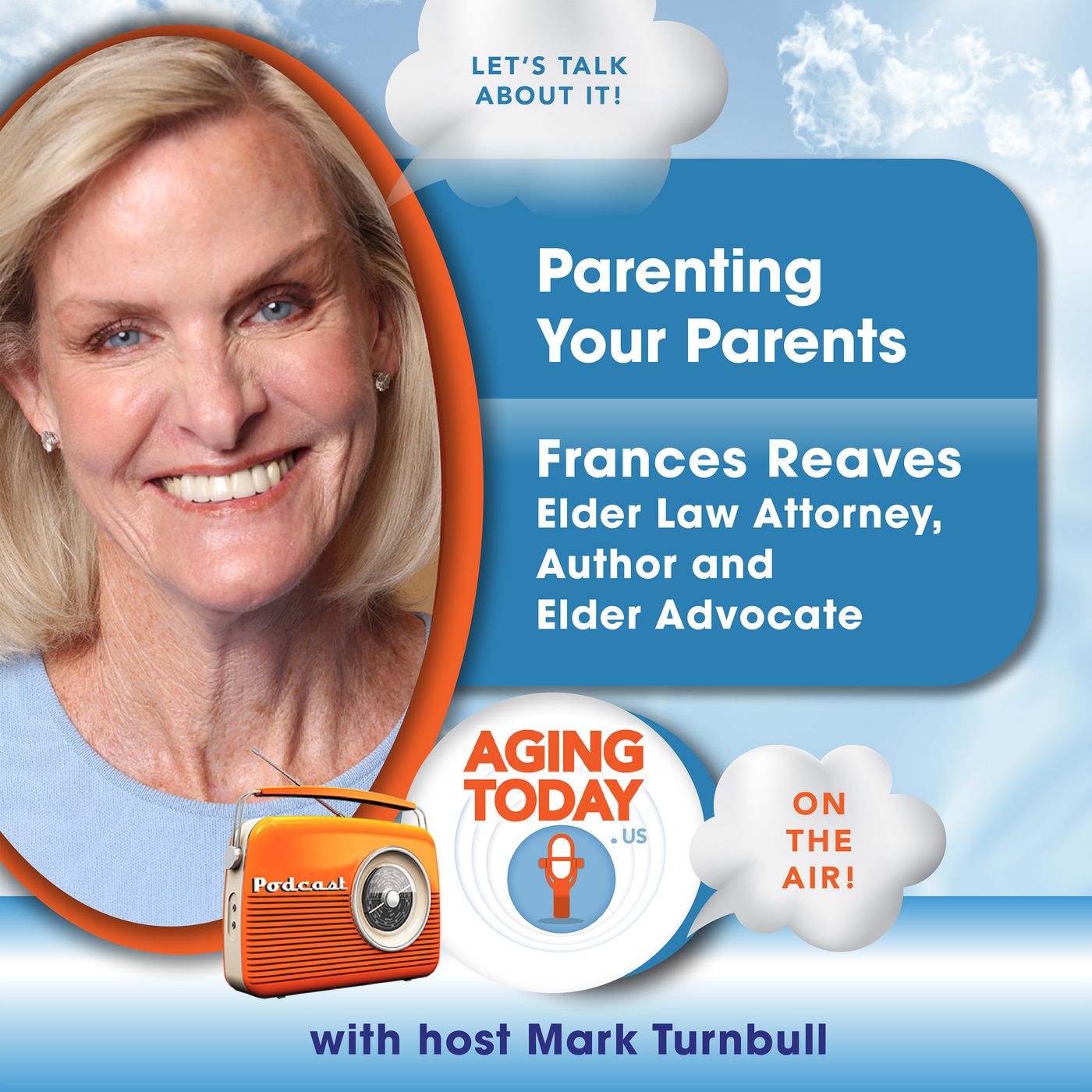
Navigating parenting your parents with Frances Reaves
Frances Reaves, an elder law attorney and author, and host Mark Turnbull talk about the complexities of aging and caregiving. Frances shares her personal journey of caring for her parents and...
Navigating parenting your parents with Frances Reaves
Frances Reaves, an elder law attorney and author, and host Mark Turnbull talk about the complexities of aging and caregiving. Frances shares her personal journey of caring for her parents and husband, highlighting the challenges and emotional toll of these experiences. The conversation delves into the importance of planning for aging, including legal considerations, long-term care insurance, and the role of family dynamics. Frances emphasizes the need for proactive measures to ensure a fulfilling life after 65, encouraging listeners to embrace aging as a time for growth and opportunity.
• Frances Reaves shares her personal story of caring for aging parents.
• The importance of long-term care planning cannot be overstated.
• Navigating family dynamics is crucial in caregiving situations.
• Medicaid is not just for the poor; it can benefit middle-income families.
• Personal care contracts can help protect assets while providing care.
• Long-term care insurance can significantly reduce financial burdens.
• Relationships play a vital role in the aging process.
• It's never too late to mend family relationships.
• Planning for the future includes understanding legal documents like wills and trusts.
• Aging should be embraced as an opportunity for growth and fulfillment.
YouTube Channel:
Sponsored by ComForCare Home Care of West Linn /Portland Sound and Royal Hospice Care Oregon.
#aging,#elder care,#long-termcare,#familycaringforagingparents,#dynamics,#estate,#parentingyourparents,#complexitiesofaging,#planning,#Medicaid,#caregiving,#personal care contracts,#spirituality,#relationships,#agingparents
Buy Mark a Coffee - Support Our Content About Aging!

Like and share Aging Today podcasts with your friends and family!
www.AgingToday.us
0:14 We are the podcast where together we explore the many options to aging on your terms. Today we are talking to Francis Reeves. She's an elder law attorney and an author and an advocate for our seniors and for those that are aging in the aging process. She's written a book and the latest book is Boomer's Booming, and we're going to be discussing that a little bit. But the name of her company is Parent Your Parents, and I want to spend some time talking about what that means. It's a great name. It's a great name for a company because it's very very descriptive, and we're going to be talking about what that means. So Francis, well, welcome to Aging Today.
1:01 Thank you, Mark, it's a delight to be here. Thank you very much. Yeah, we're looking forward to our conversation day. I did have a chance to read your book and it was very compelling, it was very thorough. But before we get into that, I want to hear a little bit about your story. We always start our segments out with what's in your story. We're not so interested in what's in your wallet unless you have a plethora of greenbacks to share with all of our listening audience, we're more interested in your story. Well, my story is mom and dad. That's sort of what got me here. What happened was mother had dementia, my brother and I. My brother lives in Atlanta, Georgia.
1:47 I live in Miami, Florida, and mom and dad lived in Houston, Texas. So as a consequence, I would go probably once a month to visit. My brother had children, et cetera, so he would go probably every other month, every three months. And we both noticed that there were issues with Mom, but we kind of did the kid thing. Oh, everything's fine, everything's fine. Then Dad had his ninetieth birthday. It was a huge family reunion, and it was very apparent. Now at this point we had already gotten dad someone to come in four hours a day, but it was very apparent that that just wasn't going to cut it at this Dad's ninety, Mom was eighty four, and the I still remember the day after the party, were doing a brunch at their home and Mom says to me, I need to go home now, I'm really tired. And she was at home. So Matt and I, my brother and I had to get moving, and it was it was a lesson in how badly seniors or elders are treated in the United States of America. If I hadn't been a lawyer, I fear for what would have happened
3:20 to Mom and dad. My father was a World War Two vet. Mom was a PanAm flight attendant. They had lived all over the world. She was a SUMA or one of those cum Laudie graduates of America and University. We were not talking about stupid people here. So the first thing we had to do is move them to either Miami or Atlanta. And of course Dad was like your parents, as we discussed earlier, I'm going to die in this house, and well you can't, Dad, because nobody lives here, and so he chose Atlanta. And that makes it and that makes it very difficult for a lot of families because we're such a transient community, you know society where in the earlier days, children and parents and grandparents all stayed in the same community. Now we live in multiple different states exactly, Yeah, and that makes it more challenging. How did you how did you handle that traveling back and forth. You were in Florida and they were in Houston. I mean, that's that's got to be wearing and taxing on you as well well.
4:34 I have to say, if it was, I never noticed it because what was important were Mom and Dad. And I give my parents full credit for raising us to be the type of children who were willing to put anything down to make sure they were okay. And I wish I could say, oh, no, I'm such a wonderful person. They had nothing to do with it. But it has been proven to me time and time again. You know, it was as I told my father when he would get upset because he felt as though I was taking away from work, I would tell him it was an honor. It was an honor to be able to do something that could help him out. Because what ended up happening is we got him into a place mother could not be sustained there after sixty two years of marriage, they were going to have to be separated. They had long term care insurance. She was going to go into one place.
5:32 He was going to go live with my brother and his wife. They had a basement apartment until he could decide what to do next. And after a year there, it was after a year with my brother, he was the one who decided it was time for him to go to an assistant living in, which he did just you know, because there were other people his age there, and it was you know, I had to go back to Houston, excuse me, and clean out that home. My brother was in charge of Atlanta, trying to get mom put together. Get all. Mom had some fabulous jewelry. Of course I wanted at all, but understood that we had, you know, and and so we had to do all that sort of thing. What is it we want? What is it that we're going to sell? But it's not like you can call someone and say, Hi, Mom and Dad need to move. Is there a senior moving place there isn't, Or Hi, mom and Dad need help. How can we get some help. Oh, you'll have to qualify for Medicaid, or you'll have to qualify for this thing.
6:58 I mean qualification in and of itself. Is I charge money for it? So and the other thing that was is so annoying for Medicare is that they send you this thing that says this is not a bill, but it looks just like a bill. And your dad would look at it and he'd go, Now, he calls me, Franny, Franny, what what is it this means? And you know, I look through it. Oh Dad, you might be billed this much from your you know, once you understand it. But it's not like they make it easy or intuitive. Why are you sending me something I don't have to pay?
7:41 You know? So, I'm sure someone with bigger brains thought of that well. I think. I think the whole process of aging is a very complex process. And if we don't prepare ourselves and we're not prepared, usually as the children of mom and dad, the ones that are aging, we're not really that well prepared. We're not. So that's what I want us to discuss today is how can you help us to become more prepared, because when we're proactive, we can begin to see some of the sequences that go along with the aging process. And one of the things that I think it's very difficult for us boomers to understand. We're in our sixties seventies.
8:33 I'm at the tail end of the boomer generation. I'm sixty seven, so you know, the older ones are just approaching in their eighties, but they're still you know, they got most of it together. We've got it all. Yeah, we got it going on. But mom and Dad don't and it's very difficult because and that's why I love the name of your company. It's Parent your parents, and it's I think it's a it's a switch that we need to turn on in our brains that when we are brought into this world, we need a lot of assistance in order to survive and with with activities of daily living, all those things you know as a child.
9:21 And then it's really interesting. I think we all kind of know this intuitively, but we're not really prepared for it. When we actually see mom and dad needing that same help, it's like reverting back to your two year old days. Well, and it gets it gets more progressive. It depends on how much cognitive issues that you know mom and dad have. Mom and dad have, well, I have to you know, it's funny because I've done it now with mom, and then I've also done it with a husband, having the husband incontinent, having a person who you were married to, and and pooping in your bed and all this stuff that is much worse than your parents. I'm just here to put that out there, and you you yourself, if you're the caregiver, have to decide is this really what I want to do?
10:17 If it's for you're talking about your quality of life exactly. And if that's what you want to do, that's a okay with me. I am a lawyer who works full time, and it's not what I wanted to do now with mom. With Mom, it was interesting. I was visiting her and this is just shows you the difference. I was visiting with her and she had come into my room and was laying on the bed, and you know, we were just being mom and daughter. And then all of a sudden, this I guess happens with dementia. Let me knock on ward here. Mom had to go to the bathroom and then she goes, oh, I've got to go. I've got to go, and then she didn't make it. And so there it was, right, you know, number two all over right in front of the bathroom and it wasn't pretty.
11:12 And Dad, of course, you know, I'm guessed, started I said, Dad, please, I'll take care of this, and Mom was like, oh, you know. Then I say to Mom, I said, Mom, how often did you have to do this for me? And she goes, you know what, you are right, I was constantly having to clean up after you. And it all went away, It all went away because you know what, that was my mother. She had to take me through that whether she wanted to or not, and chose to do it by having me. And so so the so parenting your parents is a very different modality, I guess than parent then taking care of a loved one, because in my case that person was not the man i'd marry. Yeah, so I'm just saying that it's not all the same.
12:15 Well, like you, like you were saying, is that you also have a job again, and you know, you're an attorney and you're an elder law attorney and you have to go to work. People are depending on you. And when you stay up all night long caring for you know, your husband and all of his needs and he's not sleeping well or he's having to go to the bathroom which is very typical amongst seniors three four times a night. Well, and you smell where to get up? Yeah yeah, yeah, yeah, none of it, it's none of that is fun. But on the other hand, the as as sort of you know why am I having to do that? Is kind of dirty work. The worst part really is the stress, and that's why when this happened with mom and dad, Dad was fine until the day he died. He was fine, but he was trying to take care of mom and it was so apparent that that was going to kill him.
13:22 I mean, you know, she was a handful. She was always a handful, much like her eldest daughter with whom you're speaking. Ye, so you know, the fruit doesn't fall far from the tree, is what you're saying. It doesn't when those. Around comes around. Just remember that. Well, she was thrilled that finally I had to do something because I didn't have children so whereas the other two did. And it was like, it's not fair, Francis, you know, But I have to say that I'm so glad I had the parent experience and the husband and experience, because I I'm not speaking from someone who's read about it.
14:07 I'm speaking from someone who's lived it. So and I'm not saying I don't have more to learn, because just today I went out with a woman in her eighties and she taught me something new, something I haven't written about or researched. But how hard it is this is my next area. How hard it is to have your husband in hospice and be by yourself. I never thought of it watching him die so but that's a story for another day. But I mean, there's so much about this aging process that we as a culture. Although I think the boomers have started, have started the research and the act, the action, But these people who are aging, I mean, as you know, since you've read my book first, don't think you're aging just because you have a number attached to it, you know what I'm saying. I mean, my last article was now that I am seventy, I have to actually internalize it. I don't have to go out and show everybody I'm still young and all this stuff.
15:27 Now internalize the fact that I'm seventy and use it to my benefit, which, for example, get rid of toxic people in your life. Some people have done that prior to me, but I just got rid of toxic people. I went through that same thing, the toxicity and people in relationships. Yes, yeah, yeah, and when you have it, when those are in your family, it's a little more difficult it is to navigate that waters. But at the same time, you know there's ways that you can do that. Do you have any advice for Because it's easier to get rid of the toxic relationships that are outside of the family. But inside the family, how do you manage those? Well, I have one, because there's no such thing as a perfect family.
16:16 No, no, no, no, I have My sister quit speaking to me, I don't know, three years ago, four years ago, and it was something that was very unimportant to me, but something that was important to her. So I did my best. I apologized. I called I and I think it was last year. Once again, I went through the whole rigmarole. Can can I just come and you know, let me do it in person? And the answer was nope, nope, nope.
16:58 And you know what I did. I accepted it. Yeah, I accepted it. Okay, there's nothing And if tomorrow she calls me and needs me, I'll talk to her. I mean, none of this, I have. Whatever I did, it's something I wanted to mend it. She didn't. But you have to accept that you can't control how that other person feels about you, period. And it's hard. It's hard, you think, I mean, we all think, especially when you're the oldest child. I'm the oldest, you know. I never thought it would last as long, but it has. And I think she's happy, and if she's happy, I'm happy for her. I'm very happy.
17:45 I am on a mission. I think it's important because families are families, and you know, there's no guarantee that just because we're part of a family that there's going to be hard harmony in that family. In fact, you know, in realistic you know, reality says that if you've got individual personalities, just guarantee that there's not going to be harmony. And but I think the key is respecting each other's you know, yes, respect the boundaries it's okay, and agree to disagree and to be able to say, you know, I'm not going to agree with you on you know, the way you're caring for mom, or I'm not going to agree with the way you're caring for dad, or how the money is being handled, and on and on and on and goes all the different ways and reasons you're even even politics gets into it and it's like, oh my god, it really stop, stop with all this, and just can't we just all get along? And the truth is no, we can't. So accept it. Build those boundaries like you were saying, I love that, And but you don't need to excommunicate family members from your life forever. There's there's gonna be times when you can really I get hang in that book.
19:13 To her as much as I did my brother. Yeah, you know, because she was raised in the same family. I know you addressed that in your book Bloomers. No, oh, okay, I do not no reason to this is, you know, but I will say what I did address in the book. It was my mother and I. We were oil and water the entire time I was growing up. She was five two, I was five ten. You know, she I had a personality. She didn't know. I was much more like my father in a personality which you'd think she would sort of love because she loved my dad. But she she was a silent generation. And here I was this woman who was like, I'm not gonna have to learned to clean house. I don't want to learn how to cook. You know, I am going to go to college. I am going to go to law school.
20:06 I'm going to be And it was what she'd wanted to do but couldn't because she was that in generation. But when mother became sick, When Mother I still remember the moment where I said, I looked in the mirror and said, Francess Reeves, get over yourself. Your mother gave you life, and look at what a great life it's been. So do what you have to do for your mom. And then I'm telling you, none of those people wanted to see me coming in because if Charlotte, my mother hadn't been treated right, they were going to hear it from me. And so it's never too late.
20:55 Yeah, and your role then changed as a daughter to become a protector as well. I mean, yeah, I mean that's that's the same you. It sounds like you didn't have children, so you hadn't experienced being a parent protecting child children. But now you are. You're the parent to your parents. You're fulfilling all those things that you you missed in your earlier years. Girl that my. Siblings talked about that. Yeah. And and but you know, if anyone out there has an issue with their parent that can be solved, the only reason I'm going to tell you to do your best to solve it for yourself is because they're going to die, most likely going to die before you. And honestly, the fact that Mom died, I was with her. She died at one am in the morning, so I wasn't with her when she died, but I was with her that that day and we were doing She couldn't talk or anything because she'd a stroke, but her little eyes were moving. And so we used to when I used to go visit her, we used to sing songs together, you know, the Mom playlist, Frank Sinatra, Ray Kniff, Mitch.
22:10 Miller and Bennett and Bennett, Yeah. And and and so I just sang. I just sang, and you know, did things. And you know, it's hard. It's hard when you know they're gonna die. It is hard. But but something else that I thought was helpful was last rights. Mom had been a religious Anglican and Episcopalian. So we my brother and I and my dad, we all got together and had last rights for mom, which really calms you down, which kind of shocked me. I mean, I wouldn't have known.
22:53 How did that calm you down? Now? And you're you're saying that you're not so much of a spiritual or religious person. In other words, I don't think anyone would think about getting last rites for me. Yeah, yeah, but it did something for you to explain what did that mean? What did that mean? You're asking me that mark what happens is I, of course was doing acts of kindness and what once we could tell she'd had this stroke, I was crying, and I was, you know, putting lotion on her and you know, trying to brush her hair and holding her hand. But I couldn't quit crying, you know. And Dad was right there with me. But he's mister stoic, you know, World War two, uh I Regima guy, you know, And and he it was interesting how just stoic he was. And so then when Matt said, well, let's bring Mark and his priest. Let's bring Mark in to do last rites, and I said, oh, man, okay, Mom would really like that.
24:07 And there's just something calming about, you know, no matter how you feel about the Lord or Jehovah or whatever, you know, take this woman into your arms, up, up, up up. And of course the priest is also soothing to the family. And and because I knew how Mother felt about it, it made me feel better for mother. Does that make sense? Yeah, yeah, so I. Think I think that's that sort of that's what did it. So, So if just because you're not a religious person doesn't mean that if your parents or your sister, brother or whoever is having the issues in front of you, if that's something that would benefit them. I promise you it's going to benefit you.
25:09 Yeah. So it's called respect. That's respect for our elders and honor your mother and father. And that's a way to do that. That's a very practical way. Even it may not be your belief system, it was their belief system. And you gave him that gift. That couldn't have cared less. Yeah, you know, he died four months later. Matt couldn't believe he died when he did because it was in the middle. It was halftime during a football game, and he goes, I just can't believe dad died during halftime. You know, it's a whole It was a whole different messaging with my father, you know what I'm saying. And then it was like, oh, no, he died not knowing.
25:58 So well and he probably would. Was he in battle in so he saw probably too much to death at that Yeah. No, No, he wasn't a marine. He wasn't you know the guy who was in there. Yeah, he'll tell you. I was in the Navy. I was on the destroyer sending the. Bombs in Yeah. Yeah, yeah, okay. Yeah, but you know, he he saw not only death, but a lot you know over there, the Japanese were If you're a student of history, you know, the Japanese were not easy warriors. They you know, if you lost a battle and you were the commander, you had to commit suicide. They call it Harry Carey, which was a shock when I found out he was also a sports announcer for the Chicago Cubs. YEA to this restaurant in Chicago.
26:51 Had they called it, it's Harry Carey's I'm like, oh my god, that is so weird to name it a suicide to act by the jap These. Yeah, No, totally different thing, totally different baseball. Yeah. Yeah. So when you have some of your clients that come to you for the very first time, how do you approach them and getting them prepared because they don't even know what they don't know. That's exactly that's the biggest challenge to the whole aging process is we just don't know what we don't know.
27:32 You're absolutely right, and I wrote since you read it, you know that I wrote boomers Booming. The first half of the book is really about going out and having a good time and not letting age define you. And one of my one of my favorite people is Winston Churchill, who at the age of sixty six, when the median age for men dying in Great Britain was sixty two. Winston Churchill came into power as Prime Minister during World War Two had just started, and he took his country through World War Two. Then he was not elected. You know, a lot of war presidents and prime ministers aren't reelected.
28:23 They it's a whole different thing. But so he is now seventy one, so he's you know, still an MP, and it's seventy seven. He came back as Prime Minister just in time to have Elizabeth the First ascend to the throne. And so first he takes us through war. Then he takes us, not us, but us as a nation through this young twenty two year old not only losing her father but also having to take on becoming the queen. And and he died at eighty one, where most men in his country were sixty two. And never once people would call him an alcoholic, but no one ever once said he was demented. All you have to do and and remember Winston Churchill in his early days when he was Lord Lord Chancellor of the war. It was during World War One he lost a huge battle galopoly.
29:44 I mean, and it was the Australians and the Key the New Zealanders who lost a lot of the people in this battle. And I mean he had to resign in disgrace. So from that he got wise right, And so tell people stop thinking you have quit aging. I mean that you have quit living. I mean I choose to continue working. But there are people who continue to travel, who are doing nonprofit work, who are using their wisdom and experience and and and the intellectual abilities that they have to move forward.
30:25 Yeah, So Booming Boomers. Booming is a book about living your best life possible after the age of sixty five. In other words, just because you turned sixty five does not mean that you were to take your life and put it on the shelf and give up. And which it means your insurance is cheaper. You get Medicare. You can then have a Social Security. Yeah, get social Security. I mean, I'm sorry, what's wrong with that? A little extra money? Yeah, you have to pay insare? Friends Yeah yeah. Yeah. So I mean I think that's how we should look at it. And I think whatever you choose is what's okay. In other words, not everyone is going to choose to travel the world or might not have the resources for I had a woman who had been my manicuris for a very long time, and she was just so happy to retire to read all the books she'd never read. Okay, what's wrong?
31:30 And a lot of people they take on they become artists in their sixties, you know, they part Yeah. Yeah. There was several people that I've known that we've cared for over the years, and it wasn't until they reached their seventies and their eighties that they begin picking up a paintbrush and started painting it. Oh my goodness, incredible. You know, sceneries and things that they put on the canvas that I can't even imagine, and how you know, it was lying dormant in them. I'm hoping that I've got some of that in me, but I doubt it. Well, what about President Bush? President Bush too, Yeah, you know he now does all those wounded warriors, He does the wounded warrior portraits. I think some of that is that ten year war in Afghanistan. But yeah, I mean, no one else did anything for the Vietnam vets like he's done for the wounded warriors. When it comes to trying to portray his feeling because that boy never saw war.
32:37 So you know, but what you have to do to live a good life is planned for it. And that's about four pieces of paper, well, four documents. The first one is a power of attorney, the second one is a healthcare proxy, the third one is a will, the fourth one is a trust. Now, a will is always incorporated into a trust, and people seem to think that because they don't have a lot of money, they don't need a trust. So I'm going to start with why you need a power of attorney.
33:20 Oka. A power of attorney gives to somebody you trust all your powers should something happen to you. And this doesn't necessarily mean death. You can be in a car accident and out for two or three weeks. So you know what I'm saying, Someone's got to pay those bills. Someone's got to tell the bank what happened, you know, And that's the power of attorney. And I almost always suggest too for a couple of reasons. First of all, you you sort of have a check. In other words, the first power of attorney can't just take it all because it's a dangerous instrument. Once you sign it that power attorney can go almost anywhere and take out your money. Now, in Florida, we have what's called durable power of attorney, which means all the person has to do is sign it, and they their agent can go do all the stuff they've signed. In. Let mean, Missouri is a good example.
34:26 In or New Mexico. In Missouri and New Mexico, they have what's called a durable but they also have a springing power of attorney, which means that two one or two doctors have to say you're incapacitated prior to a power of attorney being able to take something on. Now, the healthcare proxy, that is, of course, when you're in the hospital same car accident right and say you have diabetes or you know, I'm pretty lucky, I'm not very sick, so I don't I don't know a lot of what you could have, but you your healthcare proxy allows you to go to that hospital and say, listen, this person is also diabetic, so they're going to need this. Here is the list of their medication, and unless you give me a good reason not to do it, he has to be on there. These medications must be given. The will. Now, a will every state has different rules. But here's one thing about wills. It will go through probate. And probate means you're going to go in front of a judge.
35:46 You're going to hand the will into probate court and then after paying an attorney for Every statute's different, but it can run depending on how much money it is. The more money you have, the higher the probate costs. Even though they're the same. You know, it makes no sense, you know what I'm saying. It's the exact same actions, it's just more money. So and then the judge finally says, Okay, this is what he wanted, and so the will is done. And then a trust. What's good about a trust is that it bypasses probate, but a trust is more expensive upfront.
36:34 So I also talk about there are many financial instruments that you can use between trusts and wills to sort of keep things out of probate. So that is what you have to do before you go out and have a good time. And I'm just going to give you several examples of what has happened. One of my favorites is Audrey Hepburn. Audrey Hepburn did everything she was supposed to do. You know, she had a little trust. She had two sons. She had a trust, and then she had the poor overwill. And in the trust and poor overwill, she said to the boys, you all split my movie memorabilia fifty to fifty any way you want. That took twenty five years. Twenty five years because Audrey hepburn movie memorabilia.
37:29 Do you know how much that's worth? Oh yeah, yeah, okay, I can only imagine. Yes, that was exactly Another big favorite, Aretha Franklin. Aretha Franklin knew she was going to die. She had pancreatic cancer. The doctors had told her. She knew, she knew, she knew. She had four sons. She dies, she doesn't have a will. Then all of a sudden, about a week later, each son found a will. And uh, then the IRS came calling and said no, no, no, no, no, she ows is eighty million dollars in backpaxes.
38:10 Ouch. Yeah, So until the IRS was done, nothing else. And remember they also are going to value her music going forward, I mean respect R E. S P E C T. I can't even imagine how much how much that one song is worth. And and you know, and the IRS takes their tax up front, so it took five years before the boys got anything anything. So I'm just saying, you know, that's why you have to plan. I mean, how much money was spent on lawyers between Audrey Hepburn's sons, that valuing every piece just with you had to have it with Aretha Franklin. You had to have that IRS lawyer there a lawyer for each of the sons. And then of course the judge appointed the personal representative and he was paid a handsome salary. I mean we're talking millions of dollars.
39:25 Where did they fall? I mean, where did the attorneys not do a good job of protecting you know, those individuals where they just in over their skis. They didn't know what they didn't know until it got into the court system. But you would think that they would be elder law attorneys. You would think that they would know these things. And that's why you hire. You know, here's the issue now in Aretha Franklin's case, she's like, my husband, he's not going to die, just ask him. He wasn't going to get Alzheimer's, just ask him. I mean, he was in his family. Four of his uncles had it, he would not get long term care. No, he wasn't going to get it, and nor is he gonna die. He didn't have a will. I finally put together a will and had him sign it. And I put together the power of attorney and the healthcare proxy, put myself there and had him sign it. I mean, and that's exactly who Aretha Franklin was. Now, what could have happened with Audrey Hepburn. But I don't know what could have happened with Audrey Hepburn is the attorney said, well, miss Hepburn, you know this is going to cost a lot.
40:36 Oh no, no, no, no no. The boys get along so well, I just don't that's not gonna happen. I mean, I you know, sometimes you can't convince them otherwise. Now here is, without a doubt, my favorite. And this was a lawyer who did his own trust. But guess what. He was a real estate lawyer and he owned the Miami Dolphins. His name is Joe Robbie. So Joe Robbie owned the Miami Dolphins, and he owned the stadium called it Joe Robbie Stadium. And he died. He and his wife had eleven children and when he died, he had there were nine left, and he had he put together his own trust, which, by the way, I did, and now I have to redo it because I forgot about a special needs trust for my husband in case I predecease him. So just saying, you know, we lawyers shouldn't be doing our own trusts. So he put together his own trust and in it he had three of his kids as the trustees. Right, So three of his kids were the trustees, and then he had one kid who worked for the dolphins. So the three trustee kids went
42:07 in and fired their brother. Mom got really angry, I mean, like, why are you firing him? There's no reason to fire him. And they were like, well, Mom, you know Dad didn't appoint you as a trustee. He appointed us, and we're doing what's best for everybody. Well, in this trust, Joe Robbie had put what we call an intervevos and a trust that's alive to support his wife. Am I getting too technical? Are you trying not to yawn? No? No, it's good. It's a great story because I think, you know, the majority of us aren't of that kind of wealth. But it's interesting to hear the story and after you get down with telling this story, I want you to go a little bit into where maybe the rest of us live, where you know, mom and Dad got a little estate and you know it's not that big, okay, but any keep going because it's a great story.
43:12 Well here's what Mom did. She said, all right, I'm going to claim my dowager share. In other words, he had left her a trust, but not money, and he was worth a whole lot of money and had not left her a third. He had left her the intervew votes trust, which was going to be fine. I mean, you know, she was going to live just fine. But what she said is, all right, kids, I'm going to go and claim my one third of my estate because i'm his wife. It's called elective share, and you can elect to take a third of whatever your spouse has if they haven't left that to you, you know, if they've already left it to you. And they said, oh no, Mom, you can't do that because we can't afford the taxes.
44:12 They fought her all because they'd have to sell to give her a third of his estate. They fought her all the way to the Florida Supreme Court, and she won the elective chare you can't touch it. And they had to sell the Miami Dolphins. Those three trustees got one ninth of what their father had. The other six got their one ninth of what their father had and one sixth of what their mother had. And to this day they don't talk. So be careful when you're doing these trusts.
44:58 And he does funny things to be people. And if you're the trustee, so you want to talk a little bit about folks. Like you and me, Yeah, well, at least me. Now I'm with you, you know. And one of the things I think I remember reading in your book, it was about you made the statement medicaid is not just for the poor, and so the question is how can medicaid work for the middle incomers, and which is the majority of us. And you know, in the state of Oregon, you know, at least for medicaid, in order to apply for medicaid, you have to virtually have nothing, I mean less than two thousand dollars. And you can own your own car, and you can own your own home, but you got to have income coming in. But there's also what's called an income cap trust that allows you to protect yourself.
45:59 But I don't know if you have that in qualified income trust. Okay, so explain for the rest of us out there, how then, Because so just and my listening audience knows this about me, I own an agency for in home care, and I own a hospice. Hospice is fine because Medicare covers the total cost of that. However, in home care comes out of your own pocket. And in the state of Oregon, because of all the government regulations and all the things that Oregon has going for it, people don't realize that I don't pay taxes. I pass those taxes onto the consumer as a business owner. People don't understand that yet. So my cost to do in home care is forty seven to fifty an hour. So if you need twenty four hour care, that's over thirty six thousand dollars a month for in home care. Who can afford I can't even afford my own services. I'm just being transparent and honest here because we as a society got to figure this out. And I don't know the solution other than maybe it's a it's a mixture of government intervention, which I just makes my skin crawl, and but private pay can't. There's just nobody can afford it.
47:31 Well, you're absolute, right. So then Medicaid has to come in somehow, but it's in, it's in not afford I can't. I couldn't qualify for Medicaid because I make too much money. So now what Well, Medicaid planning is my specialty mm hm. And it's a question of trusts, spend downs, personal care contracts, and we put it all together. If like, I'm just going to use my husband for example, because he's in Medicaid now. So his social security, which is all he had.
48:24 His social Security was more than the income in Florida. So I had to put together that qualified income trust and every month I have to put four hundred dollars into that qualified income trust. And since you read my book, you know my husband left me in debt and had spent all his money. So I have to put four hundred dollars into that qualified income trust. And when he dies, all that money goes to Medicaid to pay for what they did, for what they used. Yeah, for what they use. Now, can you take the time to actually administer that trust and see if there's anything left for you? You can, but I don't, you know, I've cut it pretty close to the bone, so I don't think that's going to be an issue. So but when you have, for instance, in Florida, the how you the house is exempt, but only up to six hundred and seventy thousand dollars. So if you have a three million dollar home, you still have an asset. You know, it's not every state is different now, but the way we work it is through a personal care contract. For instance, the personal care contracts
49:54 I've done are usually for children taking care of their parents, and so so we actuarily. You know, there's all these actuarial tables that say, okay, dad is eighty five, chances are he'll live till ninety. So we'll do this on a five year deal, and then this is what it's going to cost for us to take care of dad. Now, taking care of dad does not mean he has to live in your home. What it does mean is that you have to pay his bills. That if he's in a Medicaid facility, you have to hire that nurse. It's going to take care of him. Bup up up, bup up up, bup up up the extra food that you know, there's a formula to it, and that So if you think about let's say fifty thousand dollars a year for five years, well you can take two hundred and fifty thousand of it away in a personal care contract. So you see what I'm saying. So, so if the children were going to invite inherit the money, they're going to get it this way. There are some annuities that work.
51:17 I'm not I personally don't use annuities. We've had a couple go bad, you know, so I'm not an annuity girl. The other thing you can do is buy a new car that's part of transporting you back and forth to all your doctor's appointments. You can if they're going to live in the house, you can get that portion of the house redone. So you see what I'm. Saying, walking showers, yeah, yeah, grab bars and all the things. And not just grab bars. But I don't know, do you need some painting redone there? And I mean, what about a couple pieces of artwork just because Mom always liked a little bit of art in a room. You see what I'm saying. In other words, we I mean that's actually for me, it's kind of fun, you know, like, Okay, what can we do to qualify you for Medicaid. So it's not as bad as it looks, and it's all on the up and up. I mean, you have to use that money to do what you say you're going to do.
52:30 Sure, Sure, and that's a way to spend down. However, in the end, after a mom and dad die, the state's going to come back and want it back. No, correct, no, why would they They can't. With this personal care contract, you were doing what you said. You're private privately yeah yeah, yeah, no no, no, yeah, no, I'm referring you also do IOUs. You know, there's this whole IOU thing you can do where you lend the money to the kids and then the kids have to pay you back at a reasonable rate. But if you die, you know, right after, Medicaid doesn't get that money. It's all in other words, this is always the only way Medicaid gets the money is if you're going in over the income cap.
53:23 Yeah yeah, yeah, they're going to get that back. That's what I was referring to. That what I've done with Tom, I will get none of that money. Yeah yeah. Which, by the way, his brothers don't believe. They think I'm doing something. You know, shady under the table there. Yeah, well they can listen. They can listen to this show, and you stated it publicly now so that you're not going to incriminate yourself. One of those brothers is totally on the toxic list. Oh my god. Yeah. So, so I got another quest for you, And we're running up towards the end of our time here together, but I wanted to ask you in particular. When I was reading through your book, I was and the situation that I'm in myself where I'm living with my mom and was living with my dad but he's passed and now living with mom, and I begin to think about, you know, our wishes and we want our best life possible, whatever that means for each individual's one thing that I keep going back to is how important family is. And I know that that's a very difficult thing because a lot of families are fractured, and a lot of families, a lot of people don't have family. I mean, I'm surprised at even my mom and dad's generation, how many
54:55 people chose not to marry and they don't have children. And that's even being as more prevalent today with the younger or younger generation they've chosen not to marry. So the family dynamic is important. But I guess sometimes it comes down to, Okay, how do you define family? And family can be you know, embracing personal friends, it can be all kinds of things. But the bottom line is you've got to make sure don't isolate yourself to the point where you don't have any family. Whatever that means.
55:41 That definition means yeah, because it's a very lonely place that and I've seen it over and over and over again. When you are eighty ninety whatever and you're going and you're dying, actively dying. You don't want to be in that place. It's a lonely place to be. But chances are I will be. I have no children. My husband is fifteen years my senior and has Alzheimer's, so even if he were alive when this happened to me, it wouldn't matter. So but you're taking steps. I mean, you have personal friends, you have I.
56:27 Have personal friends. But I'm going to tell you what I really have. Okay, long term care insurance. Mm hmm. Because long term care insurance, whether I decide to go into an assisted living facility and paying six or seven thousand dollars a month, or have in home care at my home. It's going to reduce my cost substantially two thirds, if not three quarters. Yeah, and I I it's so funny. I tell everyone people say, oh my gosh, long term care is so expensive. Now they're correct, it is. I was smart enough to get into it about fifteen years ago.
57:10 But here's the bottom line. If you're paying ten thousand dollars a year for long term care, let's just say you're paying ten thousand dollars a year. You said it yourself. A month with tax of in home care is forty six thousand dollars. But if you have long term care helping you pay that, all of a sudden, it becomes a much easier amount to swallow that Maybe you have in savings, or maybe you're going to have to go into a living an assisted living facility, but you know they're going to pay for most of that. So I call long term care a necessary evil because, believe it or not, Mom and Dad had long term care and they were treated so badly by the long term care people that I finally, it's this long story about how I finally got their attention through LinkedIn, and they gave me fifteen thousand dollars because they had miscounted mom. Yeah, fifteen thousand, and that was my first parry. I thought they'd come down, which meant I didn't ask for enough.
58:22 So I'm just saying, if you are alone, don't wish that you die before you go into a medicaid facility, because chances are that's not going to happen. We're all living longer. And a woman I just ran into the other day, she's so upset with her brother because of the way she doesn't like where her mother is, even though the brother is paying for it. And I looked at her and I said, you know, he's the one with the money and if he's got your mom in a place where I understand you don't like it, but your mother is being taken care of. And I don't say this very often. I told her. I said, remember, you're going to be in that position yourself, so you might want to make sure your brother loves you too.
59:15 Yeah. Amen to that. I better better mend all your relationships because it's a clue. I don't want to go into that that last chapter of your life. Well, and listen, listen, my brother, when all this happened with my husband, and oh my gosh, I you know, I didn't know what to do or where to go. I could call my brother and his wife, and if I needed three hundred dollars, you know, for a short term loan, it was. It was in my bank account that afternoon. And why is that? Because we well, A, I pay him back. That's but b he he understands sometimes we fall short, you know. Yeah, I mean, and the good news is we're past that, you know. But when when your life explodes in front of you, and it will, I mean, that doesn't mean you're down and out for the count. You've already had it explode in front of you. Otherwise you wouldn't be doing this podcast.
1:00:15 That's right. Let's conclude with this. Let's go back to your book, Boomers Booming Ye, how to think? After sixty five? Yep? What's your favorite chapter? Out of all the chapters? I think there's like over twenty, isn't there. I think there's nineteen nineteen nineteen chapters. What was your favorite chapter that you enjoyed reading the most? That maybe for whatever reasons, I think I have two. One is chapter seven, which is, as you know, all my chapters are titled from verses from songs.
1:00:58 Yes, going to mention that to the listeners today because some of my favorite bands. Yeah, those are the names of the chapters. This one is clap Along if you feel like Happiness is the Truth, and that's from Happy by Pharrell Williams. And I just talk about how lucky we are and how let's pinch ourselves. I mean, I woke up this morning and I went out to do my walk, and I got to watch the sunrise. And yet here in Miami, a very well known congressman died just this weekend at the age of seventy. He doesn't get to see that sunrise ever again. I also had a good friend here in Miami die of a cancer at fifty six. Fifty six, and we're complaining at seventy. Hey hey, hey, hey hey.
1:01:58 And then I think my other favorite chapter is chapter one, because I mean that's one where I talk about, you know, you can't let a number define you. You can't let someone tell you you're over the hill. Every one of us is Winston Churchill. We just have to find what we want to do and go do it. I didn't talk about the guy who took himself back to medical school at the age of sixty two. I mean, you know, there's so many people out there, and to me that is And of course I love all the photos of my family. I love looking at mom and Dad getting married again. I was born nine months and four days after they got married.
1:02:54 Oh nice, what does that sat? Honeymoon? I was either conceived in New Orleans or before. Yeah, yeah, noe. Other two So chapter one is what good is sitting alone in your room? What song is that? After? That is from cabaret? What good it is sitting alone in your room? Come here the music play? I can't get up that high? Nicely done. You got a good voice there. You hit those tunes the caborel chum, come to the caboet all right?
1:03:37 Well, and then maybe this is a great place for us to end our conversation. And I just want to say thank you Francis for being on Aging today. I encourage our listeners to pick up your book Boomers. Booming, my website, yourparents dot Com or good old Amazon. Yeah, and how to Thrive after sixty five And and you know the thing is that I used to look at my life in ten year increments. You can Yeah, and that's true. There's there's chapters. Those are chapter breaks. But I think that if I would look back on my years, I saw thirty years in it is, Yeah, thirty, the first thirty, then the next sixty, and then I'm looking at the last thirty of my life. You know, I'm sixty seven, so I'm looking forward to exactly what your book says is. I want to learn. I want to live life larger than I can even ever imagine in the last thirty years, and I'm going to live it well, I truly am, And that's my goal. That's I'm just going to have fun and I'm not I'm still working like you, and I enjoy working, I really do so, but I want to work less now that I own my own companies. And but I want to work when I want to work, and surround myself with more intelligent people than myself and better looking. So that's
1:05:10 all I that's a and then just keep living life. We always want the smarter ones around us. Yeah, that's right, exactly who I look for. Yeah, absolutely sounds good. Well, it was a delight Francis having you on. Mark appreciate our conversation, and uh do pick up her book Boomers Booming, and enjoy that read because I think it's. The and the what the right, because once you read it, you're going to start taking that right. Oh yes, absolutely, yeah, all right, thank you very much. Well, this is Mark Turnbull, your host, and I want to thank all of you for tuning into aging today. Remember this, we're all in the process of aging and as we age, we really are are better together. So stay young at heart, stay young