

 YouTube

 Apple Podcasts

 Spotify

 RSS Feed

 Spreaker

 iHeartRadio

 Castbox

 JioSaavn

 Pandora

 Deezer

 Podcast Addict

 Amazon Music

Stefano Iaboni: Experiential Training through Laughter
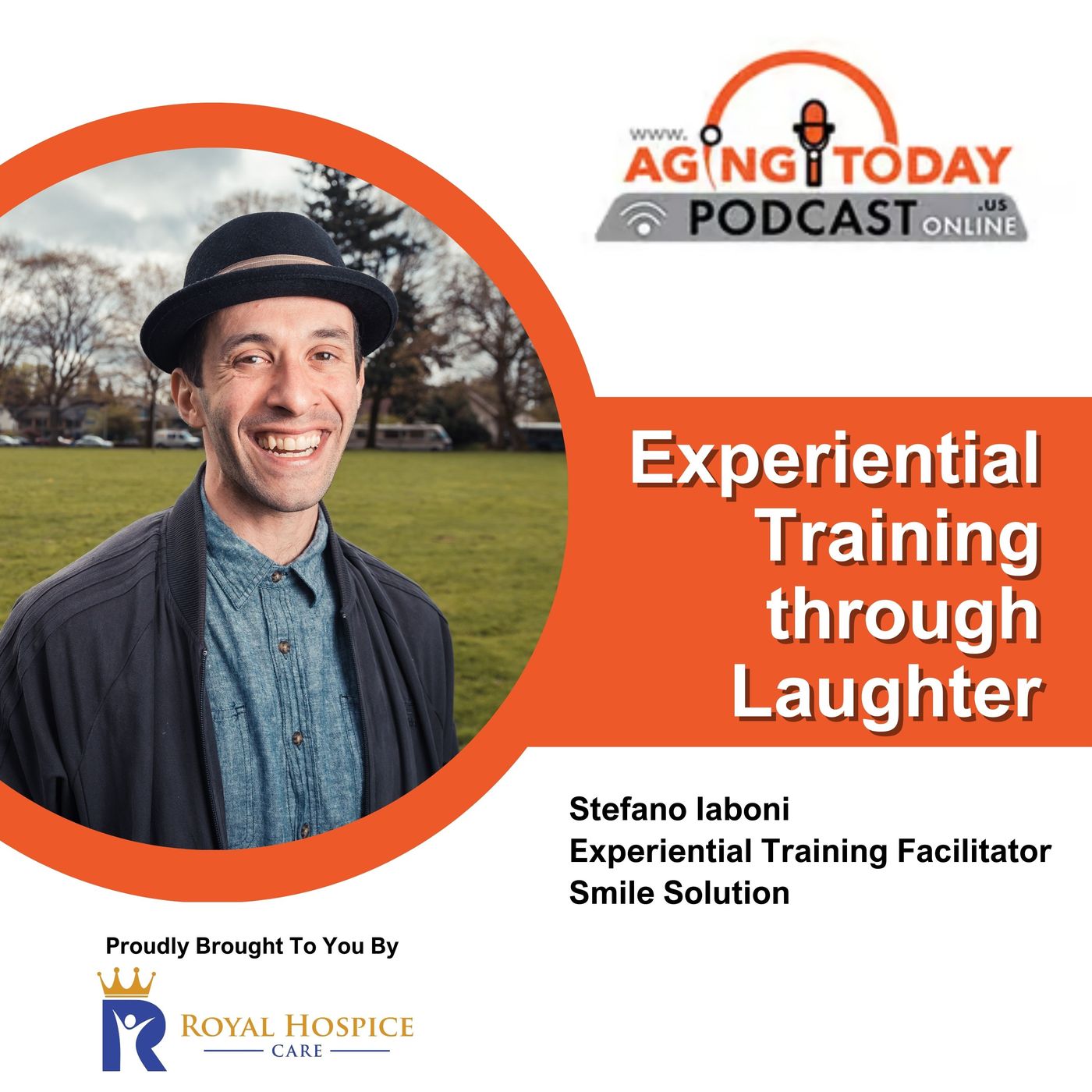
"We all know how to laugh." - Stefano Iaboni
Mark Turnbull engages in a lively discussion with comedian Stefano Iaboni about the importance of laughter in the aging process. They explore how humor can serve as a powerful tool for connection, stress...
"We all know how to laugh." - Stefano Iaboni
Mark Turnbull engages in a lively discussion with comedian Stefano Iaboni about the importance of laughter in the aging process. They explore how humor can serve as a powerful tool for connection, stress relief, and community building, especially in senior living environments.
Stefano shares his journey into comedy, the cultural nuances of humor, and practical techniques for eliciting laughter in various settings. There is healing in the power of laughter and its ability to create lasting memories and bonds among individuals, regardless of age.
Learn more about Stefano Here: www.stefanoiaboni.com
Connect with Stefano on LinkedIn: https://www.linkedin.com/in/stefanoiaboni/
Enjoy this episode and others from our over 8 years of Aging Today Podcast: https://agingtoday.us/
Chapters
00:00 Introduction to Aging Today Podcast
01:53 The Healing Power of Laughter
06:07 Stefano's Journey into Comedy
09:48 Cultural Perspectives on Humor
14:06 Connecting Through Laughter
17:49 The Role of Humor in Senior Living
22:04 Laughter as a Stress Reliever
25:57 The Science Behind Laughter
30:12 Using Humor to Build Community
33:52 The Importance of Being Silly
38:01 Creating Lasting Memories Through Laughter
41:46 The Art of Storytelling in Comedy
46:03 Final Thoughts on Laughter and Aging
#aging #laughter #humor #comedy #mentalhealth #seniorliving #stressrelief #communitybuilding #storytelling #wellness
Buy Mark a Coffee - Support Our Content About Aging!

Like and share Aging Today podcasts with your friends and family!
www.AgingToday.us
0:00 [Music] And now the podcast we're together, we discuss proactive aging on your terms, connecting to the professional advice of our special guests while creating better days throughout the aging process. Now here's your host, Mark Turnbull. And I want to welcome everybody back to another lively discussion on aging today.
0:41 We are the podcast where together we're exploring the many options to aging on your terms. You can find aging today and our past eight years of programs on our website all you got to do is go to agingtoday.us and you can scroll through all the many topics that we've discussed over the eight years on the aging process. And if those of you that are podcast and that you want to follow us on your favorite podcast channel, all you got to do is go to Spotify. You can go to Pandora. You can even now go to YouTube because we are now live as you see us and we're very excited to be able to expand our footprint onto YouTube.
1:26 And then for those of you that want to ask any questions on the aging process or if you have an incredible guest that you think would be intriguing to have on the aging today podcast, all you got to do is reach out to me your host, Mark Turnbull. And my email is mark@agingtoday.us. And as you know, this is a podcast about the aging process and we're so excited to have you join us. And one of the things that we always say if you're not too busy being born, you're too busy aging and we want you to know that we're trying to get every angle to the aging process.
2:13 And one of our missing links, believe it or not, has been the best medicine of all time, even all the way back to the biblical times and the book of Proverbs that that laughter is a incredible medicine. It's an incredible therapeutic tool. And here to guide us along that way is the funny man himself. It is Stefano Iaboni Stefano. Welcome to aging today. I'm Mark. Thank you so much for having me such a pleasure to be here. And so I am very excited about this conversation because I love laughter. I love people that are funny.
2:56 And I'm not funny. I don't know what it is about, you know, me, but my sense of humor is probably drier than people like. But I do enjoy laughter. I think that the best medicine that anybody can have is laughter. Oh, yeah. It's all I agree with you. And I want to make a distinction between laughter and humor. They do go together, but they're not exactly the same thing. So humor, maybe it's more personal, it's more cultural. I'm from Italy. So maybe something that is funny in Italy might not be funny in the United States or the other around. But laughter is universal. We all know how to do it.
3:37 We are very speaking. We all know how to laugh. And as a matter of fact, as human, we first learn how to laugh before we learn how to speak. Yeah. And I think that's well said. And I'm also, you know, curious about a little bit of your story. And so what, you know, I'm curious about your story. We always start every one of our segments out with what's in your story. And I think that our audience would love to hear about you. And, you know, in particular, when was it in your life story that you realized that you were actually funny? That's a very good question. You know, I don't know. I felt as a child, I was like one of those funny kids, like the clown of the classroom.
4:20 I don't really know. I guess I was kind of shy, you know, maybe a little introverted, but I was exposed because of my dad, my dad was in the movie industry. I was lucky enough to be exposed to like arts and from a very young age. So I had that, there were a lot of artists and performers that were like come to our house. And maybe that, that, that was maybe my initiation into that kind of word. When I was in my 20s, I started, I wanted to become like a circus performer, a professional circus performer. So I joined the circus school with no idea what that meant, you know, there was a lot of physical stuff that I had no idea that was part of the training, right? But I think that laughter really helped me out in that because maybe I wasn't so skillful as like an aqua bat, but I could always rely on the laughter.
5:08 I could always like rely or like make people laugh. And there was like the first experience that I had as a performer there, like we would go and do shows, you know, and some of my like all the, the people, all the other students that were in the school with me were very, very skillful, you know, physically. Maybe I wasn't as much as they were, but I was kind of like the funny guy. I was like the ringmaster that could bring everybody together through laughter. So that was maybe the first exposure that I had as a performer in comedy. And then basically from there, I kind of like continued through that part. I kind of like stopped with the circus and I was more into the improv and just performing itself that didn't really necessarily rely on skills.
5:53 I felt like with the circus, like people also, a lot of time did rely on the circus. And I was in a skill, right? But I was having a lot of fun being the ringmaster or like getting the crowd together. That was the funniest part of the thing. The coolest part of the thing for the show for me, to get the people together. Because I was able to like play. I was able to like look people in the faces and it wasn't about, you know, the skill. I was also jugging at that time and I felt like, the moment that I would like grab that a juggling clumps of the juggling balls, I would like lose my crowd because then I would like be so focused on the skills that I would lose the eye connection. And that was to me, that was the main thing. That was the best part of the show.
6:34 Oh, I have in that moment, I'm connecting. We're looking at you into the eyes. I can see if people are enjoying this, if people are getting more, if they need more, they need less. That was the best part for me. So I've been doing this for the past 20 years. I've been producing and directing and performing comedy for the past 20 years. And I was lucky enough to travel around the world with my comedy show and I went to over 15 countries around the globe. And I was also in places where I did not speak the language. They did not speak my language. But there was this thing that brought us together. They helped us connect and that thing was laughter. Yeah.
7:14 And you mentioned the distinction between humor and laughter and I love that definition, never thought of it that way. What is the main as you traveled the world? What are some of the main tenants to humor that works in, you know, the, the, the elicits, the response of laughter in Italy or other parts of the world as opposed to the United States. Yeah. So the type of humor that I do, it's mainly visual, non-spoken, not a mind, but like, think like Mr. Bean, right? So I don't really rely on language, which is also making more universal. I think we love when we can relate, when we experience where I recreate a situation that you experienced before.
7:57 So you create that complicity and you feel like, oh, I know that feeling. Oh, I've been there or, oh, I know how does it feel like, let's say, to walk in my office and having like something stuck between my teeth that I haven't noticed. And I'm talking to everybody. And at one point, somebody's like, hey, Stefan, you got something there. You know, I mean, that thing of like, oh gosh, you know, that eventually makes you laugh. So I think we generally speaking, we laugh at things that we can relate to. And then also it depends on the culture, it depends on where you are, you know, and depends on the age of your crowd, you know, maybe like younger audiences laugh at things that they can relate to the most, let's say, most basic primitive way of comedy, which is slapstick, right?
8:44 So it's like somebody falls, somebody gets hit. Or, you know, there's a fart or something like that. They laugh at that thing because for a little one, that's their world, right? That's the thing that they relate to, you know, and for us, for adults, maybe it's more emotions, you know, that we experience, you know, and interesting enough, apparently, we don't laugh the majority of the case. We don't really laugh about the joke itself, but we laugh because of what laughter creates and because laughter is also contagious, right? So if I hear somebody laugh, generally speaking, I will laugh with them. It's very interesting. It's fascinating to see why do people laugh at certain things that do not laugh at other things?
9:27 But I would say in general is because we can connect, we can relate because we had dead experience in our life, so we know what it feels like. Yeah. Yeah. And is there one particular joke that works cross culturally? I mean, if there was one that could stand out for you? I say, every time I introduce myself, I say, hi, everybody, my name is Stefano, and I'm familiarly, I'm sorry, nobody's perfect. Okay. And that works no matter where you go. Crossbounders. Yeah, it's just as be your words. Yeah. And that probably may be true for, like, if I went on the road and said the same thing, I could say the same thing about me and apologize for being an America. Exactly.
10:07 You could be a different country and say, hey, my name is Mark, I'm from America, I'm sorry about that, nobody's perfect, and then usually get laugh. And this is a show about aging, and we're going to talk a little bit about the humor. We're going to talk about laughter. We're going to talk about laughter in the aging process. As you describe, you know, nationality, you know, as being one of those transferable, you know, jokes that can cross boundaries, does age also do that? So in other words, if you used an age joke here in America, would that also work in Italy? Would it work in Russia or in China? Yeah, I would say so. And because I think that laughter is like the easiest and the most way of communication between two people, right?
10:55 And it also is a very simple way to have people connect. In my experience, like, with the work in a system-limin facility, it has a performer and as a facilitator, the most interesting things that happens is, like, I'm not sure, I'm not sure, is not really about the performance itself, is not really about the joke itself, but is what laughter creates, which is that. It's the bonding. It makes us all together. It makes us all of us. We are all the same. We are all sharing one experience at the same time together. And that's the beauty of laughter, in my opinion, right? We all, like, having that moment, we have been present and just having that experience through laughter.
11:38 And would that be the goal, your mission? That is what attracts a group of people. How important it is for you to know who your audience is. So in other words, if you go into a senior living community, or if you, whether it's here in the United States or whether it's in Italy, how different would it be? Or are the principles the same? Because senior space doesn't matter your nationality. I'm assuming that senior space is some of the same issues. Yes, I totally agree with you. They do face the same thing. And I like to know, generally speaking, the audience that I've been working with, you know, but I also love the fact that, like, I want to be surprised.
12:25 I don't want to know exactly how many people are going to be there, or what kind of demographic I like the element of improvisation. And I like to be, because that's one thing that happened with laughter. We have to be present. We have to be in the moment. And having 20 years of performance experience, giving me the ability, giving me the ability of like, be able to read the room very easily. So I can understand this is not working. This is not appropriate. Yes, this is working. Oh, yes, I love this. Let's dig more. Let's go more in that direction. But ultimately, I would say that really, like, is there a connection that laughter can create? You know, beside everything else, beside the performance, beside the jokes, I always have people that want to talk.
13:08 That's the most important thing. They want to talk. They want to know. They want to share the stories. They want to tell them when they know that I'm from Italy, they want to tell me they've been in Italy, or they have somebody in the family that is for me, but it's because laughter creates allow us to do this. It's like opens the door to that, to that kind of conversation. Yeah. You know, I was also, as you were describing that, I was thinking about the audience when you get in front of a group. What are some of the probing types of jokes that you or material that you would use to get to know your audience a little bit better? Do you have, like, is there a process that you go through and you go, "Oh, that didn't work, so now I've got to adjust."
13:55 I think the first thing is, like, can I get a laugh within the first minute? Is there? So can I help them loosen up within the first minute or something? That's like a good way to start, right? So then I understand, "Okay, people here, yes, I'm willing to laugh, they're open for laughter, this is what they want to go for, right?" So it's like, try to do something funny or tell a joke or something that, like, might induce laughter, right? That's the first approach for me. So what do you do when you get a group that is just deadpan? That's very good. Everything that you pride just isn't getting them to move on their seat. That could be very painful.
14:35 That's another side of laughter, right? But it doesn't work. It could be extremely painful for the person that is the living room, trying to deliver that laughter, right? So sometimes I work in different environments, like maybe, let's say in corporate words or different kind of businesses, where you might experience that, right? So I always try to play with simple stuff or stuff that can relate, like one of the simple games that it depends on your crowd, but I have two things that I usually work with that I usually ask people to do is like, first is I try to create a group, try to create a sense of like belonging, right? Without going into like, what is your position in your company, what do you do for work?
15:17 Because that actually creates separation. Because then people start thinking like, oh, this guy, oh, he's the CEO, oh, he's a doctor, so then you create like this thing in your mind. Oh, it's smarter than me. He's better than me. No, I try to just like, let's just work on the names. I just play where we at now. So one of the things that I do is like, can you say your name and then maybe say, hi, my name is such and such, but a lot of people call me and have them repeat their name backwards. That's it's a funny moment because like, oh, he puts them out of the, the, the, the mindset and they go somewhere out there for a moment. He's like, oh, wait, I got to think differently. And then James Peeck, when you say your name backwards, it makes things a little awkward any mic generally and laughter, right?
16:03 Because maybe your name backwards sounds really funny. Or maybe you don't laugh at your own name, but some of the folks might laugh at the sound of that, they're your name backward or another thing that I do that also depends on the crowd. I say, could you say your name and say something that you like? Something very simple. Keep your brief. Maybe a fool that you like or a place that you love and then say that, but this time add your, do it with your songs sticking out of your mouth. So, feel that there. And then it's like, yeah, a little ridiculous. Yeah, yeah, then my induce laughter. Those are very simple. So what you're doing with that is you're, you're tearing down some of those barriers that, you know, we create with titles and roles that are happening in companies or family structures, whatever it may be.
16:50 Absolutely. So my name would be Kram. Yes. Yes. Mitch Lover. Right. Right. Yes. So how do you say Stefano backwards? Stefano back. Oh, oh, enough. I can't even say. Yeah. I didn't even think it. Yeah, I mean, there'd be some names that would be very challenged. Yes. But the shorter names are easier. But you just said that. Yeah, there was absolutely right because they like, they, for a moment, we all the same, you know, it's not about those, their social status is not about your, you know, whatever that is. It like you're being the same. And for a moment, you can be, you don't have to be perfect, right? Because I think sometimes in society or in the workplace, or depends, you know, there is a lot of demand of like, you know, we've been pushed like of like, oh, you've got to be the best of this.
17:39 You've got to be the most, the stronger you've got to be the most good looking or whatever that is, right? Always that. But maybe sometimes it's also good to be, just be and also be silly or just let go and be ridiculous in front of somebody else. It's very liberating. Yeah. And I think that, you know, laughter is, it transcends, you know, cultures, it transcends time. I think back in the King's court, there was always the court gesture. Yes. And the court gesture had a very important role to play. Yes. And if they didn't play it very well, they got their heads cut off. I know. I mean, that's, that's, that's, that's commitment.
18:19 Oh, for sure. Right? But like, interesting enough, I, in a different way, I, like, experienced that when I was working like in places where the culture was very different because being this gesture figure, being this clown figure, I was like becoming something else for them. I was like a different identity. I wasn't me anymore. I wasn't Stephanie anymore. It was something else that was like, oh, this person is the one that brings the laughter. So I was allowed to do things that may be well and allowed if I was just being myself, right? I was in places like Kuwait or Dubai, where maybe physical contact is not well accepted, but being that character, I was able to do it.
19:06 I was able to like, I have physical contact. I was able to like, look, people in the eyes because I became the gesture because I became something else. So basically, the society, they allow me to like, okay, no, it's fine. It's not, it's not, it's not special permissions. Yes. It's not like a real, a real human being. Here's something else. It's a funny person, right? Yeah. You're the laugh of men. So it's like, you're allowed, you're allowed to do that. Like the gesture back in the days, it was the only one that could make fun of the king without getting in trouble, right? Because he was seen as something else, not really human. It was something else. It's like a shaman that brings laughter into this society. Yeah. And it was a really good test of that day, also in the King's court.
19:49 If the king was laughing, then everything was good in the kingdom. So when the king stopped laughing, not so good. Yes. I didn't want to be the gesture. Okay. So let's talk a little bit about your audiences. Who are the main audiences that you bring your laughter to? I have, because I perform and I do different, many different things, it really depends. And like as a performer lately, I've been working along with like an assistant living facility, which I do love so much because people that are very extremely appreciative, they love to laugh, they love to be engaged. And they just, as I said, it's a great way to see people connect, right?
20:34 And then I might do comedy show for like different crowds, for adults, or I might do, you know, team building or workshops or training for corporates, which is a totally different crowd, right? And so, after and a new more, it's always the tool to help people connect and help people bond and boost like creativity and just basically just help people in a good time. Yeah. And so you address corporate world, you address the senior world. Is there any other worlds that you flow in and out of in particular that you've found?
21:15 Because I would imagine just like anybody with any craft, you're trying different audiences to find your niche. Yes, I also had the experience of working with like, I am a cancer survivor myself. And I also had the experience of like working with cancer patient and like, and medical staff that will work with cancer patient. And these are people that like deal with a lot of stress, right? Not just because of the illness itself, but you know, also staff, you know, they deal with a lot of stress and it's just interesting to see, you know, sometimes in that environment, it feels very hard to like laugh about the situation or laugh about what is going on, right? But very interesting to see how laughs that can change, you know, people's spirit and perspective within within seconds, you know, everything changed, the room changed, somebody starts laughing, everybody joins in, you know, there is always me, my experience I always had like maybe resistance at first, you know, because we have this concept of like, oh, this is a very serious thing.
22:14 We're dealing with like cancer, we're dealing with a life-training situation here. So, you know, it's very delicate, but laughter, it's life can really break down barriers and like help people like connect even in very, very difficult situation. What when you're addressing a group, you know, we've talked a little bit about, you know, your mission is to get everybody to laugh, get everybody together. What are some of the other goals that you're trying to accomplish when you address a group? You know, and then how do you do that? How do you bring that group together? One of the things is also like, allow yourself to be silly, let go and just...
22:59 Yeah, but that's tough. It is. Especially for people that are very reserved. Do you have certain techniques that you've found to be effective for those that are more reserved than others? So, get them to loosen up. And you can demonstrate it. Yeah, so one of the things... Because I'm pretty uptight. I'm as tight as the skin on a group. So you can... If you can loosen me up... Well, with the name thing work a little bit, I'm a bit just smile. I think because a lot of things happen in a brain where we laugh, we don't realize that there's a huge science behind laughter, right? One of the things that we do when we laugh, we activate something that is called mirror neurons.
23:41 So basically, and this is funny to me because it was a group of Italian scientists that discovered this. They were studying apes and they discovered apes, mimic facial expressions, right? So they'd imitate each other, facial expression. And we as humans, I mean, we're just basically smarter apes, we do similar things. Like a parent that is trying to feed that child, right? If they approach the child with the mouth open like this, "Oh, oh, oh, the child will probably take it." They will imitate the facial expression. You do the same thing. I remember doing that with my three sons. Yes. If you approach the sons with a face like this, that's probably not going to go that well, right? Right. So one of the...
24:21 Like the very simple thing to do, if this is why laughter is like one of the most direct way of communication. If I approach a stranger, if I approach somebody and I smile... Mm-hmm. Okay. Possibly. Yeah. Possibly. I got a smile. You're going to imitate my facial expression. Yeah. And it was really funny because when you smiled, my first reaction was, "What are you doing?" I'm not going to smile. You can't make me. And then all of a sudden it went inside of me. Oh, I smiled. Yes. It's like almost automatic. It's breaking down some of those barriers. And it did nothing. There was no joke. Why? It was nothing verbal. I just smiled.
25:01 Yeah. Why do we do that? Is it for protection? And then once we feel comfortable that we can be caught... It'll let loose and then it's safe. Yes. Absolutely. Okay. That's the direct communication is that you feel that I'm not a track, that I'm not, you know, this is not a dangerous situation. I'm smiling. I'm not doing anything, right? Sometimes in society, smiling in a stranger, I'm smiling at somebody. That you never met. You might even get your own trouble, right? So that's the easy way of this. It's like, "Oh, you just look like a friend of mine. You're a dandagol as a friend of mine." I'm sorry. I'm sorry if I made you uncomfortable, you know. But I was smiling because you just remind me of this friend of mine that lives in... Whatever.
25:42 Yeah. Did you know that laughter is actually one of the very first forms of communication that we learn? Long before babies can utter their first words or string together coherent sentences, they instinctively laugh. This happens as early as three months old. It's one of the purest most universal languages we have. No translation needed. Laughter connects us before we even know how to speak, acting as a powerful social tool that builds bonds, expresses joy and creates understanding, all without a single word. This did you know moment was provided by today's guest and is brought to you by Royal Hospice of Oregon.
26:29 And as you were describing that, I was thinking of the senior population. And when you go into an adult living community of various kinds, I mean, you've got a lot of challenges to connect with that group. Yes. Audio. I mean, they don't hear well. Yes. Sometimes maybe they don't see well. So do you find that you have to exaggerate some of your expressions, whether it's you might or might or with my have to exaggerate, but I think I always start with that. I always start. I try to look make eye contact with everybody in the room with a big smile. Yeah. Hi everybody.
27:09 My name is Sachin Sach. I tell the joke about I'm from Italy and you know, I apologize about that. I might get a laugh, but as I say that I always try to make eye contact and I have a big smile in my face. This comes, this is in, with my ears of like performance experience, you know, when you are performing with a crowd, there is always going to be somebody that is not going to like you, that is either going to say, oh, I didn't like that. I'm not going to laugh. No matter what, I'm going to try not to laugh at all that person for whatever reason. They're in a bad day. They don't like your facial expression, whatever there is, you know, but you're always going to have somebody that will laugh. You're always going to have somebody that's going to, you know, like your stuff, like your joke. You go with them.
27:49 This is my strategy. I go, I try to make those people my friend, okay? And because laughter is contagious, that eventually is going to spread into the room. Same thing when I go into like an assistant living facility, there might be some folks that I might have some resistance, right? So they might want to, you know, they're going to hold it. They're not going to laugh straight away, but eventually because all the people are having a good time because all the people are laughing, they will eventually join in by the end of the day. So I'm going to put you on the spot. Yes. If that's okay with you. And I know I want you to take us down a path. Yes. And I'm going to give you some benefits of laughter. And tell me how you would accomplish the laughter with these benefits.
28:35 So let's take team cohesion. If your purpose was to come in and address my company, your purpose was to come in and do an adult living community and you want to bring the seniors together. Yes. How would you do that specifically? Yeah. You simply ask, what are the things that you like? What are the things that you enjoy? Like, and that could be food, activities, artists, whatever. And what are the things that you do not like in general or things that you cannot stand, attitude or way of doing things, artists, whatever that is, that brings us together. And within second, we're going to discover things that we have in common.
29:17 And so one of the things that I know that most seniors have in common when they live in adult, you know, living communities, most likely not all communities, but most likely is the food. Yes. Did you like it or do not like it? No, they don't like it. And so that is such an easy one. You know, that's like setting the ball up on the tee. Right. You know, let's go that route. Let's say they did not like the food. Okay. We come up with an idea of like, how can we name this food in a different way? Or was the worst food you ever had here? And if that food had a title, let's say that was a slogan, that say was a little pitch for their food. What would you name it?
29:57 What would you call it? And then can you come up with a very simple phrase that I described the food in the worst possible way? Exaggeration is also another way to provoke laughter. To exaggerate, think one thing and expand it to the maximum, right? So if that thing was bad, make it extreme and extreme and it bad. Yeah. So somebody else would relate hyperbole. Hyperbole. You're going to use hyperbole and hopefully the chef isn't in the room at the same time. Yes, hopefully no. If they have good sense of humor, they might get a lot. Yeah, they might get a good laugh. Because a lot of times, you know, it's not always the chef's fault. It's the restrictions that they have on how much money they can spend on the food.
30:39 There's so many other factors, so it's not always the chef's fault. Yes. But if you can get the chef to laugh at himself, you know, you can say, you can do another simple exercises that like, these food is so bad and then somebody else complete the phrase. These food is so bad and it's terrible when you combine it with this and somebody else adds something else. We're going around in circle and everybody's going to add a little something, right? I say something. Yes, and that's one of the principles we're like improv comedy. You say yes, and then accept it. There's acceptance in the sentence in the statement and then and you add something else, exaggerate on something else.
31:20 Yeah. And a lot of comedians and I don't know if you do this, but they'll pick somebody out in the audience. And is that what you're doing in an adult living community where you've got a year you're going to pick out somebody that can literally, you know, that you can have a conversation back and forth with? Yes. I love doing that. I love that element and improvisation. Yeah. Especially if something unexpected happens, something somebody comes in late or somebody walks in front of me or that's for me, it's a great element to play with, right? If people saw it, then if I saw it and people saw it, we'll aware of that moment, right?
32:01 It's not used for me to pretend it didn't happen. Or if I'm doing something and I drop something by accident, what's the point of pretending that I didn't drop it, right? Yeah. Let's play with it. That's also, we laugh at that. It's a mistake, okay? And can I elaborate on that? Can I expand on that and then mistake? That's a good option from opportunity for me to play around and possibly get it laughter. And a lot of time, when shows mistakes become part of my show, something that wasn't expected it becomes part of my show. I wasn't planning on doing that. But then I was like, oh, that moment was absolutely genius. Let's expand on that. Let's play on that.
32:43 Yeah. And one of the benefits of laughter is bringing people together, which we've been talking about and food is at the forefront. It always is and it's not even if it's in an adult living community, you know, I think about all the holidays in my past and my childhood. And really the holidays revolve around the food and they were people end up always is in the kitchen. And so food really does play a huge role and one of the benefits to laughter is that team cohesion. Here's another one that I want you to address, you know, when it comes to, you know, the benefits of laughter and that is a, it becomes a stress reducer.
33:30 And believe it or not, you know, and I think you know this in many adult living communities, seniors come from all different walks of life. And so they have a lot of stress. Even though they're in an adult living, everything is taken care of. They still have a lot of stress. So how can you show us a way that you release that stress? It's, I remember when my mom was doing canning, you know, as a kid and the, the pot, there was a little release valve on top of the pot that would release the, the pressure and the steam from as she was canning things. And I think that we all have stress in our lives and we need that release valve.
34:15 And the court jester just happens to come in and to be that release valve. Yes. So one thing that happens when we laugh, we produce endorphins, our brain produces endorphins. Endorphins are natural pain killers. They're the thing that help us deal with stress, right? They help us relax, relax. So one thing that sometimes I do, it depends, but sometimes I do this game and I ask because interesting enough, our brain cannot tell the difference from a real laughter to a fake laughter. And then after it will be something like this, huh? Oh, oh, oh, oh, oh, oh, our brain will still produce endorphins. Yeah. Okay, while I was doing that, I noticed you were smiling a little bit, okay? Because when I was thinking of was emails or like that, you know, everybody says LOL or they go, huh, huh, huh, huh, huh.
35:01 And it was like, okay, I get it. You're trying to communicate to me that it was funny, but it really wasn't. So when you watch sometimes like, I don't know if they still do it, but like back in the days and tick homes that would have those can laughter, right? They would like put fake laughter. So it's like, it's a way to like, oh, understand. Oh, that was a joke. So I'm supposed to laugh, but also say, oh, I'm laughing because I hear the sound of laughter. So one game that I play sometimes is do that. The fake laughter. I put a timer on and I ask everybody, can we do a fake laughter for 30 seconds? Okay? Let's start with the sound, ah, ah, ah, ah, ah. Usually within 10 seconds, their fake laughter becomes a real laughter. But first it's like a little awkward, right? because it's like because adults generally speak and need an intellectual reason to laugh, right?
35:47 It's harder for us to like laugh in the reason. Kids, they don't need a reason to laugh all day long, whatever. Okay? Actually, they did studies and they say kids laughed a half to 200 times a day. Adults, 15, okay? Wow. That's interesting, right? But we laugh because of that because of the sound of laughter. So when I play that game and I say, okay, let's go and everybody starts, ah, ah, ah, ah, ah, ah, ah, ah, we didn't second, people start laughing. We didn't second start laughing. And what happened is like maybe at first it's just one person or maybe there's a couple of people that do laugh, but because of that, because laughter is so contagious, eventually the old room like end up laughing. Yeah. Yeah. Well, another benefit of laughter, we've talked about, you know, how it builds team cohesion, it's a stress reducer.
36:34 Talk a little bit about communication and how laughter can assist in our communication styles because remember a lot of times seniors, you know, that are going through dimensions or different types of dimensions or have some cognition, their, their, their communication is broken down, but their minds can still grasp some of the laughter, some of the, you know, funny things that are going on there because laughter creates memory. We, we, we, we laugh at something we remember their experience. And so we can always go back and that could either be, or a movie that we watch, a joke that we heard, something that we read about that made us laugh.
37:17 We create a memory in our brain. So going back, especially when you're doing with people like memory loss, going back to a moment or recreating that moment, it's like, ah, we music happens a similar thing, right? If I listened to a song that was like, that I loved like 20 years ago, that, that was going to bring me back to that moment and, and, and, and, and I'm going to re-experience that moment, like in my body and in my mind and same thing with laughter. If I laugh for something, it was a moment that, if I could remember that moment of, if I come in one of the things that I also do is like, let's share moments of laughter that we had, maybe this past week, this past month, was their story, was something that happened. Now I always try to go, go personal, go, go like tell something that happened to you, okay?
38:01 And then my make other people laugh, that goes back to the you more and laughter, right? It's different, right? So some people might find me funny, some people not, but for that person, in that moment, you are recreating the moment, you're recreating the memory, right? That is going to bring you back to that moment of joy that you experienced. And by telling somebody else, you might have them join, you know, your thing, or they might relate or they might think, oh, I had a similar story. So I want to tell my story too. Now, I've seen that quite a bit when I'm talking to seniors that are living with various types to dimensions, especially in the early stages of that. What happens is that you can trigger, like you were talking about the memories and then people will open up, or the one next to them was going, I had that same experience.
38:48 I had that same memory. And then they begin to tell stories. Yes. Yes. Yes. They will be connected. They want to feel human. You know, that's what we are, we are like, we're social, human beings are social, right? We need other people to be with, right? So that's what we want. We want to connect and laughter is a way. I recreated this story. I shared it with somebody else. We laugh about it. And then I made somebody else think about their own stories. Oh, wait, I had a similar thing, or something that happened to my cousin, or something that happened to somebody that I know that was similar to your story. Boom. That's the moment they were like, we're together. Yeah. And we all want to be recognized. We all want to be valued and appreciated.
39:28 And we don't want to be not seen. Sure. And the thing about what you can do for a group of people when you bring them together, whether it's seniors or a business team of some kind, you can bring everybody together and engage them with the goal of bringing that team cohesiveness. Yes. And that's all through games, laughter, and just mindfulness and time. You mentioned earlier that you were a juggler. You used juggling as I don't, I don't juggle anymore. Now I'm doing magic lately. I've been like exploring magic.
40:09 And I always had like a passion for magic. Maybe the past five or six years have been more, you know, studying and performing magic, but I always try to make it funny. Because otherwise to me is just another trick. I always try to make an element. Can I make this trick funny? Can I create a round this trick? Can I tell a story around this trick? Can you give us an example of what that would look like? Develop laughter. Oh, that's a good question. Let me think. What are the things that I do with magic? Yeah. When you say magic, what kind of magic? Are you using cards? Yeah. I do cards. I do slider hand and other stuff.
40:52 Sometimes in my comedy show, I do fake magic. Okay? So as I, magic is not a real magic. Fake magic. I'm going to show you. I'm going to show you the camera. Yeah, okay. I'm not. Okay. Sounds good. But this is finger magic. Look, nothing here, nothing there. Oh, look, look at this. Look at that. What if I happen to do this? No, if you can see it there. Hmm. Hmm. Now, throw this up. I'll catch you there. I'm not doing anything. Yeah. Yeah. Because another thing that works with them in comedy it's when things are unexpected. Okay, that's how you break the rules. I show you something you're gonna expect something you're gonna expect something there's also like, any work sort of any kind of comedy even in stand-up, right? That's the punch line. I make a statement. I talk about something and then I change the story completely right, I'm making a completely different so it's like, oh it's still not unexpected for you so that's the element of surprise that will make your laugh.
41:48 When he's like, oh, what is he gonna do with this finger? Well, you don't expect that and then I do this silly stuff. Oh, that's silly. You don't expect that. That is the moment that like creates laughter. Yeah, describe some other magic that you use in your presentations when you're getting, you're listening that laughter from somebody. I do love the finger. I mean, that was so simple and so remedial but it worked. Yeah, another thing that I like to do, one of my favorite tricks, one of the oldest like magic trick in the world of magic is called Cops and Balls. You may have seen it before. You may have seen it in the street. It's like basically involve three cups and three little balls that goes on top of it, right? So it is basically, there is a lot of slider hand where like I make those balls disappear. It looks like they're gone and then they reappear and they need the cup or maybe they are not in the cup or maybe they are in my hands. You know, there is a lot of, you know, it takes practice, you know, but I always try to make a story behind it, right?
42:47 I try to tell a little story behind it. One simple joke that I use is like, oh, there is always three cups and three balls, okay? Oh, how can we say that in different languages? Oh, in Spanish, one, two, three, one of those tricks in French, on the trough in German, Einstein's Vydry and then I say, something is really silly, you know, it's not a great joke but I still, anyway, I say when I come from, we say this, one, one, and another one silly thing, right? But that's the, right there, I just created that unexpected thing, one, one and then you expect, oh, what is going to say three? No, another one. Another one. Yeah, there's your three. Yes, that's the three. Yeah, yeah, that's good.
43:28 So, so you use magic? Yes. You use communication, you use jokes, is there, you're not doing juggling, are there other, you know, forms of communication that you're doing with people to elicit that laugh? Body language, okay, and physicality, right? So, I think it's like, that's one of the, that I love people out there that are extremely funny and they're funny because they don't know they're funny because they're not trying to be funny, okay? I love to observe people, right? It might sound a little weird, but it's one thing that I do, we all do, right? Yeah. And you look, look at the body language, look at the posture, look at the way they dress, right? And to me, that's, like, there is a lot of element of, like, comedy there because, because of the way the people behave, because the way they are, right? The way they're carrying themselves, the way they talk, it could be very funny, but because they're not trying, that's, that's to me is, is, is the best thing when you're not trying to be funny. And now here, I don't create the expectation of like, oh, I'm going to tell you a joke, okay? So, you're really thinking you're, oh, he's going to tell us a joke, he's going to be funny, he's going to make us laugh. Now, let, can I create a situation where it is just funny because it's just, this is silly, right? Because you can relate because there is something in my body that's on a voice of what I do with my, with my, yeah, the way I present myself that, like, makes you laugh, right? That it's kind of like, very, like, basic clowning to me.
44:58 Yeah. Yeah. And, and there is a art form to being funny. Oh, for sure. And, and it does take, you know, it's, I think it's a gift. Um, you know, I'm sure it's a gift, but it still takes practice, just like any other gift. And I think that's what people are going to realize. And, I, you know, hear comedians all the time saying that they're always working new material with their audiences to see what kind of response they're going to get so that they know, can I use it at the next audience? Yes. And I think that one of the main thing is really like more than try to be funny by try to be the comedian. Look at what is real. Look at what, look at the reality around you. Look at the things that you do every day. Look at the things they like might help you connect with other folks that they might relate to. Are you a sport fan?
45:47 Are you something that you do that is very unique to you that you feel like that might just be ridiculous to you or to other people, but maybe you might be surprised because other folks might do the same thing or might have the same practice, right? So I think like the main thing is really like, focus on what is real to you, you know, more than what is funny. And yes, surely it takes practice. You got to go out there. If you're comedian, you want to go out there and try that material, right? That's what they do. A lot in setup, I think that is, well, I'm not necessarily just in comedy in general. You might have an idea that you think, oh, this is extremely funny. And then you go out there and you fail, right? Oh, no, maybe yes, it is extremely funny. So, oh, great. That's a great idea. I'm going to write it down. And how can I even deeper with that? You know, can I go further with that? And how can I expand that concept? You know, making more one of the simplest things that we do in comedy and we do this all the time, it's storytelling, right? It's like, I'm a friend and I tell them a story, I tell them something that happened to me. I made a tell them about somebody that I met or an experience that I had that was funny. And in comedy, we just exaggerate that, you know, we take something that is, and I think it works best when it's personal because once again, because we relate because we know we've been there. We had experience there. So can I take a simple story or something that happened? My vacation in Croatia this summer, let's say, did something happen?
47:10 A vacation that was funny. How can I make it even more funny by telling a story? How can I amplify? How can I exaggerate something that, you know, that might be funny, right? But something that is going to be funny because maybe in your vacation in Scotland or whatever you went, you know, you might had similarities, something that like, oh, actually, something happened in my vacation, that was similar to your story, right? Oh, oh, yeah, actually, I was in a place many years ago and I had a similar experience. Yeah. Yeah. And I can see where the senior mind does the same thing when you start talking about vacations. Hopefully, you're transporting them back into time to the times that they used to go on vacation and something funny happened along the way. Yes. And it's amazing how the mind works even with somebody that is, that is living with dementia. They still can recall long term in their memories and bring up those those funny moments. And it's, it's really fun to watch seniors laugh. It's the best. And they are, and they love, they love laughing. In my experience, that I've been working in senior's facility for the past year and a half and so people do love to laugh. They love to laugh and they love to tell stories. Yeah. And they're not afraid to laugh at themselves. Oh, not at all. Yeah. Younger people, not so much about laughing at themselves. It's, you know, just comes with wisdom and age. So glad you said that as a matter of fact, study shows that were like the laughter peak goes down like around age
48:42 25, but then it goes back after like 70s. So something happens in between. Yeah. So maybe like when we older, we just like look back and then and just think about, oh, I don't know, guess we get wiser, possibly, right? And we get, we were able to reflect back and things that happen in life. We're in it with a different perspective. So we're able to like, open up and like, oh, laugh about things that happen. They might even be things that were very hard, but we know in that time, but like looking back at it, you know, just like, oh, now I can laugh about it because I'm still here. I can still tell the story and I can share with somebody else. Yeah. Are you musical? No, not really. Because I know a lot of people will use, you know, musical instruments. So they'll use music to also engage people like I'm thinking of like the dueling piano type, you know, you know, platform, which is, yeah. But I was curious if you had musician friends that do work and they told me stories about working like, you know, assistant, like living facility. That also the music is very, very powerful in that regard that we can bring people together, can recreate memory, right? Even if somebody there is somewhere else, you know, like in a lay state of dementia, through music, they can come back and it can be in the moment. It's just like blick like that is magic. Okay. So I'm a senior 66. That's what they tell me. I'm a senior.
50:05 So suddenly senior hit in fact, there was a great online presence. It was called suddenly senior and the premise behind the whole, it was satire, it was senior satire was really funny. I don't think it's in existence anymore, but I just love that because one of the days you wake up and you go, I'm suddenly a senior. I mean, there's some, there's some funniness to that. But at the, you know, at the, in light of all the things that go along with being a senior. So if you were addressing me as, as we are today, get me to laugh. Yeah. Yeah. Take me down, take me down the road if we were in a group right here. I know it's just the two of us. Can I awkwardly? Can you just tell me something? Happy that, that funny that happened to you just last week. Anything happened to you last week? Did you read anything them? That was funny. Did you watch anything? That was funny. And you recall of anything that's, see, see, that's where I'm not that funny because I'll tell you what like, when I first moved to the United States, I might just tell you something. This is personal. Okay. So when I moved to the United States, I was driving, I've been here for 10 years now. The first couple of years I was driving around with my, my Italian driver's license. Okay. Then my wife, my American wife said, I think you should convert that, right? And I didn't know that I had to do the old test again and I had to go through the old process again. I thought, I'll just go to the DMV, you know, I'm a paper, paste some money and then convert it. And they were like, no, actually, you have to take the old test. So when I took the test and
51:37 when I did the theory, you know, you'd have to answer a certain amount of questions. I mean, I think it was 10 questions and you need to get seven out of 10 or something like that. There was a question that to me was very interesting and the question was, if you're driving down the road and somebody approaches you, like riding a horse and put the end up like this, what does it mean? And is it please stop the horse's scare that other animal approaching or is just waving at you? And to me, the funny thing was like, when does it, when does somebody like, where? Oh, I guess because now I'm in America, maybe things are different, but when, on the highway, somebody will have approached me like riding a horse, you know, so that the moment to me was like, it was just funny because it was out of context. Yeah.
52:22 We traveled to Scotland this last summer and my wife and I and my son and other family members and we had a great time. And I think the funniest thing for me is was driving and driving, they drive on the wrong side of the road. I don't understand that, but I mean, you could have a whole series of jokes and things about the side of the road that they're driving on. And there was many, many times that I had forgotten and I was going down the right side of the road and cars were coming at me. And it was really interesting. Instead of panicking, my wife and I would just go, oh, we're just dumb Americans. We don't know where we're going. And then we would move over to the other side, but that's, but nobody could hear us, right? Right. But like in this moment, you were able to laugh yourself. Yeah. Okay. And there was a simple moment that instead of getting upset or stress, or like stressing out, you're like, Oh, I can change the situation just by laughing at myself, or just by saying, they're like, Oh, whatever, I'm a dumb American. I laugh at myself. I laugh at my, you know, conditional, like where I'm from and I can just switch the situation so simply without getting upset. I'm having a laugh. I turn, I go to the other lane. Everybody's safe. Everybody's doing okay. And we continue with our vacation. Yeah.
53:45 Yeah. Is there anything else that you wanted to talk about with laughter and that we haven't covered yet? Oh, no. I just want to like remind everybody that, like, you know, consider that, you know, like at the end of the day, because I think we live in times that are like, you know, it could be very stressful, you know, and I'm very demanding and such, right? Yeah. I think it's a good thing to always consider at the end of the day, every laugh today. Did I laugh today? Was there anything funny that made me laugh? Is that's the case? Buried down. And if not, if you feel like, Oh, I got, I had a very terrible day. I didn't laugh even for a second today. You know, what you could do? You go to the bathroom. You look at yourself in the mirror and have a big laugh. You might want to warn the people outside of the bathroom before you do that, right? I think you're crazy. We go in the mirror and just laugh for like 60 seconds, right? Yeah. Just without reason, just try that. It helps. You know, it really like changes the mood and it's just a good reminder, you know, to take things not so seriously, right? Because sometimes we do, we do that and, you know, that my, I don't know, I think it's good to like take everything in consideration and just like think like life doesn't have to be so serious all the time. Yeah. And I read an article from the Mayo Clinic and they were talking about the short and long term benefits of laughter. And how that has an impact on our bodies. Yes. And as an impact as you were talking about not only on our bodies, but also on our organs and just even muscle, you know, just when you smile, how many muscles
55:21 that you activate in your face is, is incredible. Yes. Over 30 max muscles you activate when you're in your mouth. When you laugh, you produce endorphine, you produce oxytocin, which is the love hormone and you produce dopamine, which is the, the thing that makes you feel good. Just by nothing. We definitely need more love in this world. I'll tell you that. That's for sure. All right, Stefano. Is there anything else that you want to say? And then for those that want to reach out to you and and potentially draw you into their adult living community or into their business, how would they best get ahold of you? First, I want to quote Victor Borgia, which is one of my favorite comedians. He has a quote that says laughter is the shortest distance between two people. If people want to reach out to me, they can just go on my website, www. Stefano Iaboni. That's IAB as in boy, oh, and I calm, calm me over the phone 971 276 5109.
56:21 And I can help them with like most creativity and bonding and well being through laughter and humor. Okay. And you can do that whether it's in a business practice, you can do it in the environment of an adult living community. And I'm sure educational communities, I mean, there's so many ways that you can reach out. Now, you're here in Portland, Oregon. I am. And it do you travel to other states? So if somebody's listening in Maine or in Texas that yes, if you're willing to pay for my travel call, there you go. And that lists it's a response, a laughing response. But yeah, yeah, I mean, people travel all over the world, you know, to entertain people and so if you're listening to this show and you want to invite Stefano, once again, your website is Stefano Iaboni. And it's I A in your last name is spelled IAB O N I correct, correct, calm. Yes. So and Stefano was not with a pH STF A N O. Yeah, because I made that mistake when I was looking you up originally and I was going it says it says there's no website.
57:37 Is this guy really real? Or you can look up for also my company, my LLC is called Smile Solution. Yeah, dentist. But smile solution is the, you know, the company that I work, it's my own company that offers all those experiential training and such. All right. Well, we definitely, that's what we need is more people to make a smile. And we we definitely want to do that. Okay. So is there anything else? Oh, no, I'm so thankful to be here, Mark. Yeah. Thanks again for the opportunity. Yeah. No, I'm grateful and I'm looking forward to seeing you in in practice in live action as soon as possible. Oh, I love that. Yeah. And and I'm going to have you come into our company as well. And and see if we can get some laughter out of. Oh, yeah. We're pretty stoic bunch. But we're all having we're having fun, but we're not laughing enough. That's it. There's a big difference, isn't there? Yeah. All right. All right. This is Mark Turnbull. Your host and I want to thank all of you for tuning into aging today. We are the podcast where together we're exploring the many options to aging on your terms. Join us every Monday when we release a new episode to aging today to your favorite podcast channel. And remember this, we're all in the process of aging. And as we age, we really are better together. So stay young at heart.
59:01 You make me feel so young. You make me feel like spring is from and every time I see your face, I'm such a happy individual moment that she's been. I want to go play hide and see. I want to go and bounce the moon just like a toy balloon. Well, you and I are just like a bulletots running across the metal. They can have lots of forget me night so you made me feel so young. You made me feel there are songs to be sung. There will still be run and run. And you've been listening to aging today where together we explore the options to aging on your terms. Join Mark and his guest next week for another lively discussion on proactively aging on your terms, connecting you to the professional advice of his special guests with the goal of creating better days throughout the aging process. Your host has been Mark Turnbull.
1:00:20 And Mark and his guest every week on aging today, your podcast to exploring your options for aging on your terms. And you went over and raised, you make me feel the way I feel today. Because you make me feel so you make me feel so you make me feel so young. So young. You make me feel so young. You make me feel so young. (fiddle music)