

 YouTube

 Apple Podcasts

 Spotify

 RSS Feed

 Spreaker

 iHeartRadio

 Castbox

 JioSaavn

 Pandora

 Deezer

 Podcast Addict

 Amazon Music

The Power of Storytelling & Humor in WWII | Robert B. O’Connor on ‘Jeep Show’

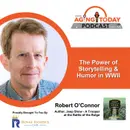
"The extraordinary comes out of ordinary people." - Robert O'Connor
Join Mark and author Robert O’Connor as they dive into the themes of aging, World War II, and the power of storytelling. In this engaging discussion, Robert shares his journey from...
"The extraordinary comes out of ordinary people." - Robert O'Connor
Join Mark and author Robert O’Connor as they dive into the themes of aging, World War II, and the power of storytelling. In this engaging discussion, Robert shares his journey from marketing to writing and explores the impact of enlisted entertainers during the war. Discover how his book Jeep Show blends historical facts with fiction, bringing to life the experiences of soldiers, the importance of humor in wartime, and the lasting effects of the GI Bill on American society. Learn about Jim Tanzer’s transformation from dance instructor to soldier and the deep personal connections Robert has to WWII through his father and uncle.
🔹 Topics Covered:
✔️ The role of entertainment in boosting soldier morale
✔️ How humor helped soldiers cope with war
✔️ The real-life inspiration behind Jeep Show
✔️ The lasting impact of WWII on American society
📖 Interested in military history and storytelling?
Don’t miss this insightful conversation!👍
Like, share, and subscribe for more historical deep dives!
#WWII #History #Storytelling #MilitaryHistory
Buy Mark a Coffee - Support Our Content About Aging!

Like and share Aging Today podcasts with your friends and family!
www.AgingToday.us
0:00 The Army drafted, you know, wealthy people from New York. It was a cross section of America, and I think that was that was one of its great strengths. Was it represented, It represented America, and America was and is, you know, the greatest country on Earth. Those young men were also coming out of the Depression and that was very hard times for most people. So they were probably a little tougher and used to privation more than we you know, we would be today. But I think, you know, to me, the most striking thing is the Army represented America as a whole.
0:49 On sixty. And now the podcast We're Together, we discussed proactive aging on your terms, connecting to the professional advice of our space guests while creating better days throughout the aging processing. Now here's your host, Mark Turnbull. Hello everyone, and welcome back to another lively discussion on aging. Today. We are the podcast where together we explore the many options to aging on your Terms. You can find Aging Today and our past nine years of programming on our website just go to agingtoday dot us. And I want to say thank you to all of our listeners out there over the years. What is You are the ones that make this show so successful, and so those of you that have been listening, you know, don't forget to follow us, because that's what is important. We need to know and to be able to monetize and also build upon our base. We're looking forward to having you follow us well.
1:54 As you know, this is. A show about aging, and what we've been trying to do over the past years is to capture as many intriguing stories of our forefathers, especially those that have gone into battle into World War Two. And I know that that is that generation is leaving us on a daily basis. And I have always had an intrigue and an interest in World War Two. And as you know, we've had other people on our show in the past, you know, talking about their experiences in World War Two from a historical and an experiential perspective. Today, we're gonna stay along those same lines in genre, but we're gonna be talking about World War Two if it's even possible to talk about it in a fictional manner. But that's where we're gonna go. And here to guide us in our conversation is Robert O'Connor. He's an author and he has written an intriguing book called Jeep Snow jeep show. I always want to say snow, but it's Jeep show and a trooper at the Battle of the Bulge and Robert welcome, Welcome to Aging Today. And I'm so excited to get into your book and into the background and all the things that you did to pour into the research, into
3:26 you know, writing this intrigue copy of a fictional but yet based on historical facts. So let's get into it. Thank you so much. Mark, it's really a privilege to be here talking with you and thus to your listeners. I will tell you the reason you probably say Jeep snow instead of Jeep show is there was so much snow. At the Battle of the Bulge that it. Just comes to mind it was a battle fought during a very bitter winter. Maybe a better title for your book would have been jeep Show in the Snow. Thankfully it's too late for that.
4:06 Yeah, okay, maybe it wasn't a better one. All right. Well, one of the things I want to do is I do want to talk a little bit about you and your background. And we always want to start out each of our guests, well, you know what's in your story, and you know that has led you to be such a prolific writer. And you know, there's it's interesting. I would say that there's nothing humorous about war. However, humor can play a role in in lifting morale in a time of war. And that humor the way I could see it coming out of your book. And I'm really interested in you as a person because your personality is reflect in those words that you've written in that book.
5:03 Ah, that's a very interesting point that I hadn't thought of other than I have heard that every novel is an autobiography, no matter. What it's about. So yes, there had to be some of me coming through. I was probably born with a modest gift for writing. Nothing genius level, but a modest gift. I made my living in the marketing trade, doing a lot of copywriting and business writing. About fourteen ten, thirteen years ago, I went to a very low period in my life. We all, you know, you live long enough, you're gonna hit some hard times. And I went to a very low period.
5:49 I got extremely depressed, and yet I still had to go to work and sit at my desk. And so I would go to work and sit at my desk and I would just start to journal about how I got myself into this situation and how I might get myself out. I got better after about thirty days, and you know, it did make me empathetic because I know that there are many people that feel just as bad as I did, and they don't get better. They feel that way every day, and I'm full of admiration for them. I kept on journaling and turned it into my first book, which is a nonfiction book called Gumption Aid The Booster for your Self Improvement Plan. And of course it was my own self improvement plan that I had in mind.
6:37 And I realized that writing was my work. It was not writing books, was not how I earned my living. I earned my living in the marketing trade, but writing books was my work. With my children grown, as with most of your audience, you know, we have to find, you know, we have to find what our work is, and for me, it became writing books. I was going to write a second non fiction book about a circus, a misadventure called the Oxidoll Circus, and your listeners, like I will remember that Oxidol was a brand of detergent back in the day. It's not very popular now. I started out at Procter and Gamble and was told the legend of the Oxidoll circus. In a nutshell, A circus promoter sold the Oxidol brand on sponsoring a traveling circus.
7:37 It turned out to be a marketing disaster, humorous only in retrospect, and it became a Procter and Gamble legend. I was doing some basic research on that and managed to locate the daughter of the circus promoter, a gentleman named Jim Hetzer. She said, oh, yeah, my dad was a circus promoter after the war, and yes he did. He did. He did run the Oxideal circus for better or for worse. But she said, did you also know that my dad was an enlisted entertainer in World War two Military Occupation Specialty four four two. And I said, I didn't know there were enlisted entertainers in World War.
8:23 Two, and to and to be fair to that, yeah, I didn't know that either. But right, but we've all we all grew up with Bob Hope and the USO and you know all of that. So right, there's a little bit of a difference between the USO and this. There's a big difference because the enlisted entertainers were under orders. So you know, Bob Hope and the other USO people, especially Bob Hope, did brilliant work. Brilliant work. I'm full of admiration these enlisted entertainers, uh, and this real person, Jim Hetzer, did several things, one of which was jeep shows from the title of the book, and jeep shows were sort of portable. They were k ration versions of a variety show. So three enlisted entertainers and by the way, Jim Hetzer, this real person, was in Mickey Rooney's jeep show squad Mickey Rooney the number one Hollywood box office star of the late thirties. And they would get in a jeep with a driver and they would go to just behind the front lines. And these were places that the USO and the Red Cross could not go for obvious reasons. They would go just behind the front lines and then combat infantry would be sent back for a day to get a hot meal, possibly a uniform exchange, and they would do shows for them. And the shows would be just almost a classic vaudeville variety show, you know, singing, dancing,
9:56 telling jokes, doing impressions, and they would always pull a soldier out of their audience. You know, his buddies are saying, hey, you know, Joe does an Edward G. Robinson imitate, you know, and the soldier would be terrible, but it was It made it even more fun. So I found out about this real thing, and Bob came. Bob. What came first, the four forty two, the Jeep Show or the USO? Did one grow out of the other. No, they're completely independent, completely independent organizations. I you know, frankly, I can't tell you when the USO started. I'm pretty sure it wasn't in World War One, but the Morale Corps existed in the army before the war. It was just greatly expanded after the war. So they were completely separate.
10:49 The USO is a civilian organization. Uh, you know, they cooperate with the military. Whereas the enlisted entertainers were under orders. You know, if they had been ordered instead of doing a show to pick up bazookahs and go, you know, go take on tiger tanks, well they would have had to do that. So completely safe to. Say then that is it safe to say that the morale boosters, those entertainers. Yeah, the four forty two were behind enemy or you know, on the front lines. And yes, then the USO was in a safer zone because you had a lot of private individuals and they had to be safe, so they were in the rear echelona.
11:30 We call that in the rear echelon. And you know, interestingly, one of the things that soldiers, you know, soldiers in World War Two, these were citizen soldiers. You know, they voted, their wives and their parents, wrote their congressmen. You know, they were citizen soldiers. And one of the things they disliked about the USO shows is the after the show, the officers would hog the celebrities and the enlisted men wouldn't get a chance to, you know, get an autographer talk to a pretty pretty young high Hollywood starlet. Yeah, the the morale called the Morale Corps soldiers were operating in frontline environments within artillery range and sniper range.
12:13 So completely different. And and the USO shows were pretty big productions and quite excellent. And again these Morale Call Corps soldiers were doing a small variety show. Although you know, if you were sitting on the German border and you got to see Mick set ten feet away from Mickey Rooney doing his routine. You saw the best show in World War Two. Yeah, yeah, yeah. For those the younger people in our listening audience that may not know who Mickey Rooney is, and I mean he was. He was a top dog, you know when it came he wasn't He right up there with some of the biggies like Bing Crosby, Sammy Davis Junior, Junior.
12:58 Uh In eighteen thirty eight and nineteen thirty nine, he was bigger than everybody. He was the number one Hollywood box office star. He was doing a series of movies and this is before all our times, but we've heard of them, the Andy Hardy movies where he was playing a American teenager learning life lessons in kind of comedy drama. So he was huge. In the late thirties. He had a problem. Well, there are a couple of things. First of all, he was a genius the directors that worked with him. One of the directors said, other than Charlie Chaplin, Mickey Rooney is the most talented actor I've ever worked with. Mickey Rooney could do anything. He was an excellent drama, dramatic actor.
13:46 He was an excellent comedian. He could do stand up, he could sing, he could play the drums. He learned to play the banjo in a day. But you know the problem with being a genius is where there are great strengths, there corresponding great weaknesses. And Mickey Rooney's weakness was his private life was just one everlasting party. You know. He was his first wife was Ava Gardner, but the most beautiful woman in Hollywood, and he cheated on her. Oh I didn't know that. Well, yes, yes, and you know, yes, she was a beautiful and quite talented in the end. And and you know he had a posse. He partied every night, you know, went through Hollywood starlets like a hot knife through butter. And you know that that's not a good way to live over the long term.
14:38 And I will give him credit though, when he enlisted in nineteen forty four, and there was some public pressure on younger male celebrities to enlist, he could have stayed in Hollywood and worked at the hal Roach Studios, ten minutes from his house. Lieutenant Ronald Reagan did admirable service there making films for the army. Rooney chose to go all the way to go over to the European Theater of Operations, join the morale corps and do these jeep shows, putting himself in in in, you know. In dangerous way. I hypothesized that, and nobody has told me this. I haven't written this, and Mickey Rooney didn't say this, but I think some unconscious part of him felt he really needed to get away from the Hollywood lifestyle if he was going to survive over the long term. So, yes, Mickey Rooney was a massive star. Perhaps his star was starting to fade by the mid forties, and certainly it faded after he got back, although he stuck with his profession acting and you know, in the end came out fine but fascinating, fascinating character.
15:51 And I think the key for all of us to remember is that the men that were on the front lines, that were fighting the battles, they knew who Mickey Rooney was, and so when they were around him, their morale was lifted, or they were at least allowed to escape into another world and build up some you know, just to get a reprieve from all of the horrors of war. Yeah, the violence, and also the discomfort. You know, it's freezing cold and they were sleeping outside and they other than you know, ammunition and gasoline. They didn't get a lot of the supplies that were on the rear echelon.
16:34 I think a very important point that I came to understand, and I came to understand that by reading some of the letters from entertainers is and this has kind of gotten to my fundamental understanding of morale and how we build morale for each other. The show was fine, you know, Mickey Rooney was incredibly talented, so it was a fine show. But it wasn't the show as much as it was these enlisted entertainers being present, you know, coming up to the front line doing it, doing the show in person. Then afterwards, you know, cigarettes and coffee, sign autographs, you know, tell more jokes, hang out for a while. There is something about when we are in an when we feel isolated, and believe me, frontline combat infantry feels isolated.
17:29 You know. Uh, there is something about when we feel isolated when when somebody, somebody we know or like or respect just is present for us, just you know, spends time with us. You know, after if we if we if we have a terrible reverse in our life, Let's say somebody we really cherished dies, or we lose our job or you know, something terrible happens. You know, we need our family and friends. We don't need them to give us wise advice. What we need from them is just to be present. And to me, that's what I learned was the most meaningful for these frontline combat soldiers was the fact that these guys were just coming out there and being present for them.
18:17 Yeah, you know, I'm so grateful that you had shared that because I don't know if you know this, but I own an in home care agency and a hospice agency and we tell the stories on the podcast, and you know, I think the greatest attribute that any kind of a caregiver, doesn't matter whether you're a doctor or nurse or a CNA or whatever type of caregiver you are, is not so much about what you say, but it's it's about being present in that person's life and that that speaks volumes and it's hard to convey that to people.
19:02 But it's interesting how you brought that up. Is that we all want to be acknowledged and we all want to feel validated. We all want to be identified and validated and in our lives, and when your lives, your life is on the line, it really comes out and we're talking about the front lines. Yeah, I want to along that line. I want to if you don't mind, Mark, I'll expand on that thought. I had I created a character in the in the book called the War Correspondent, and the war correspondent served a neat purpose in fiction, which is he could explain big things like, you know, how the battle, the things that the frontline soldiers knew nothing about, you know, the big strategic issues of the Battle of the Bulge and all that. I had him write a column after the war about how things had turned out. And you know, they in the end Germany surrendered, but they really had to let a lot of the Nazis continue to run the country because almost everybody who was a Nazi in Germany.
20:11 So there were many kind of disillusions at the end of the war, although the goal, the main goals had been achieved. But I had him write this column, and I just want to read you the last couple of sentences because it gets right at morale and right at the topic. You know, you know so much about that we're talking about, of being present with people who are under great strain. So the last paragraph of this fictional column newspaper column America fielded millions of citizen soldiers who disliked the goddamn army, were ambivalent about their officers, and resisted the trappings of military hierarchy, also known as chicken shit.
20:53 Yet many of them will remember their service as the ennobling experience of their lives. If you ask. Them, they will tell you they fought not for their country or for lofty ideals, but for each other, for their buddies to get the job done and get home. And that's the other. Uh, that's the that's the excerpt. You know, I realized so many of these, these frontline soldiers, and it would be the same for sailors or airmen who were in combat situations. They fought for each other. They you know, when when sold infantry soldiers were wounded, if they weren't sent back to England, if they were, you know, wounded enough, they would literally leave the hospital on their own to get back to their unit because they identified so much with their buddies in their unit and being there for their buddies. And you know, somewhere in the Bible it says, you know, greater love hath no man, but that he laid down his life for another.
21:58 And these men will it. These men would, And that is that is morale. That is morale that I understand intellectually. I don't understand it in my gut, but I am full of awe and admiration about it. Full of awe. Yeah, there's a corporate structure that doesn't appeal to me at all as a human being, in the military and in corporate America as well. Yes, However, underneath that umbrella, that corporate structure is opportunities to meet incredible people. And I love the movie Band of Brothers because it's speaking to exactly what you're talking about there, is that these are ordinary people that have come together under extraordinary circumstances and now the extraordinary comes out of them as brothers and sisters.
23:01 You know, absolutely, Yeah, there is a brotherhood the World War two. You know, name was my Buddies, But yes, there is a brotherhood. You know, Captain Winter's the hero of the officer, hero of Bandit Brothers. You Know, what I found is there were many officers that the enlisted men respected, and there were many officers that they just tolerated that were they called them brass hats, brass hats that you know, they didn't look up to, but there were many officers they did. And that's true in life in general. I mean, I think about how many times in my career, whether it was in the ministry or whether it was in the corporate world, there were always people. It's just inevitable. There's going to be people that you highly respect and then you highly disrespect or you're just like, oh my goodness, how did you get into this position of authority and power.
24:01 It's interesting anyhow, but it all flushes out in the end and it shapes us. It shapes us as individuals. And I think that, you know, looking why I'm so intrigued by veterans and the time frame of World War Two in the forties and the fifties. These were the thirties, forties and fifties. That's kind of that era era. Yeah, it was. It was interesting the character the people and how they came together and had one common cause. And you know, I think Brokaw said it exactly right, the world's greatest generation. And I'm just so intrigued by that generation self sacrificing. And I'm sure there was individuals that you know, weren't but oh yeah.
24:53 In generally in Yeah, punny, what did they say, go, I think that the term of art was go bricks, plenty of gold bricks everywhere, even not sure, Yeah, well, Mark, one of the things to expand on your point. The American Army was unique in that it was it was much larger than the other the Navy, the Marine Corps, and the American the Army Air Force much larger combined. So the American Army had to rely completely on the draft, whereas the Marines and the Navy didn't even use the draft until somewhere in mid nineteen forty four. So the Army was the only branch of the service that represented the nation as a whole. It was a classic cross section of the nation. So the Army drafted PhDs out, you know, out of college. The Army drafted men who did not speak English. You know, they had immigrated from Italy or Germany or somewhere you know in the middle in nineteen thirty five, and the Army had to teach them English so they could understand their orders. The Army drafted poor, poor young men from the South. My father told me there was a young man and his barracks in nineteen forty three who said, these boots are the first pair of shoes I've ever owned by myself. The Army drafted, you know, wealthy people from New York. It
26:24 was a cross section of America, and I think that was that was one of its great strengths. Was it represented It represented America, and America was and is, you know, the greatest country on Earth. Those young men were also coming out of the Depression, and that was very hard times for most people, so they were probably a little tougher and used to privation more than we you know, we would be today. They probably had a different attitude about that. But I think, you know, to me, the most striking thing is the Army represented America as a whole. M.
27:13 Yeah, it was a good cross section of all the different classes of career people. And it didn't just it It didn't distinguish, you know, the upper class from the lower class. I mean, we were all. Want right, absolutely not it, you know, they It did distinguish the officers from the enlisted men. But yeah, which you know was divided pretty much along educational lines, you know, which would you know, divide across class lines. But there was many many enlisted men that became officers, which must have been quite an interesting experience.
27:54 Yeah, Yeah, And I love the way you capture a lot of the culture in your book from really what was transpiring or what was going on in nineteen in the nineteen forties, as you just mentioned, you know, many of these men you had to share shoes with their brothers at home, or didn't have shoes or right, I mean right, And that's a concept that today I don't think many people even understand that that's what took place in America, right, right, And. The average GI gained about twenty pounds within the first three or four months of being in the army because for many of them they hadn't been getting three square meals a day, and the army provided three square. The army also fixed the teeth of millions of soldiers who, if they had ever been to the dentists, hadn't been recently. So, you know, the the change in the American population as a result of World War Two and so many young men being in the service. It fundamentally changed America.
29:10 And then the GI Bill. Fundamentally changed America. Most of your listeners know the GI Bill offered gis loans to very favorable loans to buy a house or start a business, or free college. And you know, and so many many soldiers from blue collar backgrounds became after the war became the first people in their family to graduate from college. And of course when you graduate from college, you then you know, earn more for the rest of your life. So it paid off. It paid off big time for the government on their tax receipts for the next forty years.
29:53 And on a. Personal note, my father, who came Robert O'Connor also who came from a blue collar Irish ethlic family in Waterbury, Connecticut, ended up going to Yale on the GI Bill and graduate. I think he was a little bit out of his element there, but he managed to graduate and then was a financial executive for most of his life. And you know, sent all his children to college. So yes, the US Army, not just in the war, but afterwards, dramatically changed the social fabric of America. Did you know that the RMS Queen Mary, designed to carry two one hundred and thirty nine passengers in luxury accommodations, was used as a troop ship in World War Two and carried sixteen thousand soldiers at a time. This did you know, moment was provided by today's guest and is brought to you by Royal Hospice of Oregon.
31:00 Yeah, and it's interesting because, as you described, the army back in nineteen forty played a larger role not only inside you know, the military complex, but also in general in our society. And yet today, I mean most people when they enlist, they don't list in the Army. The shift has gone towards the Navy, or the Air Force, or even the special forces like the Marines. I mean, it's more attracted to be. In my opinion, if I was gonna had to be boots on the ground, I'd be a marine versus an Army guy. It's interesting how all that has changed.
31:45 Yeah, the Marine, you know, with the Marines are a little more intense, a little more intense about it. And certainly back during the war where the Army was mostly draftees and the Marines was mostly volunteers. Yeah, the different in outlook was probably pretty great. I'm obviously full of respect for the Marines as well. Yeah, so did you know that loneliness is one of the major health problems today. The average age of widowhood is fifty seven years old. For women and sixty five years old for men. Book, Yeah, this leaves many potential years of living without a partner or companionship. Being open to love can broaden opportunities, so you don't have to.
32:29 Be alone, Outlander. This did you Know segment was brought to you by this Much Guest and sponsored by Royal Hospice. Oregon Historical Times, and it's just a fascinating story and yours as much like it. So I'm hoping that your book will hit the screen someday. But I'm fascinated about you as a writer and how much of your personality is injected into the words that are written on those pages. Because when you think about a four forty two a jeep show, these were like vaudeville actors, if you will, I don't know if that's the right word, but these were funny people. These were talented people. And for you and I never heard about anything like this. We all know you know the USL, but we didn't know anything about the Jeep Show, right, and yet you've got some there's something about you that if it was nineteen forty two, you probably would have been right there alongside of Mickey Rooney.
33:35 That's my guess. I don't know. I don't think. I don't think I have a gift for that, although you know the protagony, I will say the protagonist in jeep Show was inspired by this real life person, Jim Hetzer. And Jim Hetzer tried to make it in show business and failed in New York in the late thirties, and then was it dancing instructor. And then in the book, I you know, he he Jim Hetzer did volunteer at the age of twenty nine when he had a rock solid deferment, and so I have the main character volunteer and he tries for paratrooper, but he's too short, he's too tall, and they notice his show business background and they stick them in in the morale cores. I I'm not I don't think I am, you know, as funny as some of the jokes in Jeepshow. One of the things about writing about these jeep shows is I get to write about the actual performance. So you know, I researched the jokes that Mickey Rooney and Groucho Marx and you know, standup comedians would tell at the time, and they're still funny, by the way, So so you know, I got to put them in. I'm not I'm not spontaneously funny. Usually I'm and i'm you know, although I'm
35:06 very pleased to be here this morning, I'm a bit introverted, which is, you know, actually a normal characteristic for a writer. So yeah, there's there's a lot of my outlook in the book, but it is really based on my research telling the story. And then you know, my father was in the army overseas in World War Two. My uncle, his younger brother, George, was in the Navy in the Pacific in combat. And so there is some i guess unconscious drive I had for writing this book to understand a little bit more about what it was like for them, because my father never talked to or my uncle George, never talked about their experiences, and you know, I was too young and too self centered to ask them, you know.
36:02 You know, one of my lessons I would tell you know, any middle aged person is ask your parents the question. You know, stop and ask your parents questions about their life, because you're gonna have questions and if they're gone, there'll be nobody to answer them. So this was a way perhaps for me to try to get some answers about what it had been like for my dad and what it had been like for my uncle in their service, and they were just kids, like so many soldiers on all sides, you know, on all sides of the war, they were just kids and they were put into such extreme circumstances. One example of kind of trying to understand my dad's experience is there's a chapter in the book where the protagonist, along with Mickey Rooney, is shipped to Europe on the Queen Mary.
37:00 They had. The British turned the Queen Mary into a troop ship during the war, and in peacetime, the Queen Mary carried twenty three hundred passengers. During the war, it carried sixteen thousand gis over to I think they usually landed in Scotland because the the Queen Mary was so big, but carried sixteen thousand and one of those was my dad in nineteen forty three. So by researching what that voyage was like for the soldiers, I got to understand something my dad had been through, and it made me feel closer to them, you know. They couple of examples they were put They were put in mostly in cabins that fit two tourists and there would be eighteen soldiers put in that cabin. In these bunk beds, isn't the right term?
37:56 What's the term for beds that are six six beds high where the guy on the top, his nose is literally about three inches from the pipes above him. Well, I think that brings new meaning to the phrase packed in there like sardines. Oh absolutely. And most of these cabins were below the water line. So you've got you know, eight yeah, claustrophobia. You've got eighteen young men. They're not getting showers every day. They're smoking, of course, because they were given a carton of lucky strikes or camels on the way on the way up the gangplank. So the protagonist has to escape from time to time to what's called the weather deck, you know, the exposed deck, just to just to be able to breathe after a while. Made me think of my made me think of my dad. And they got fed twice a day. They probably wait in line for about an hour to be fed. They were all fed English army food, which took some adjusting, bully beef. There was no coffee on board, it was tea and they ate a lot of bully beef and hard boiled eggs, and so anyways, I really got a kick out of researching that because I knew my father had experienced that for himself.
39:19 Before I forget. I want to ask the question. You know, we're talking about jeep shows and these are acts that increased the morale on the front lines. Yeah, did the movie White Christmas? Was that a jeep show? It? You know, it's such a good question, and it's funny because I only stumbled on that movie within the last year. You know, it's one of the best movies of the twentieth century all around. Oh yeah, what they. They open up with what is very very helpful and understanding a jeep show, which is, you've got a bunch of gis that looked about that looked about a company size, a group maybe a platoon. Platoon was somewhere between seventy and ninety. So let's say you've got a platoon seated on the ground and there's two soldiers up there doing a show where it diverted? Is that show became very Hollywood?
40:19 You know, production there was as I recall, you know, what is it? It's Danny Kay and Bing Crosby two giant talents. Oh my god. And by the way, Danny Kay was an enlisted entertainer. He was an Mos four four two in World War Two. So Danny k and Bing Crosby are doing it basically a two man acts, some singing, some dancing, some jokes. That is a jeep show. Then when you get then when the chorus comes on and there's fifty gis marching and singing, that's not a jeep show. That's Hollywood. That yeah, that's Hollywood. But the setting is absolutely right. And they were within artillery range. So I am sure that some jeep show.
41:00 They were bombed in the beginning of the movie. Yeah, and when they were doing their their act, and and I was thinking about, you know, in your book you're right with you know what a jeep show is four forty two. It's it's three personnel. You got your, your, your, somebody that had plays musical instruments, study the dances, and then you've got the third person is the jeep driver. And in White Christmas, those three pieces came out loud and clear. Yeah, fascinatingly the drivers and I have this in the book, as you know, as as most of us know, the Army was segregated in World War Two. It wasn't until Harry Truman desegregated the army in forty eight that the army became you know, desegregated, uh black soldiers. Although there were some in combat units, not many Black soldiers were put in support units. And in particular they were used as truck drivers and jeep drivers. So these jeep shows would be that driver would would often be an African American soldier, you know, reflecting what life was like back then.
42:18 They didn't show that in the movie. By the way, I want to mention you mentioned Sammy Davis Junior. He was an unknown in he was too young in the late thirties. He was an enlisted entertainer. He was an Mos four four to two and I'm intrigued. I haven't asked any historians, but he may be the first a soldier to integrate the United States Army because Sammy Davis Junior was a black man. He was an MOS four four to two entertainment specialist and he did jeep shows and so he was doing you know, he was in a squad with white soldiers doing jeep shows, so that he may have been the first soldier to integrate the US Army to add to add to his already you know, legendary status. Quite a guy, quite a guy.
43:06 Explain what MOS stands for? Yes, Military occupation Specialty. So, okay, the day after, and I'm sure they this is still done. But you know, the day after the citizens soldiers you know, arrived at what was called reception camp. You know, they literally arrived in their civilian clothes and got haircuts and injections and all that. The very next day you would take a long you'd answer a long quiz about your experience, and the army would use that to decide where they wanted to deploy you. So if you had you know, if you were a plumber that was your life experience, the army may have put you in a mechanics type job.
43:51 If you as we know from the book and this, if you had some entertainment background, the army might have put you in the morale corps to you know, to to entertain soldiers. So so that's that's military occupation specially came from the army putting you where they thought they needed you. And you know, if you were a baker, uh, you know, and there were already the army already had enough bakers. They put you in the infantry. Muh, the army. You know, you would go where the army thought they needed you. But they did find they did find out what you had done before. Yeah, yeah, which which is smart because I mean, why teach somebody that doesn't know how to bake and yet you got to feed the troops.
44:38 Exactly makes it exactly a. Lot of sense. I was thinking, you know, about your story, and I think maybe this is a really good time to get you know, we got a good foundation as to what MS for forty two means. Now, let's get into your book. In the inspiration behind the fictional story that is woven into historical time frame and facts tell us a little bit about the character her main character.
45:19 The main character, Jim Tanser, despite a fatherhood deferment, a thirty year old dance instructor, Jim Tanser enlists in the army in nineteen forty three. Stella, his wife and partner in their dance act, regrets his choice. She felt somewhat abandoned. The book has flashbacks to Jim's childhood, including his time in the Civilian Conservation Corps. A hitch as a circus clown and his difficulties trying to make it in show business in New York in the late nineteen thirties, Jim and Listen goes for paratrooper. He's assigned to the Morale Corps because of his show business back. After training camp, he's shipped to the European Theater of Operations and assigned at jeep shows, which we've talked about. Jim and Mickey Rooney and do a jeep show right on the German border on December fifteenth, because by that time the American Army had pushed to the German border and was kind of waiting there. They had outrun their supply lines largely, and so they were kind of put on the German border for almost rest and recuperation, but also guarding the German border. So Jim and Mickey Rooney do a jeep show on the December fifteenth. Something happens in that area and a soldier needs to be evacuated and takes Jim's
46:51 seat on the jeep. Jim is, of course just going to come back the next day on a supply truck, but the next day the Germans begin the Battle of the Boat. So the next day Jim, who is in a front line position. That position is overrun by German soldiers and Jim makes his way back, and this is very historically accurate. The Battle of the Bulge was fought over about ninety miles of Luxembourg and Belgium border with Germany. Three German armies attacked, one in the north, one in the south, and one in the middle. The only one that made progress because of the resistance of American soldiers who were caught by surprise. But in the north and the south, the American soldiers were successful in slowing down the German armies greatly. The German army in the middle, which is where Jim Tanzer was, makes tremendous progress for a few days. So Jim is given a captured German map on the front lines and told to retreat to clare Vaux, which regimental headquarters. Jim gets to Claivou clairevo is then overrun. The next day, Jim has given more materials, including some letters home, and is told to move west, and this happens in three or four places where there were significant battles during the Battle of the Bulk, so his path the fictional protagonist path is exactly what a
48:25 soldier would have taken who was staying one step ahead of the Germans as they moved west. And then Jim ends up in Best Stone, made famous by the legendary one hundred and first Airborne and in our time Band of Brothers. As you said that excellent miniseries, Jim ends up in Best Done and as really happened, Jim and other rear echelon soldiers and survivors of overrun infantry companies are organized into a fighting unit called Team snaff who SNAFO of course stands for situation normal all ft up.
49:07 This is a family show, so I won't give it, you know, the complete army treatment, but there and Team snaffho's job was to support the one hundred and first Airborne. Airborne divisions have four regiments, and thus the one hundred first made kind of a square around best Owned to defend it, and the Snaffho soldiers their job was to get in the in between these forces and plug holes as needed. So these rare echelant soldiers again we're talking about bakers and telephone operators and mechanics and soldiers whose job was to play in the division band and then this entertainment. Soldier were organized into a fighting unit, and of course they had been to basic training, so they knew how to shoot their M one Grand rifle. But so the.
50:02 Plot follows. Exactly what what a soldier would have experienced in this situation. And of course I can call on some historical figures. General mccauliffe, the famous general who was in charge of the forces in Bass down well, the protagonist, he ends up through a subordinate asking uh, the protagonist to put on a little variety show for the wounded soldiers in the basements of in beast done because there were many, many, many wounded and they did not have, you know, sufficient medical supplies to really treat them. And so you know, I made up this conversation between mccauliffe and and uh, the protagonist Jim Tanzer. And McAuliffe is looking at the the bill for the show, you know, what the acts are, and he notices a one of the one of the players as it journal a name, and and he says, well what about this, this this Willie, And Jim says, well, he's actually a pow He was He's an American, but his family moved to Germany in nineteen thirty seven. And so he's a pow but he's he's very talented at at singing. And mccauliffe says to him, you know about the Geneva Convention, don't you private And the protagonist, Jim Tanser, says, yes, I won't put him on after an animal act. And
51:33 that's a that's a bit of an insight joke for for it, one of the things that vaudeville players never wanted to do for obvious reasons, was to follow an animal. Act on stage. So, uh, the plot follows, you know, very realistic. Uh, you know, a path that happened during the war. I took no liberties with history, you know, I did. I did involve Jim in many, many, many many battles and then after the war and again this is based on a real life occurrence. Jim and Mickey Rooney do a command performance for a Russian one of the large highest ranking Russian generals and his staff. And this was an actual event put on by Omar Bradley, the very high ranking American general, where he had a luncheon for the Russian general Koniev. And in real life, the inspiration for the book actually performed there. I failed to mention an important thing to your audience and to you mark this real person. His older sister saved every letter he wrote home from training camp and from Europe in the war, and I had access to these letters, so I got you know, I had one hundred and fifty letters primary sources that showed me exactly what he was going through.
53:04 They could get past the censors because they did. They did censor some things, so I knew that he had been in this command performance. I also put him as so many soldiers, including Wally Reets, who you interviewed a few weeks ago. I also put him in the liberation of a concentration camp, because that is such an important part of the story of World War two, is the liberation by the Americans and the Russians coming from the east. But the liberations of these concentration camps were which were at the time called murder camps, which is completely appropriate, and and I wanted to capture the disbelief and the shock that these battle hardened soldiers. I mean, they had they had seen terrible things, but when they got to the concentration camps, this was they couldn't believe their eyes they could not believe there. So I wanted to capture that.
54:07 So I did put him in the liberation of a concentration camp, and then I which did not happen in real life, and then I did put him in occupy Germany after the war because you know, we had I don't know, something like nine million men in Europe and the war ended and we didn't have enough transport to bring the men home very quickly, and we had to occupy Germany, so many many soldiers ended up in Germany for a year even longer after the war ended, and I wanted to show that what that experience would have been like because Germany, you know, I have him in Berlin, and Berlin has been you know, bombed to rubble pretty much by first the Americans and then the then the Russians.
54:53 So I'm following historical facts, but I'm involving, you know, one man at the center of them all. And that's you know, that's what you can do with fiction. And I should say, you know, I decided I wanted to write fiction because I just, first of all, wanted to see if I could, and second of all, I wanted to tell there are people that I want to. Read this story. Who will not read historical nonfiction about World War Two? You know, they're just they just prefer a story. And so what I have tried to do is capture in an interesting story factually what it was like to be in the army, you know, in nineteen forty four, what it was like to be frontline combat, what it was like to liberate a murder camp, what it was like to be in Germany post war Germany, and really just wanting to get home as fast as you could. And you know, I think I've I think I've captured that in a in an interesting story, or I hope I have.
55:55 Mark, will you I can say firsthand that you have. I did read the story, and it's a fascinating read, very fascinating. And the thing I like about it is that there's enough historical facts and really what was going on you captured, I mean, just even the vocabulary of that day. You've captured that in the story to make it, you know, which is what helps make it real. Yeah, I And a lot of times in fictional stories, you know, the author is sometimes using the language of today rather than the language of that day.
56:37 Right, it's very important. I have a note in the forward to the book. You know, I use words that Americans use to describe black people, or Italian Americans, or Polish Americans or Irish Americans. You know, I use the words that people used at the time. They are offensive in twenty twenty five. So I wanted my readers to understand. And I'm using this because I want them to hear how people talked and people did talk that way. Also, you may get a kick out of this speaking of you know, older movies. We were talking about White Christmas. I watched several movies from the late thirties to pick up on slang and how people talked. And then I read several great detective stories, The Maltese Falcon and The Big Sleep that were written in the late thirties, just to pick up this over the top dialect and slang.
57:32 And I put in a fair amount of slang and dialect when you're when the English characters are talking, you're getting English accents. But you have to be you have to be judicial. I wanted to put that in for realism, but you have to be judicious because if you put in too much slang or too much English, you know, British dialect or German dialect. The readers have a struggle through it, you know, they it takes them out of the story. And when you're trying to tell a story. You don't want the reader to be in, you know, you don't. Want to read to be taken out of the story. You want to just keep stringing them along and stringing them along, you know, so they can't put it down.
58:15 Yeah. Yeah, who should be reading this book? I would say, first of all, the number one target audience I thought was people that are interested in World War Two. So many. Mark people our age, you know, as you said, we're we are losing our World War two veterans, and you know they're mostly lost because just old age. So many men and women of our age, you know, boomers, if you will, mid mid tier boomers. Our fathers served in World War Two, and thus, you know, we have an interest in what that was like. So I would say, first of all, anyone with an interest in World War two, anyone with an interest in military history. And then perhaps people that just like a really good yarn because it, you know, it is a it is a story.
59:10 Yeah, because I'm in senior communities all day long, I think that even seniors would appreciate this book themselves, you know, you know, eighty year olds, ninety year olds. Because the thing that I appreciate so much about music or literature is that it transports us back into time. Yes, and I think seniors, especially from that era, or we're very young in the forties, maybe they were born in nineteen thirty, you know, between nineteen thirty and nineteen forty, would appreciate this book because they didn't really experience maybe the actual war on the battlefield, but they were experienced the war here in the States and all the things that were going on through their parents' eyes and what they experience.
1:00:08 And so for me, being able to read what you have written transported me back into the times when my dad would tell his stories or my grandfather would tell his stories of being in World War even World War One. Yes, yes, yes, yes, yeah, that's a very good thought. You know, I consider myself a senior. You know, I'm sixty eight, so you know, I'm right there much to learn from other people. You know. I want to touch back on something you said that's really important and it relates to morale and relates to these jeep shows. You know, there was quite a lot of humor in these jeep shows, whether you know, impromptu, you know, jokes, impressions. To me, humor is such an important part of keeping up one's spirits of morale because you know, at any age, you know, awkward teenage years or senior years, where we're having to you know, surrender many of the gifts we've been given because life, life has its ridiculous components, and you know, we each as human beings, have our ridiculous things we've done. And part of humor is being able to laugh at ourselves. And laugh at life is so important because if we don't laugh at ourselves, we tend to get ashamed of things
1:01:41 we've done, you know, stupid things we've done. And and once we get ashamed of things, you know, they become worse and darker. And laughing at stupid things we've done or the absurd things about life is also a very bonding you know, you're saying around with your buddies, you're sitting around with people at the lank and you know, laughing at something absurd is a very supportive bonding experience. So I don't want to discount the importance of the humor and the jeep shows and the importance of humor to these frontline soldiers. Probably some of your audience will remember or know of the cartoons that were published in Stars and Stripes. They were called Willy and Joe, and this was done by an enlisted, a sergeant named Bill Malden, and Bill Malden ended up being a Pulitzer Prize winning editorial cartoonist. He developed two infantry men characters in World War Two called Willy and Joe, and they encapsulated the citizens soldier experience. They were usually unshaven, they were usually a mess, you know, their uniforms were covered with dirt, they were usually smoking, and they had a very skeptical attitude towards their officers. And these these cartoons were published
1:03:13 in Stars and Stripes and beloved of enlisted men, and some of the generals, and particularly General Patton, were outraged by these cartoons because he thought they, you know, undermined discipline. But they didn't. They just captured the spirit of the citizen soldier. And I hung over these cartoons as I was researching the book because they really communicated to me that, you know, classic American citizens soldier mentality, and that made the American forces unique because you know, the British, you know, fine army and gallant, they had their class system, you know, they had The British have this class system and aristocracy that really made their army a different thing. The German army was very much until the end professional soldiers, not and of course not citizen soldiers, because that, you know, the Germany was a dictatorship. The Japanese army was almost medieval in its you know, devotion to their officers and their willingness to do terrible things to other people but also to endure terrible things themselves. The American army, I found, was completely unique in this way, and it was completely embodied by these irreverent cartoons that ran in Stars and Stripes, the newspaper of our military. So that to me, if
1:04:45 anyone wants to look up Willie and Joe and see some of these cartoons, it's just it's absolutely wonderful. Well, I think the correlation is so similar today. I mean, we may not think of ourselves in a war, but I think our culture was is still I think it was in a war over the last four years in particular, but over maybe the last ten to twenty years, where our culture has changed, and where we've taken, you know, humor out of our society, out of our culture, We've censored it and that's scary. I mean, think about all throughout history, even in the courts, and you know, if you go back into time in the king's court, they had a gester and the gesterre was allowed to tell jokes about the king. Well, you knew how the society was moving when the gesture was allowed to tell the stories and make fun of the king. But when the kings no longer thought it was funny, then became more of a dictatorship and the jester's head was cut off.
1:05:54 And that's exactly what we've done over the last especially the last Foard to you know, ten years yours is we've cut the gester's head off and I'm hoping that and even in World War Two, they allowed the gester to go onto the front lines, right, and they knew how important humor was to lift up our morale. And hopefully we're going to get back to that in our culture today. Yes, And you know, you think back to you know, the gester and the role of the fool, where the capital left the fool in shakes. Some of Shakespeare's plays. It's very important because the fool, the gester, is the only one that can safely tell the king he's full of crap. You know, he's not wearing any clothes, and the king needs to know that.
1:06:41 The king needs to know that. And yes, you're right if we don't have that now, because we're so divided that, you know, if we're you know, very much on the right, you know, well, we don't think Saturday Night Live is funny, even though they have a message for us. If we're very much on the left, we don't think Fox News is fine. You know, we are not getting as you say, I hadn't thought about this, Mark, but we're not getting those messages that humor can provide in a way that's not so confrontational. And yet, now that we talk about it, these Willie and Joe cartoons showing the experience, the humorous and somewhat skeptical experience of the common soldier of the infantryment, we're very important in portraying to the officers and the high level politicians what it was really like, what it was really like on the ground.
1:07:43 Really good point, Mak, Yeah, yeah, well, there's nothing humorous about war. Right, But humor can play a role in the time of war to lift all of our morale. And you know, I think war's come in and go, they change in how they look. And I think that definitely our culture has been through war. Hopefully we're coming out of that, and who knows where it's going to lead, But you know, I just I hope that we can get back to to appreciating the value of humor in our lives. And you know, let's not take ourselves so seriously.
1:08:26 There's a lot of things that are funny about me that right, right, you know that I have to laugh at myself. And if you can laugh at yourself, I think that's a really good place to be. I couldn't agree more. Humor. Humor and finding the lighter side of life, I think is a fundamental survival tool. Yeah. Absolutely, And you've captured that on the pages of G Show. Thank you, And. I encourage every one of our listeners to get out there and to purchase the book. What's the best way for someone to acquire it? Yeah, And let me add one other thing about. Our veterans and then also, do you have a website?
1:09:08 You know, I do want people to know where they can go because I found your website actually, especially under the column I think it was events. Yeah, there was all kinds of pictures and maps, you know, where you could trace the character throughout. I thought that was fascinating. Yes, first, I want to say that I'm giving a dollar per copy sold to an organization that helps veterans going through troubled times called Shields and Stripes Veterans and First Responders. And I wanted to do that because in this process it made me think about my dad's service, but it made me think about all our veterans quite a bit. So, and I did joke with the people at Shields and Stripes and I said, you know, I'm going to give you a dollar per copy sold. I would give you all the profits from the sales of the book, but a dollar per copy will be way, way, way more money. So the book is available on Amazon just entered Jeepshow Book in the search box, or on bookshop dot Org. If you don't like Amazon, it's available in an audiobook. And by the way, I will tell you if you write a book mark. If you write a book and you want to catch all the typos that you made, you hire an actor to read the book for an audiobook and you sit in the studio with him, because every three pages he stops, he looks up at me and he says, did you mean did you mean to say this? Did you mean to repeat
1:10:39 this word three times on this line? So it's available in an audiobook, it's available at as an ebook and of course as a printed book. The website is jeepshowbook dot com. And you know, I reference this column, this fictional column from the war correspondent looking back on the war with some regrets and some great pride in the American soldiers. It was I had. I had put it at the end of the book, but my editor made me take it out because she said, even though it's great, the book has to end with your main character. You know, the book shouldn't end with this very interesting column looking back. So I couldn't bear to part with it. So I put it on the website, and I want to recommend that it gives a good overview of how someone on the spot would think about the war in nineteen forty six. So that's how the book is available, and also on the website, I be able to get comments from any of your listeners or questions, and I would love to have questions or comments. So that's also another reason to go to the website, which is again Jeepshow book dot com.
1:11:53 All right, what a fascinating conversation, what a fascinating book. You're an intriguing individual. There's just so many more things beneath the surface, and you can see your personality coming out in the book. So I highly highly appreciated that and encourage all of our listeners to go out there and purchase a Jeep Show and it will transport you back into time. It will transport you back into the nineteen forties and during the war and what it must have felt like through maybe even though it was a fictional character, it will transport you to actually know what it was like to live back then in war.
1:12:38 Martine. So thank you, indeed, you are gracious, indeed, and it's really been a privilege. Thanks thank you Robert O'Connor for being on Aging Today. We truly appreciate it. And this is Mark Turnbul your host, and I want to thank all of you for tuning into Aging Today. We are the podcast where together we're exploring the many options to aging on your terms. Join us every Monday when we release a new conversation on Aging Today to your favorite podcast channel, and remember this, We're all in the process of aging, and as we age, we really are better together. So stay young at heart. You make me feel so young.
1:13:19 He made me feel like spring as from and every time I see your face, I'm such a happy individual. The moment that she speak, I want to go play hide and see. I want to go and bounce the moon just like toy balloon. Well you and I I'll just like couple of times running cross the middle. They get up lots of agat midnight. So you made me feel so young. He made me feel there are songs to me. Sound you run and under the things to be fun.
1:14:04 And even when I'm olding gray. You've been listening to Aging Today, where together we explore the options to aging on your terms. Join Mark and his guest next week for another lively discussion on proactively aging on your terms, connecting you to the professional advice of his special guests with the goal of creating better days throughout the aging process. Your host has been Mark Turnbull. Join Mark and his guests every week on Aging Today, your podcast to exploring your options for aging on your terms. And even when. Old gray, you make me feel happy today goes.
1:14:45 You make me feel so you make me feel so You make me feel so yung, so yung. You make me feels so young, You make. Your feel so young. M